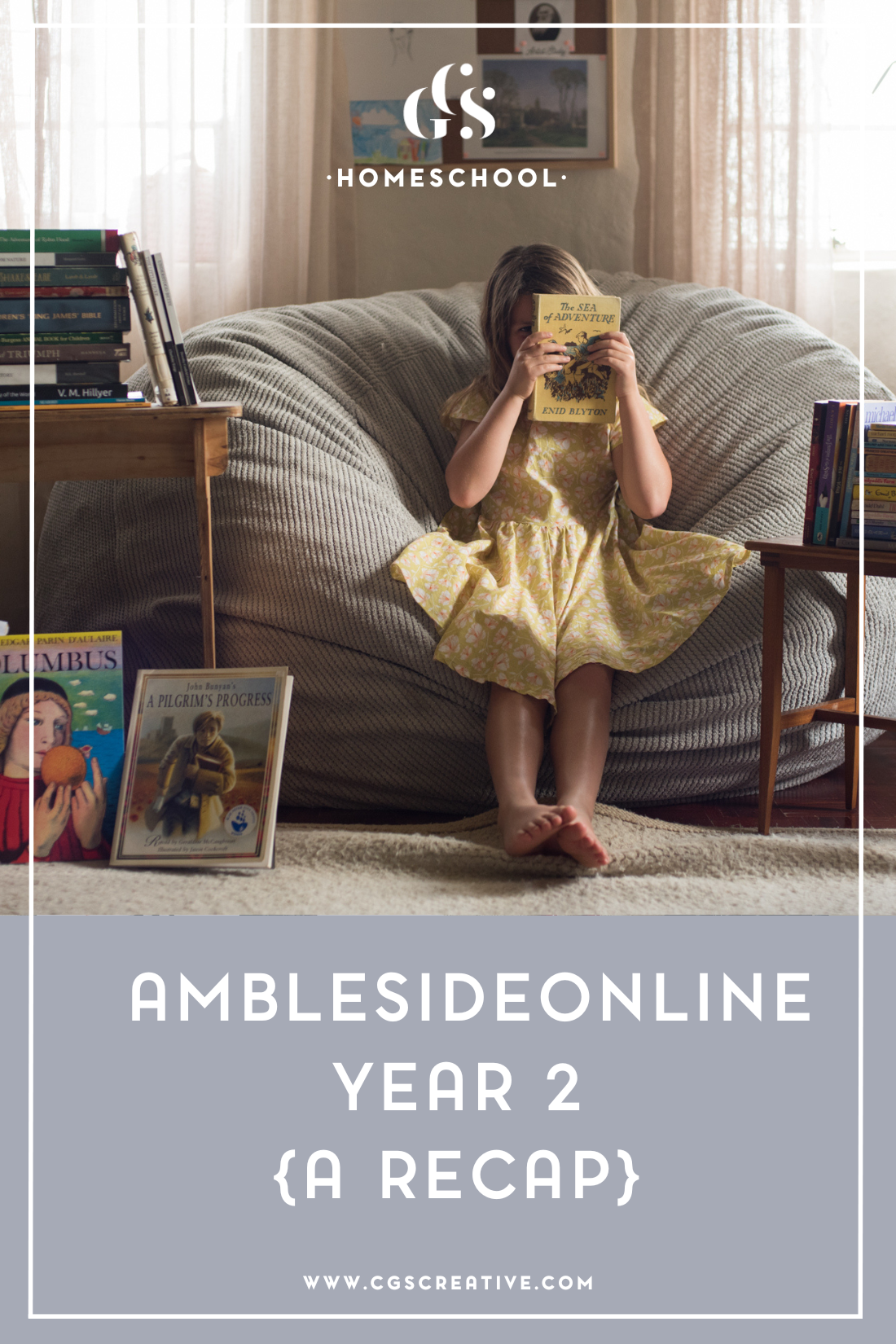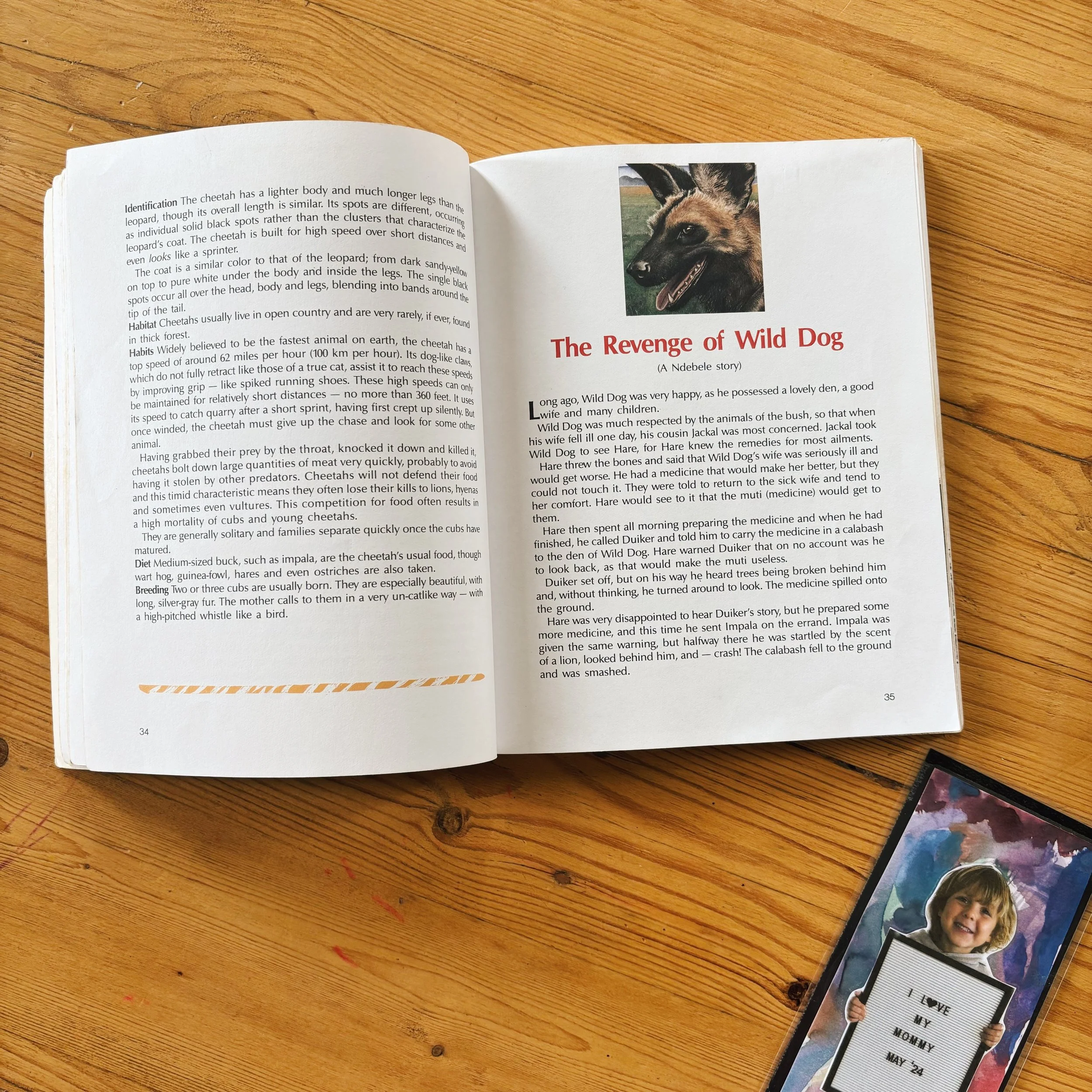
AmblesideOnline Year 2 - a recap of our second official Charlotte Mason homeschool year

It’s January 2026 here in South Africa and we have just begun our schooling year. This year my middle child, Aaron (about to turn 7), has officially joined his older sister in the school room to begin Year 1, while Everly is now beginning Year 3. It’s been quite an adjustment planning a school year with 2 kids doing their own official Ambleside years, but we are excited. While last year is still relatively fresh in my mind, I wanted to write a recap on how our AmblesideOnline Year 2 went. I’m hoping I can also use these posts to refer back to when my younger children reach these years.


AmblesideOnline is a free homeschool curriculum that uses Charlotte Mason's classically-based principles to prepare children for a life of rich relationships with everything around them: God, humanity, and the natural world.
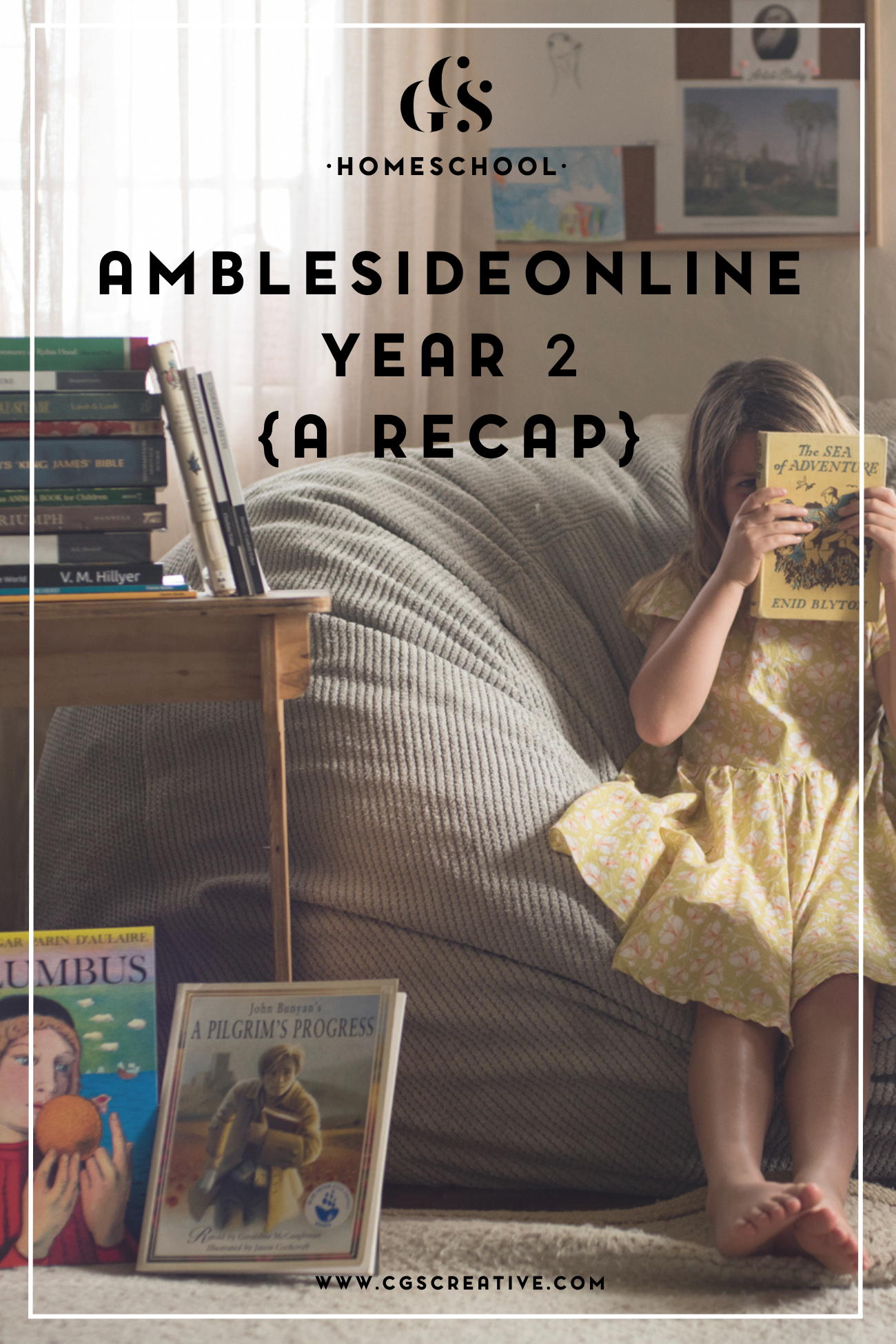


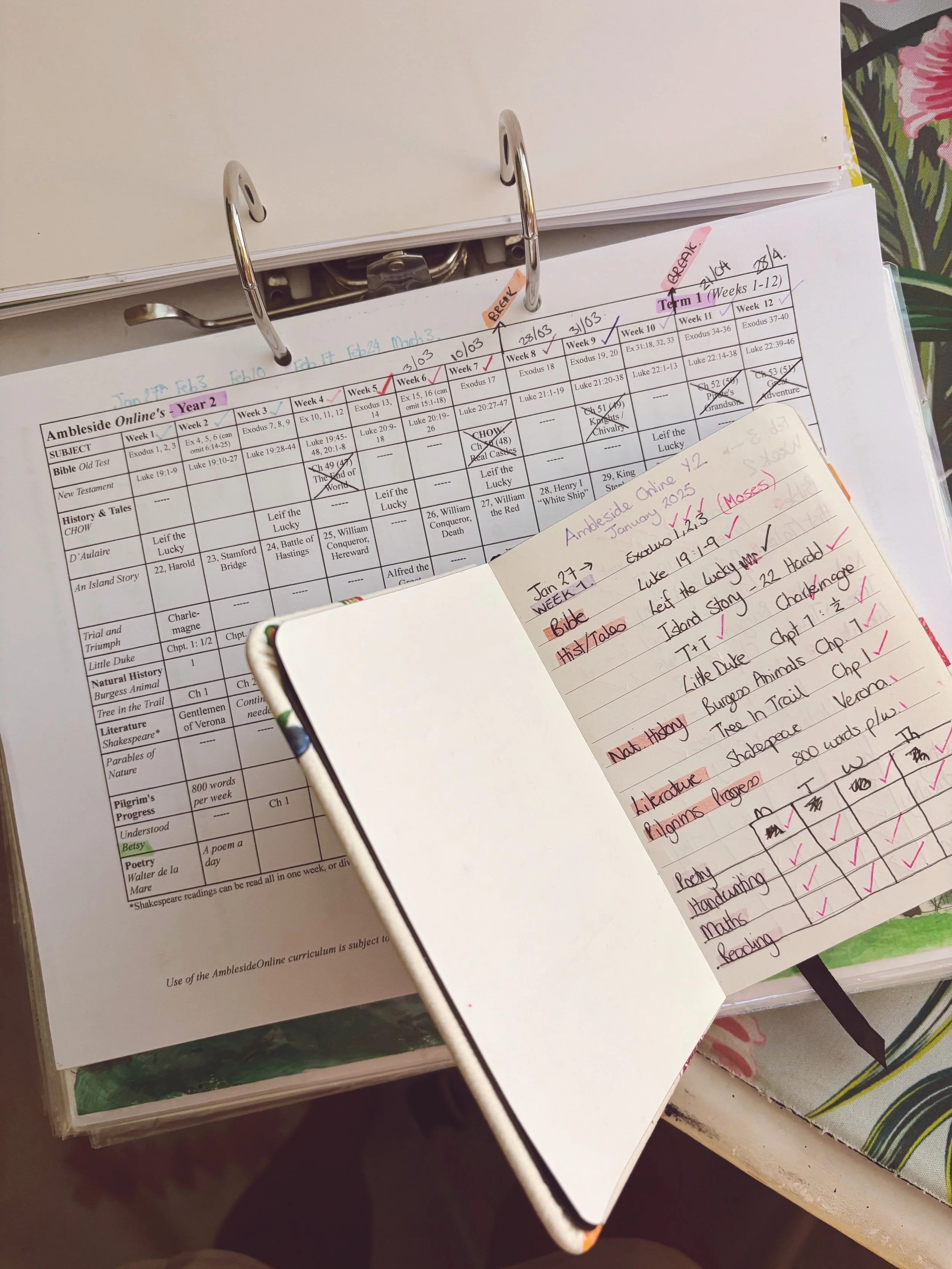
I think every homeschooling mom will say that their planning/scheduling is always a work in progress, but I will share how I planned and recorded our school year here too. While I am continually trying to refine my systems, I am always happy to share the whats and hows. For this year, I went with a very simple approach (because I kept getting sucked down the many rabbit holes filled with wonderful ways to plan/schedule until I realised all of that was glorified procrastination!). I simply printed out the year’s schedule & booklists off the AmblesideOnline website, collected the books (second hand book shops & whatsapp groups, some on Loot & Amazon.co.za and an online thrift book store I found; Chapter1, were where I found most of my books…as well as a few family ‘book mules’ who visited from the UK and were able to bring over some of the harder to find books).
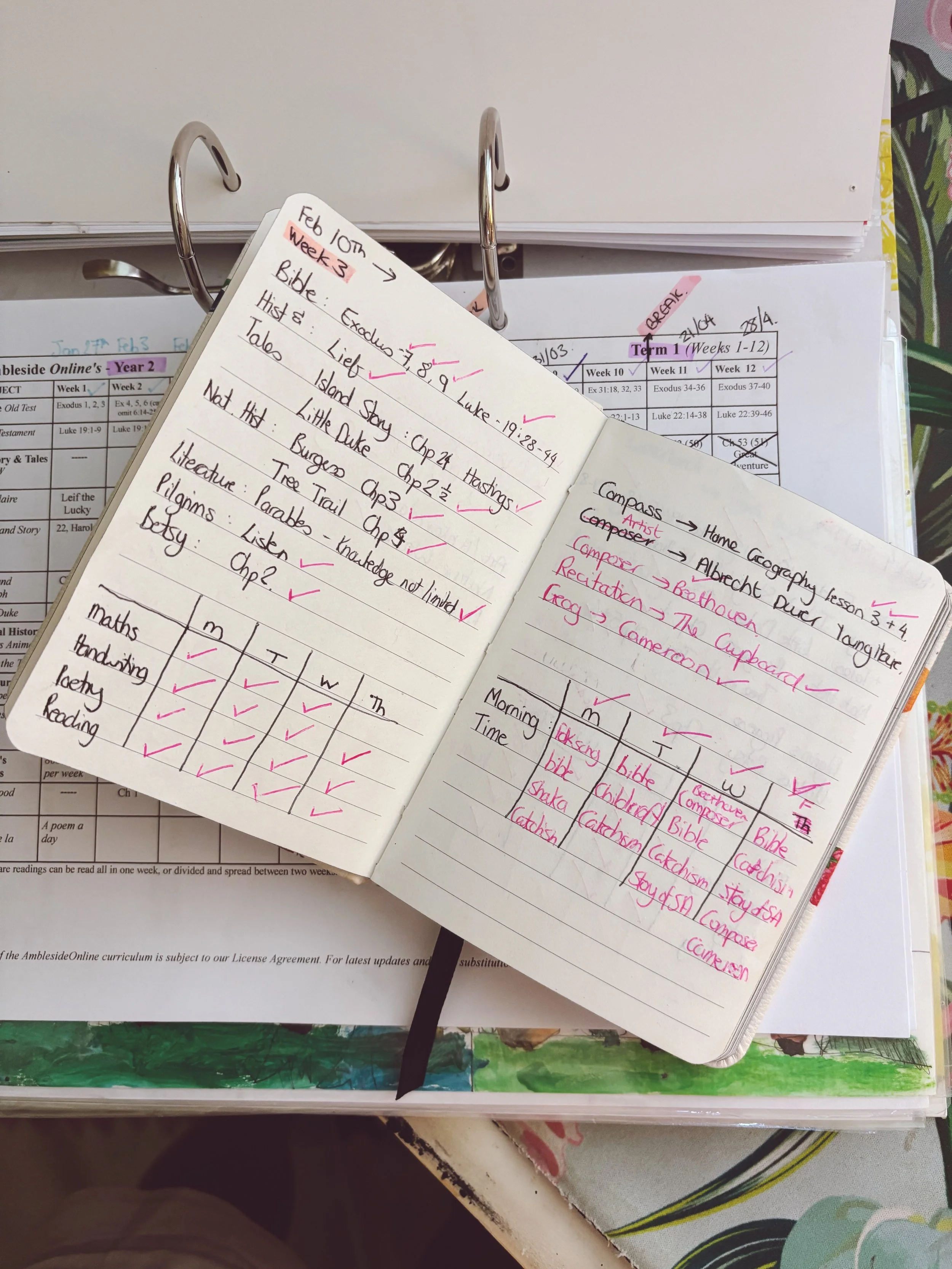
Once I had the schedule’s printed, I took out my trusty little a6 sized notebook, and manually added in the books and subjects needed to be covered that week. I did this on a Sunday evening and it only ever took me about to 10 minutes to do and really helped make the Monday school mornings run a little more smoothly.

This was my first year solely homeschooling my own kids, as the previous year I had closed up my Reggio inspired farm school, The Red Shed; which I had run alongside homeschooling my older kids. I ran that for 2 years, and loved it so much! But as my eldest got older and her workload increased, I just wasn’t able to cope with the varying needs of other children as well as my own. As sad as I was to close, I am re-opening again this year (2026!) because I have found myself a wonderful young teacher who will be able to keep things going with the other kids, and whom mine will join as soon as they are done with their homeschool lessons with me.
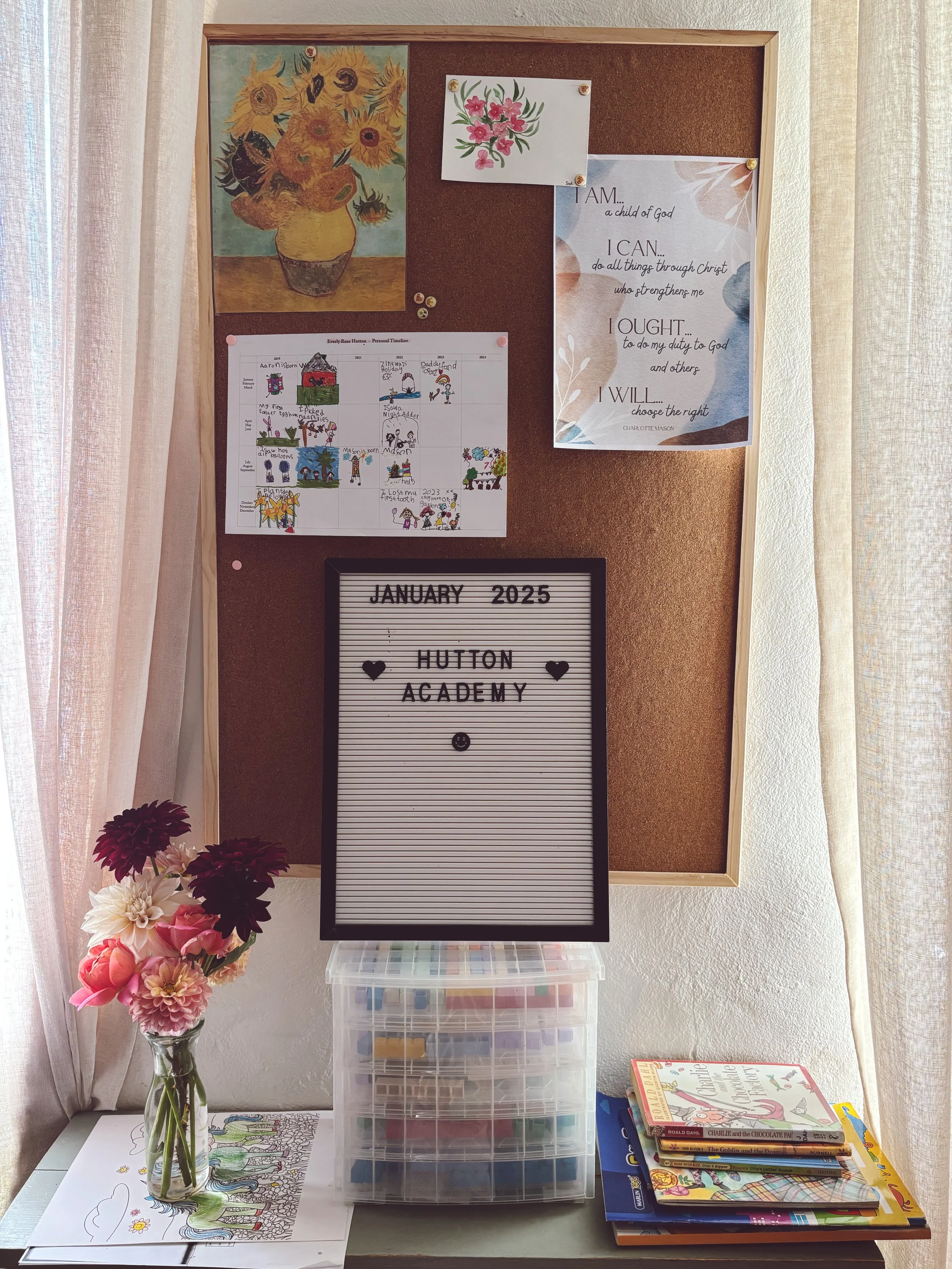
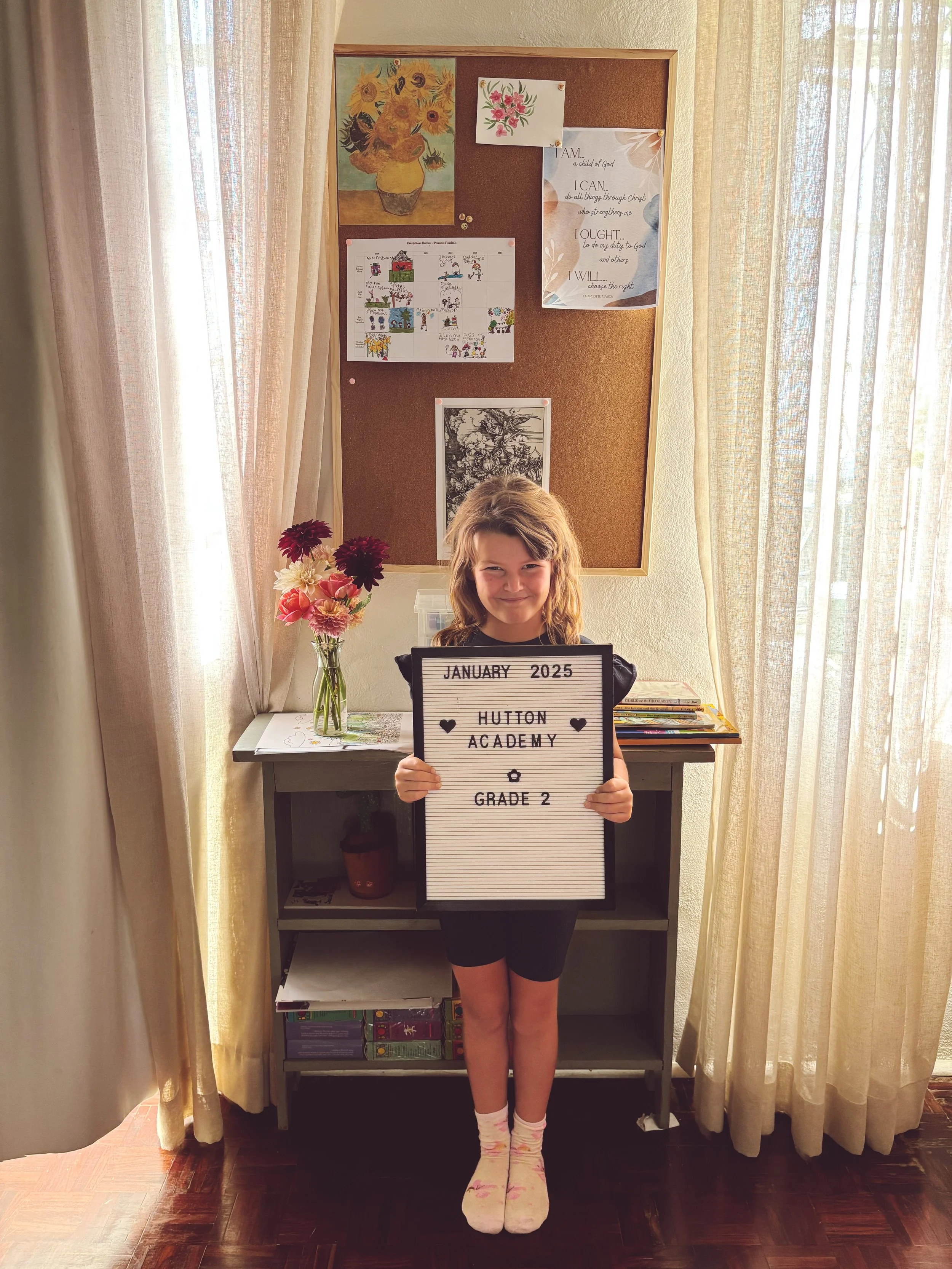
For the 2025 year I had the following aged kiddies:

Everly - 7 year old starting Year 2/Grade 2 (in South Africa we use Grades, but Ambleside follows ‘Year’ terminology. So please don’t get confused when you see Grade/Year…I am using them interchangeably).

Aaron - 6 Year old starting Grade R (or Grade 0 as it used to be called…I don’t know what this relates to but perhaps AO Year 0 haha)

Mason - 3 year old (preschool/kindergarten)

My main focus was on Everly (AO Year 2) this year, but all 3 kids joined me in the early morning (usually in bed with mugs of tea!) before breakfast for Morning Time. I tried to do this at least 3 times a week, but sometimes only managed it once (or not at all if I was really needing my own alone time!) but this consisted of hymns/folk songs, poetry, devotional (Indescribable by Louie Giglio) Bible stories (we are slowly making our way through The Biggest Story Bible by Kevin deYoung), sometimes if I had enough time before breakfast I threw in some Elementary Geography (Charlotte Mason) and a couple of read alouds we had going on (Coral Island by R.M. Ballantyne, Little House on the Prairie and The Adventures of MillyMollyMandy were the 3 books we alternated with depending on what we all felt like on that day).
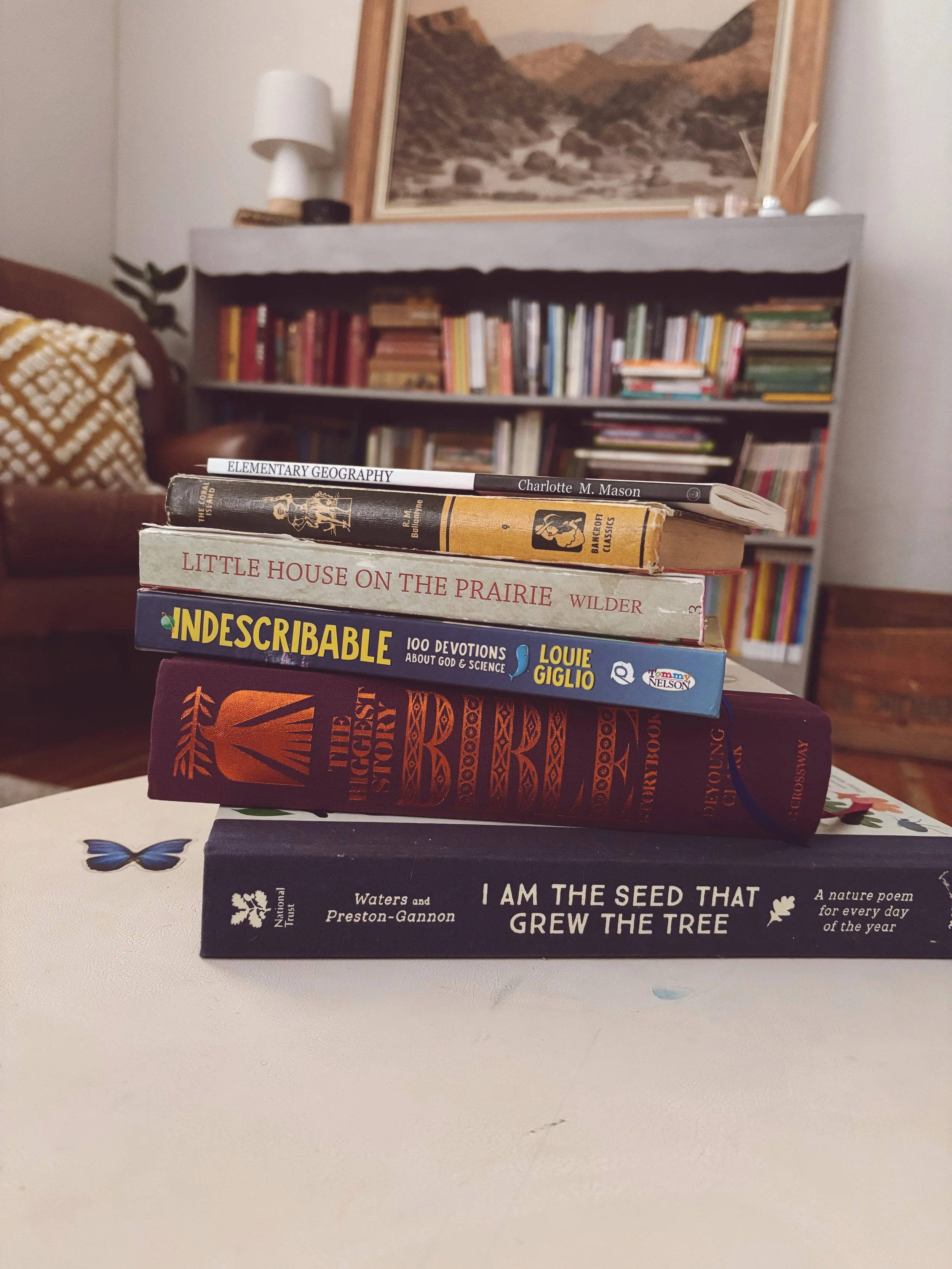
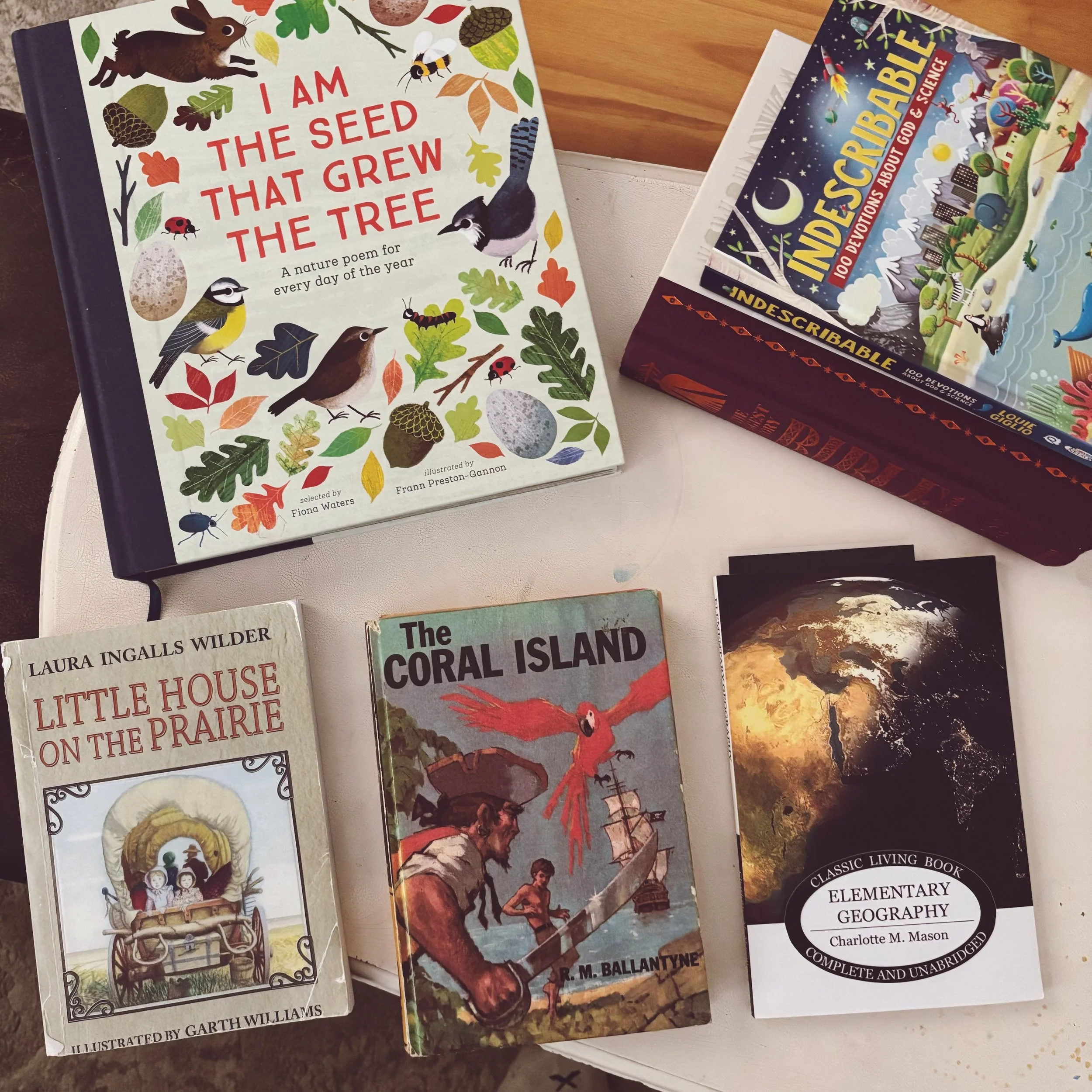
Aaron joined in for 2 - 3 days of school in the week, mainly for reading & maths (click here for my approach to reading which I’ve followed with Everly and now Aaron…I do still plan on writing a full post on this but for now the mentioned link covers what I did…just scroll down to the bit about Reading/Phonics). Mason came and went sporadically, and every now again I would sit and do some stories (or Letterland books with him) but mostly I was with Everly and we did school 3 - 4 mornings a week (most weeks it just ended up being 3 mornings). The afternoons were free play with one afternoon a week for our sport/extra curricular activities in a neighbouring town. There were/are no sports/extra mural options in my little town, and so we have to travel far and wide for these. Because of the distance, my kids do what is offered on that one day and the rest of the week is for a lot of outdoor/farm life and play.
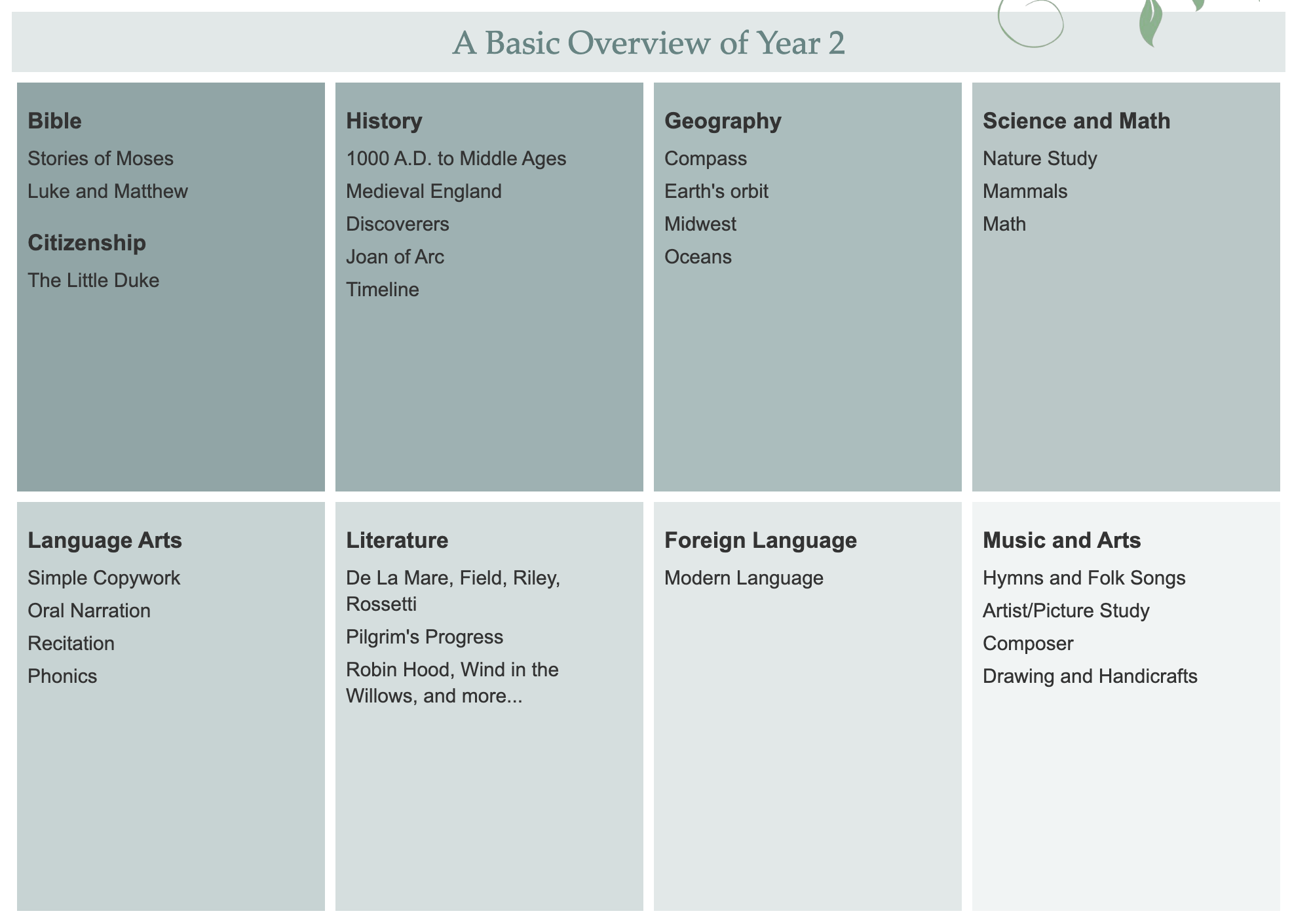
Here is a basic overview of AmblesideOnline Year 2 (please go onto the Ambleside website itself for ALL the information you will ever need about this FREE and absolutely wonderful Charlotte Mason based curriculum). AO (aka AmblesideOnline) has exceeded all my expectations so far, even though it is free (don’t let the fact that it is free make you feel it isn’t robust enough to hold it’s own against anything else). You will need to have a basic understanding of the Charlotte Mason philosophy (I am still making my way through her Volumes to truly understand her methods myself) but the Advisory team who put together AmblesideOnline have really done something incredible and I can’t sing their praises highly enough.

Here is how the year went, as well as the substitutions I made from a South African perspective, and I’ll share what didn’t work/what we just didn’t get to as well:
Reading/Phonics:

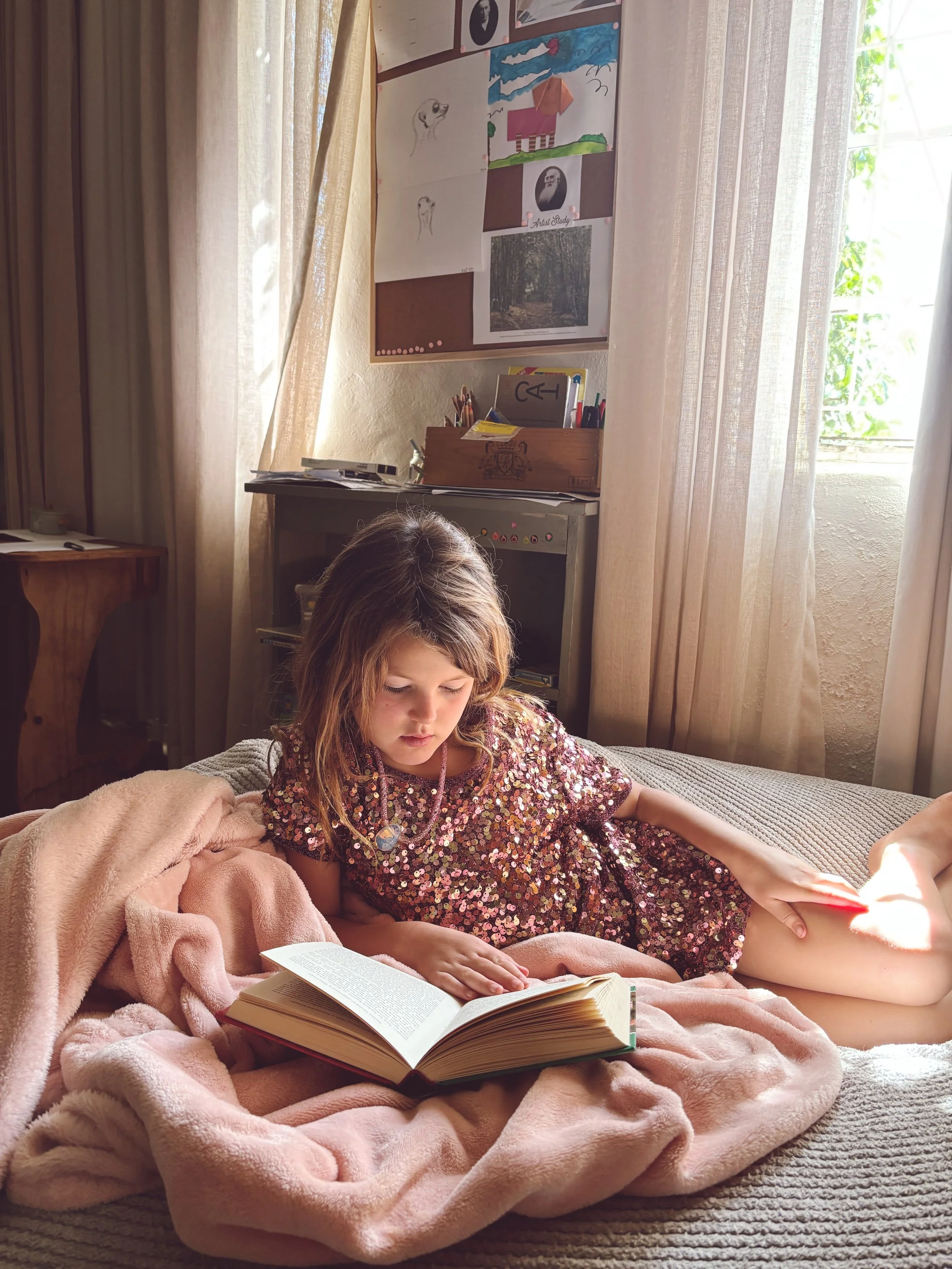
Everly was a very strong reader at this point and so I gave her a couple of her own school books to read to herself. I chose the ‘easier’ or rather the books I thought she might really enjoy like Robin Hood for this. She then had to narrate to me, outloud afterwards, in preparation for Year 3 when I would need her to take on more of her own school books. She did not enjoy this (haha it’s so much more exciting being read to than having to read to yourself and then narrate what you know you know, out loud, so I understand the resistance!) but it was a very good growing season for her.
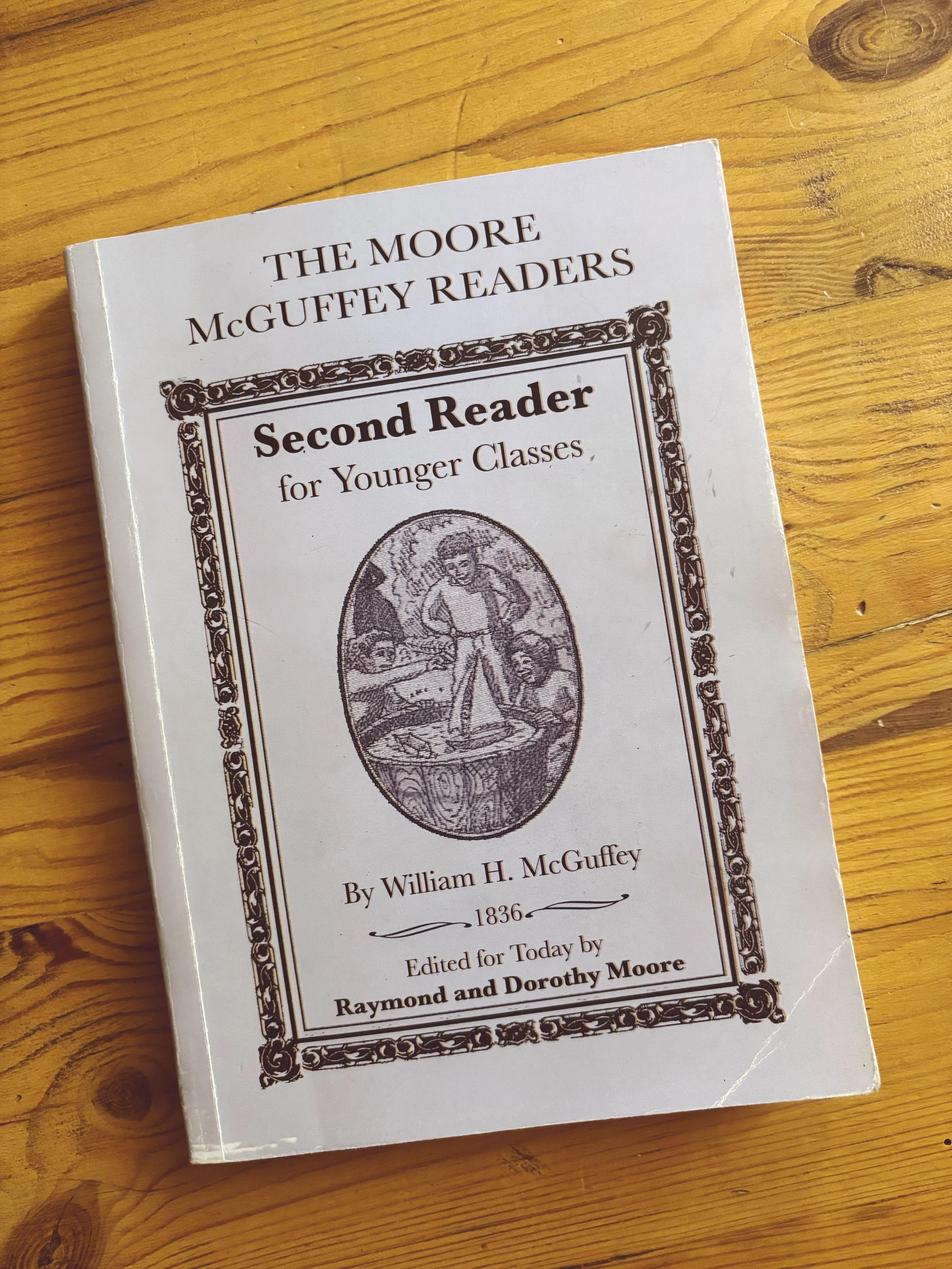
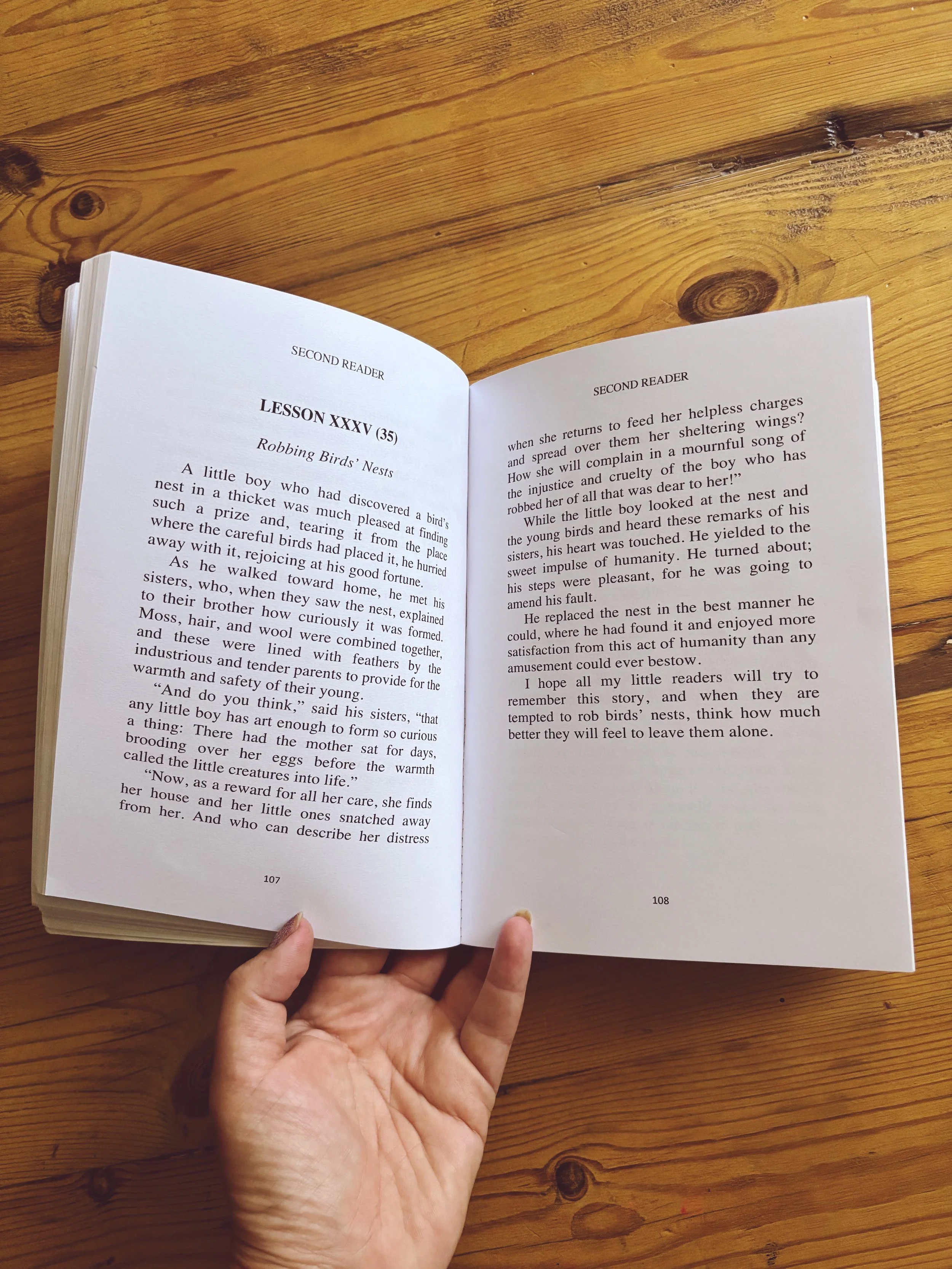
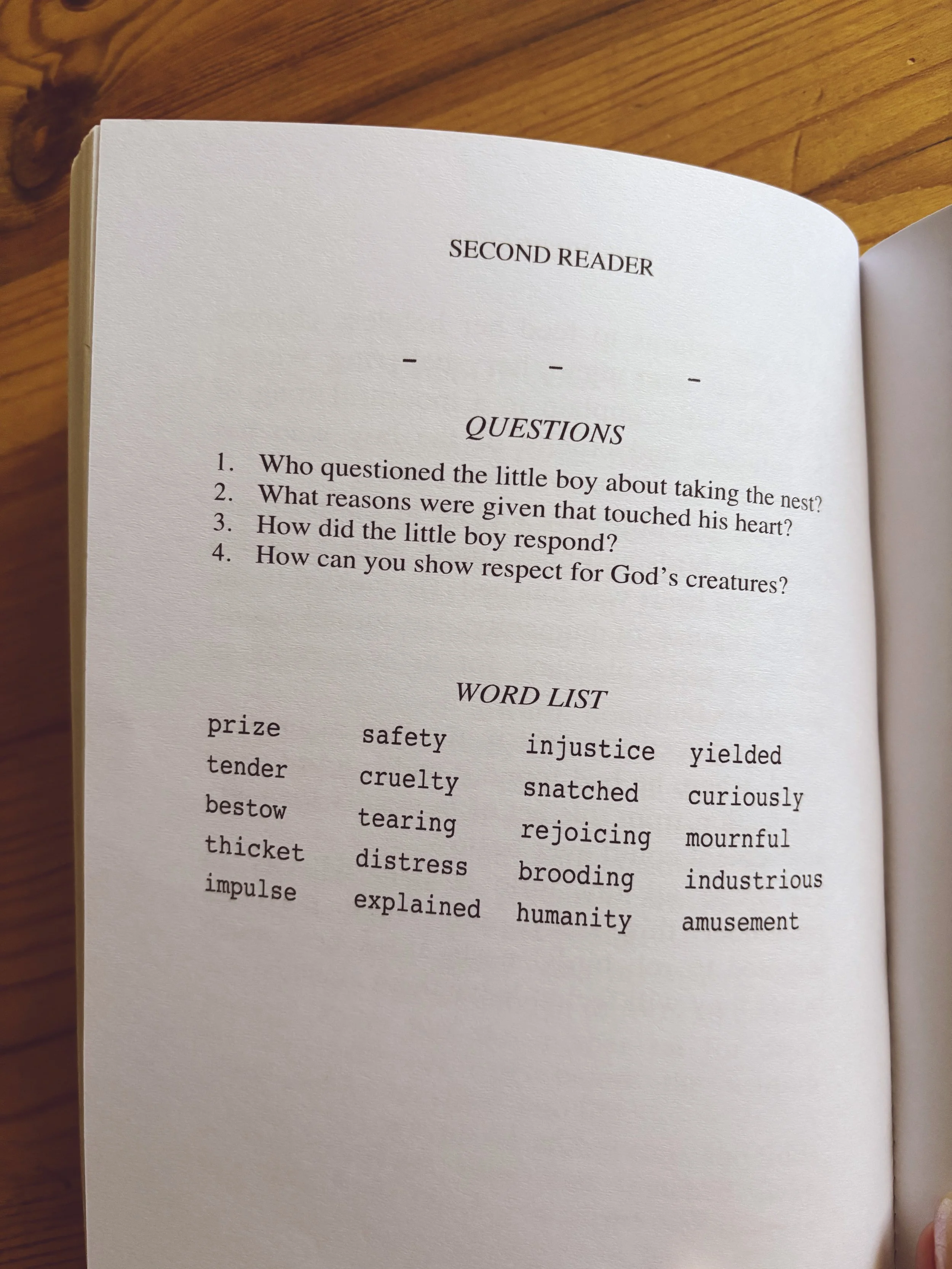
I still had her read aloud each school day, and this would sometimes be from the Moore Mcguffey Second Reader, or it would be from one of her designated school books. After reading the McGuffey lesson/story, I would ask her the questions at the end of each story, and then she would simply read through the word list. I didn’t do anything else with those words in terms of spelling etc.

Even though she is a strong reader, I still had her read aloud each day so I could check in on her pronunciation/ensure she wasn’t skim/skip reading as I’ve noticed she tends to do when a story gets boring (I cant blame her, I do the same!).

Handwriting/Copywork:

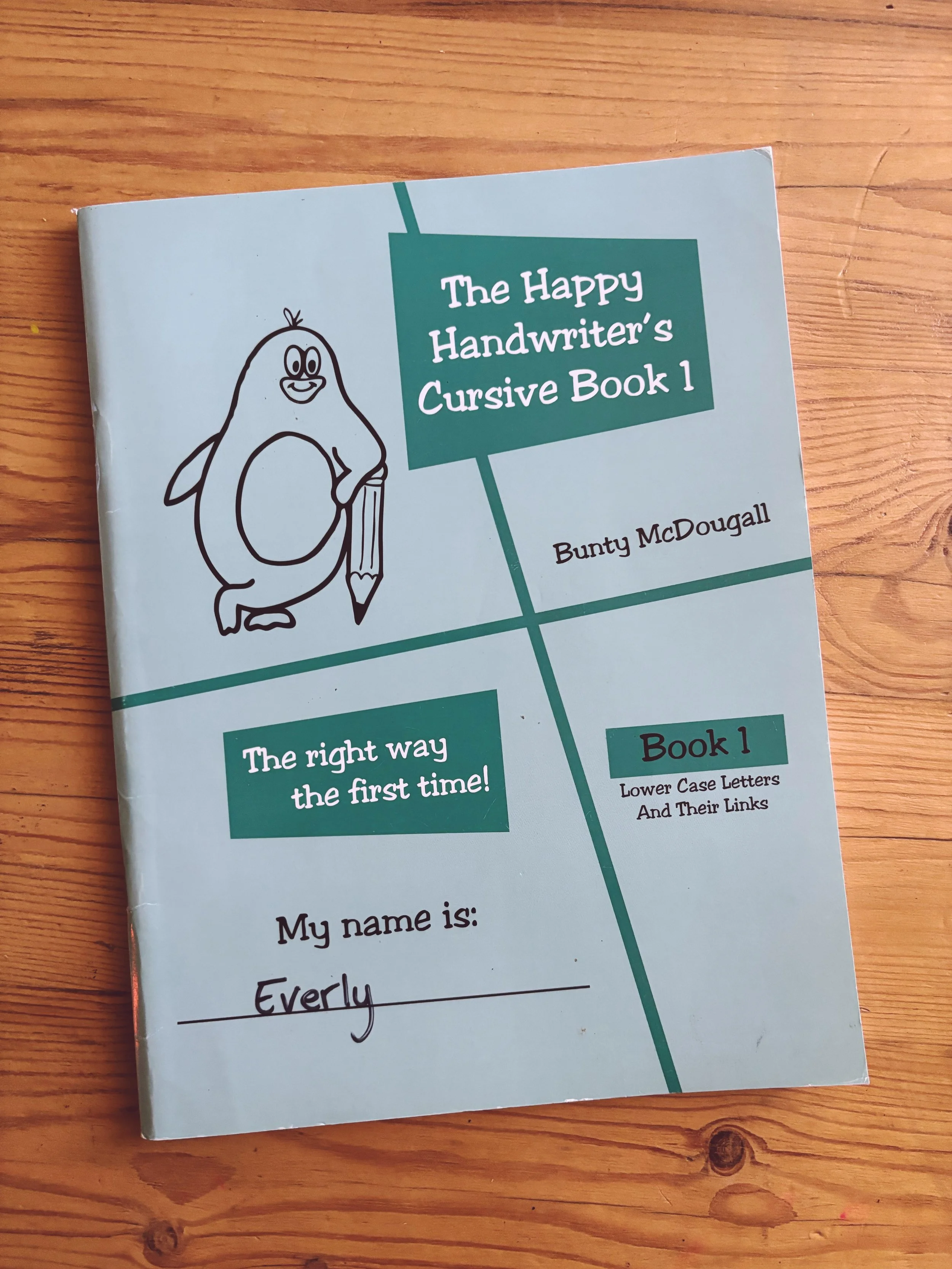
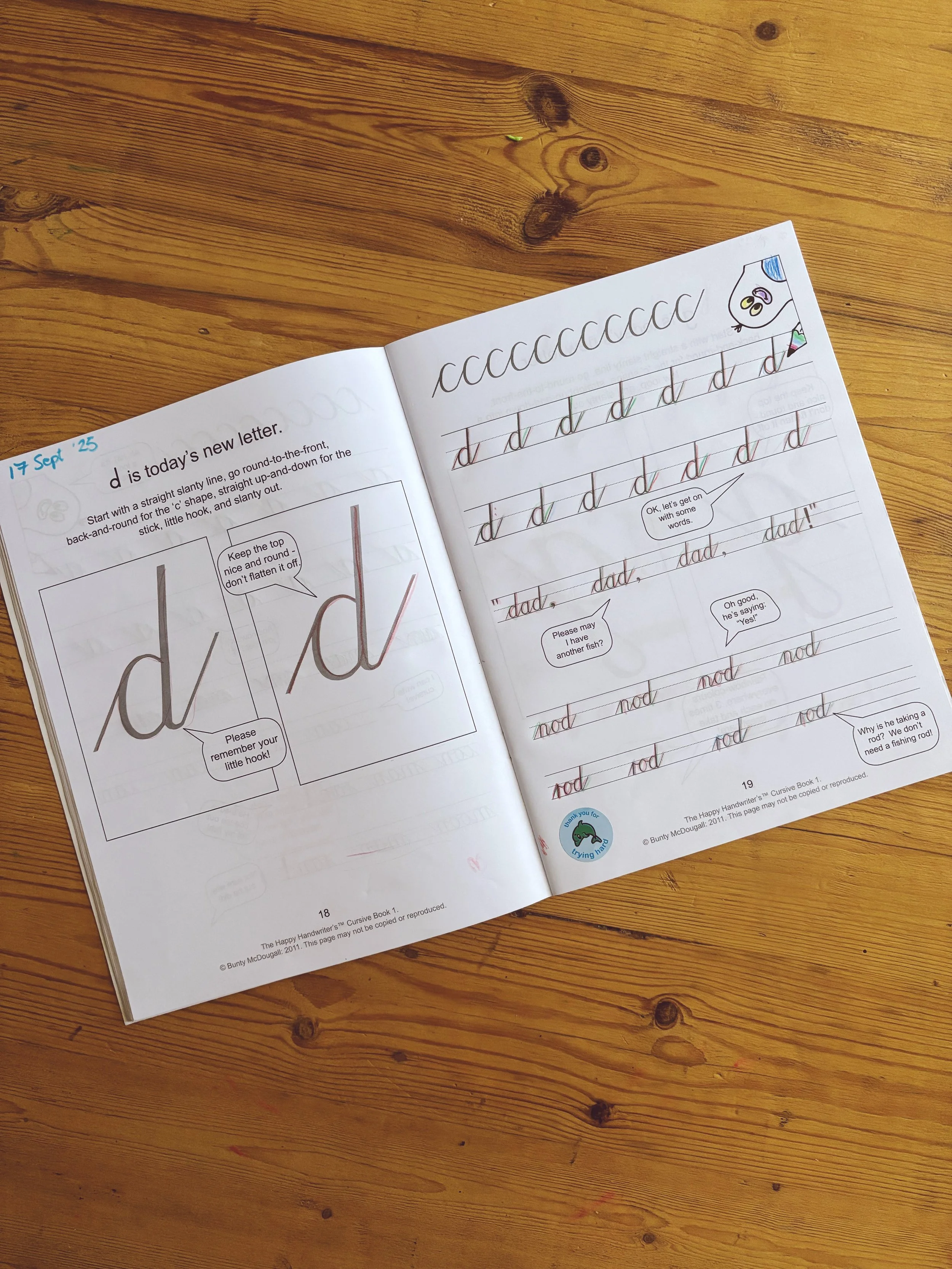
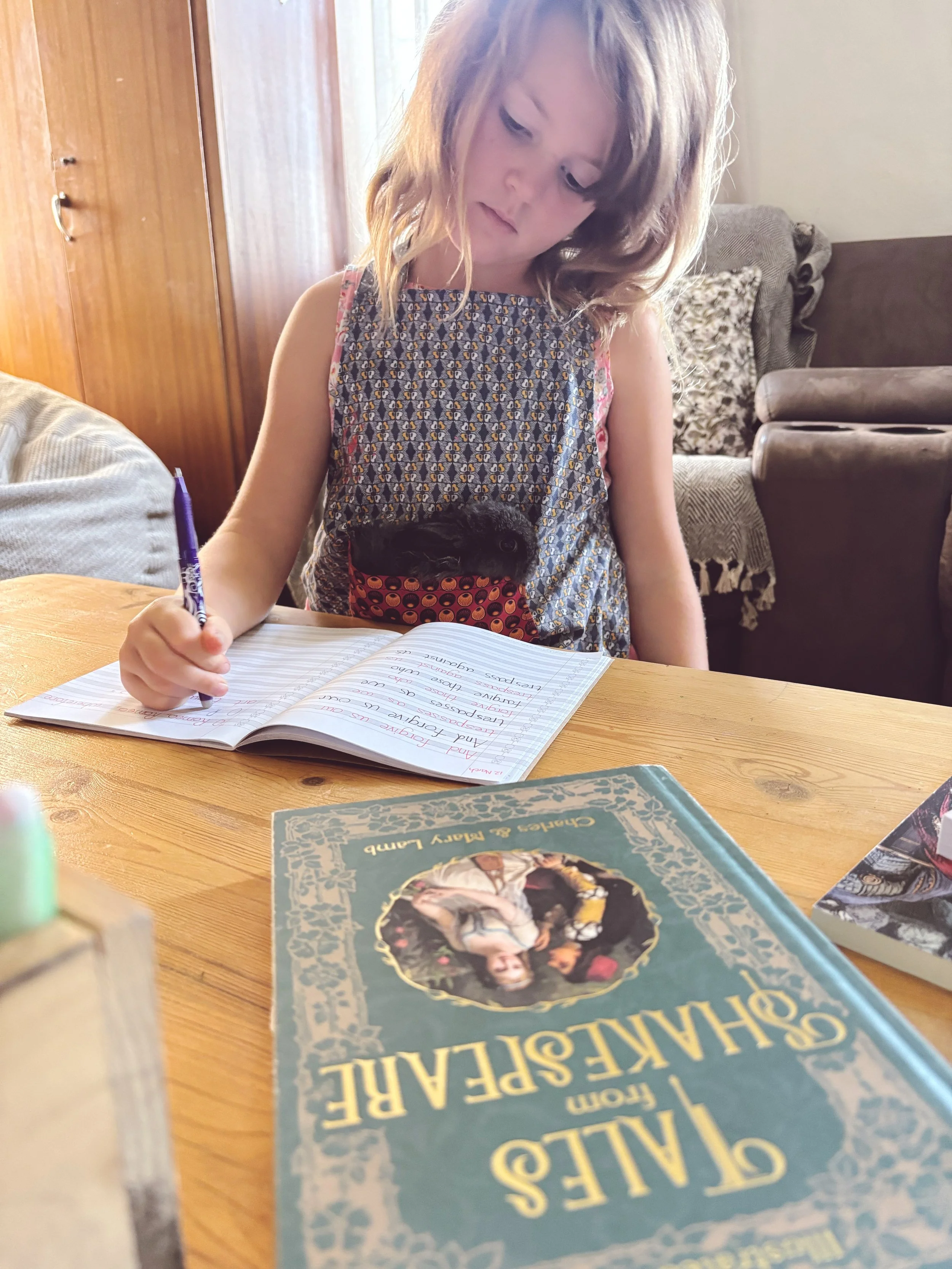
This was an area where I didn’t think I needed to be concerned until towards the end of the year when it was brought to my attention that Everly’s spacing was very far off in terms of ‘grade appropriateness’ (or whatever grade average ever actually means). But, I tried not to take the feedback too personally, and set about making this a priority. I realized although her letter formation itself was very good, she had only ever done her copywork in books with rather large line spacing. And so when it came to blank unlined pages, the spacing and ‘straightness’ was a bit all over the place. I found this great blog article and set about printing out much smaller formatted lines for her copywork, and saw a big improvement in spacing after just a couple of weeks. I was also encouraged after re-reading this article from the AmblesideOnline website. I also realized that I need to keep a close and careful watch on copywork, and not just assign it and then step away to check my phone/get distracted with something else. Everly also started working on Cursive, using the Happy Handwriter workbook (which you can buy online through JumpLeapFly).
Maths:

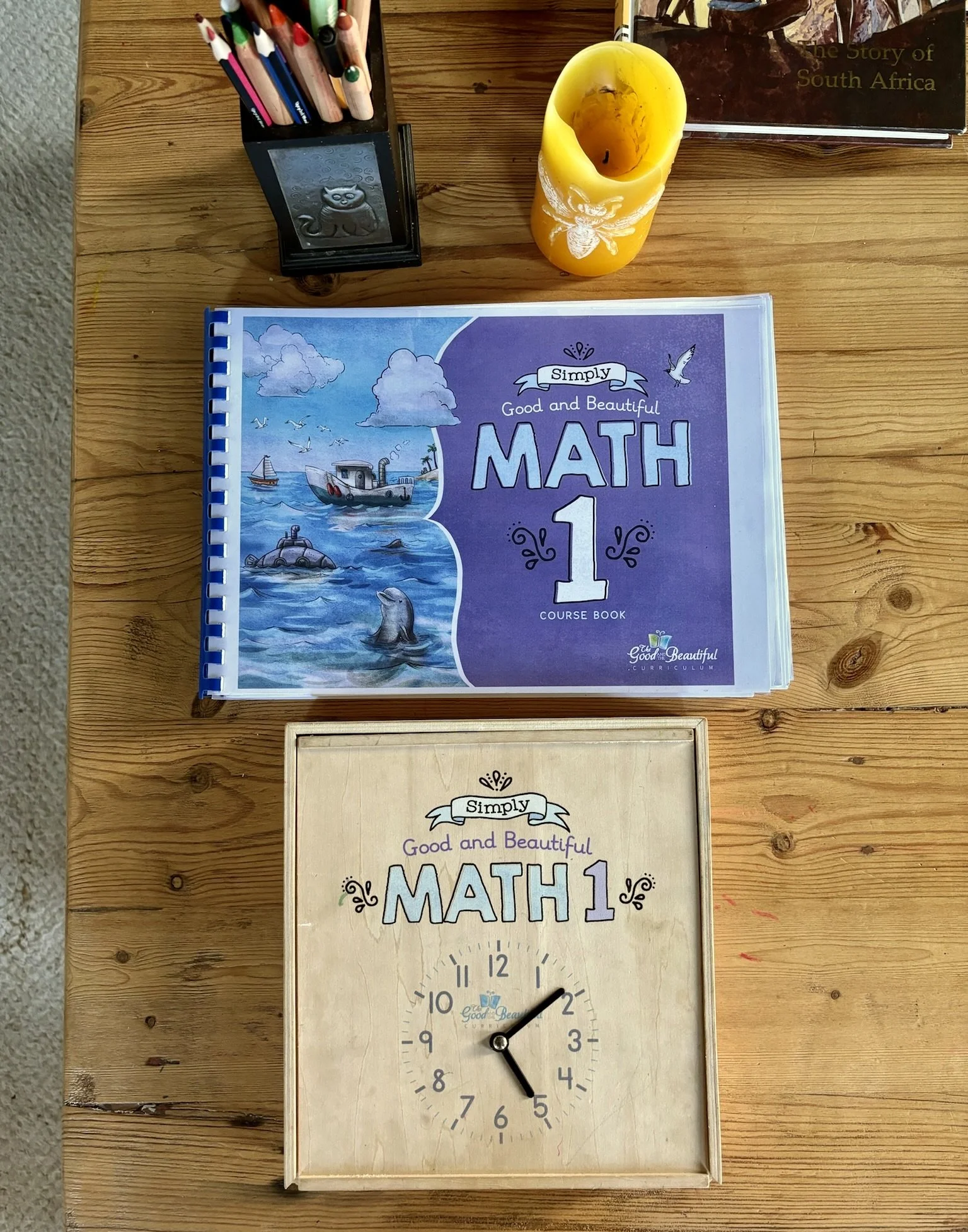
We started off the year only doing Life of Fred and a traditional ‘quick’ Math workbook I found at a local stationary store and it was going okay. We love Life Of Fred, but I just felt that we were needing to cover the basics a bit more thoroughly (especially for my very creative/daydreaming daughter) and so after doing a quick placement test, we moved back to The Good & The Beautiful (see my post on Year 1 for more info on this) & started with the Level 2 book halfway through the year. We hadn’t finished Level 1 but had got 3/4 of the way through and I felt confident that Evs would catch up anything she might have missed. It is a spiral approach so the lessons ‘circle’ back and touch on previously taught concepts. We were only schooling on average, 3 mornings a week, and my focus was less on maths and more on the other subjects, and so this has been on my list to prioritze this year. Taking things slower definitely helped though, as both of us were getting frustarted so I am happy with where we are moving forward.

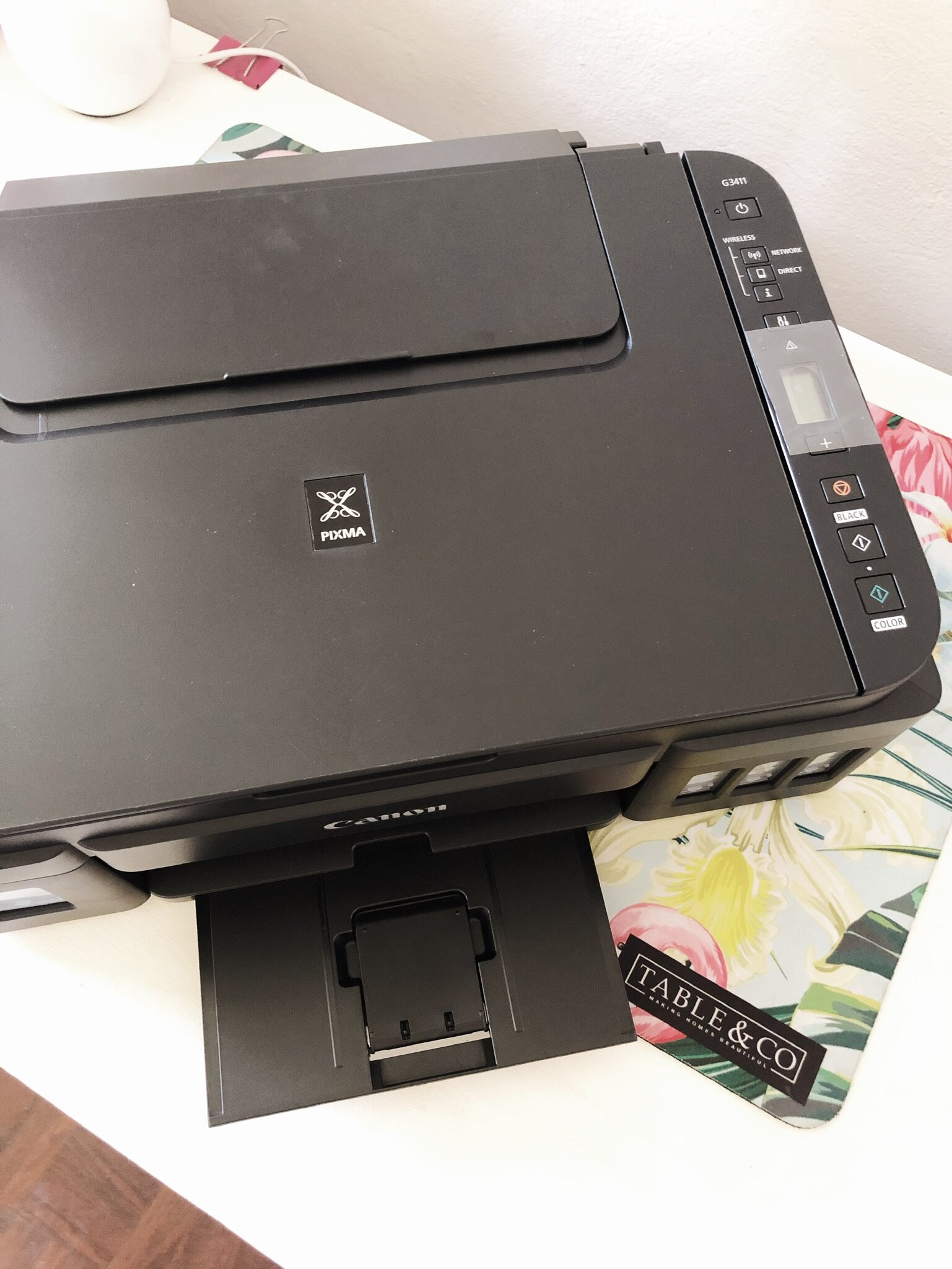
After spending a near fortune in having the entire years Math Books printed and bound for the last 2 years, I have decided to just print the lessons a few at a time here at home. I keep the loose pages in a flip file, and then just take out the pages we need for the day. I do have a nice eco friendly printer (here is a full review of our last printer, the Canon G3411, which I have since upgraded from to the Pixma G3470 simply because the previous one was not compatible with my Mac on wifi, and I was having to manually disconnect from the wifi and connect to the printer every time I needed to print…it was such a pain…but only something fellow Mac users would need to worry about…apart from that the printers are very similar).

Geography
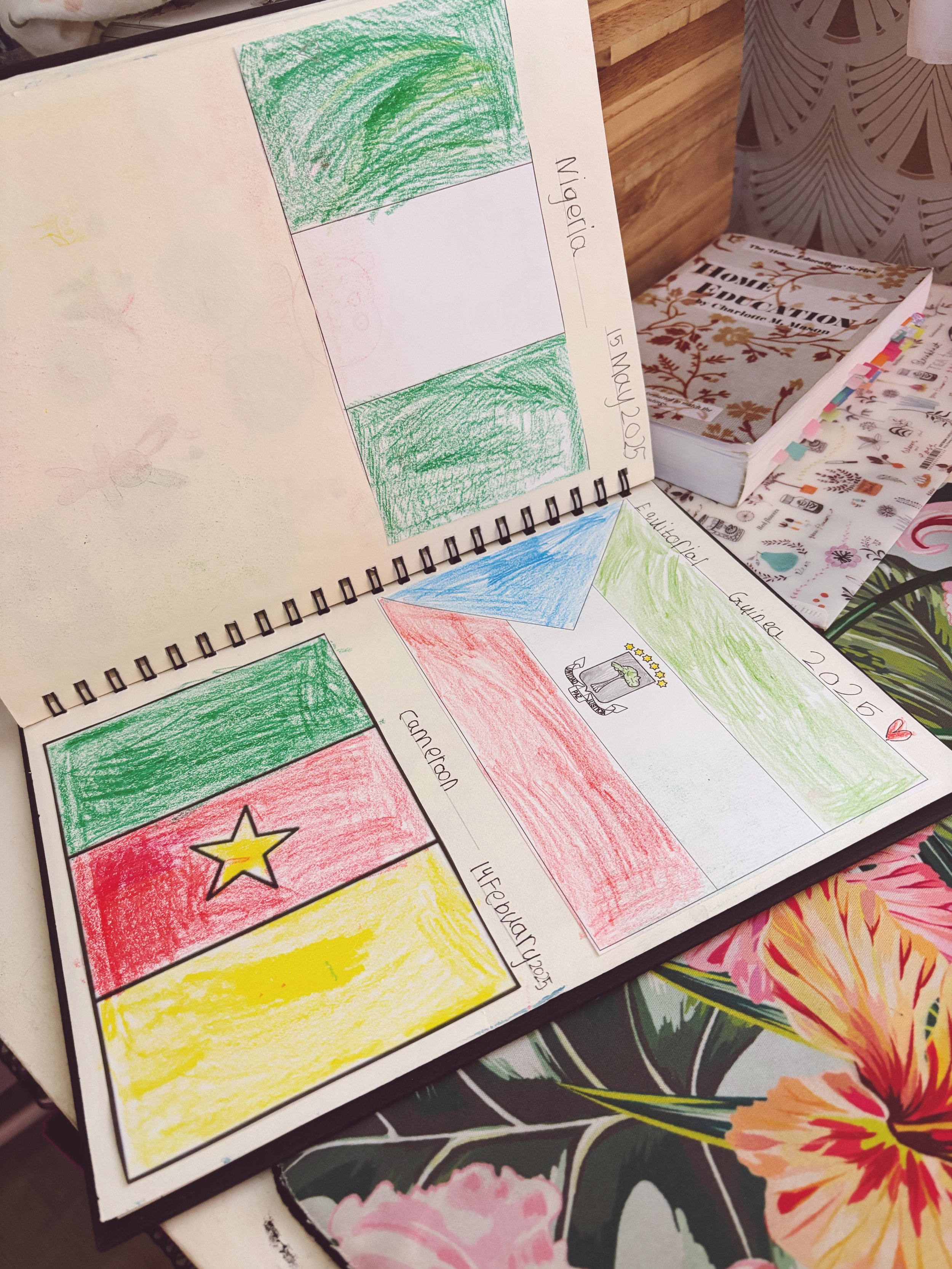
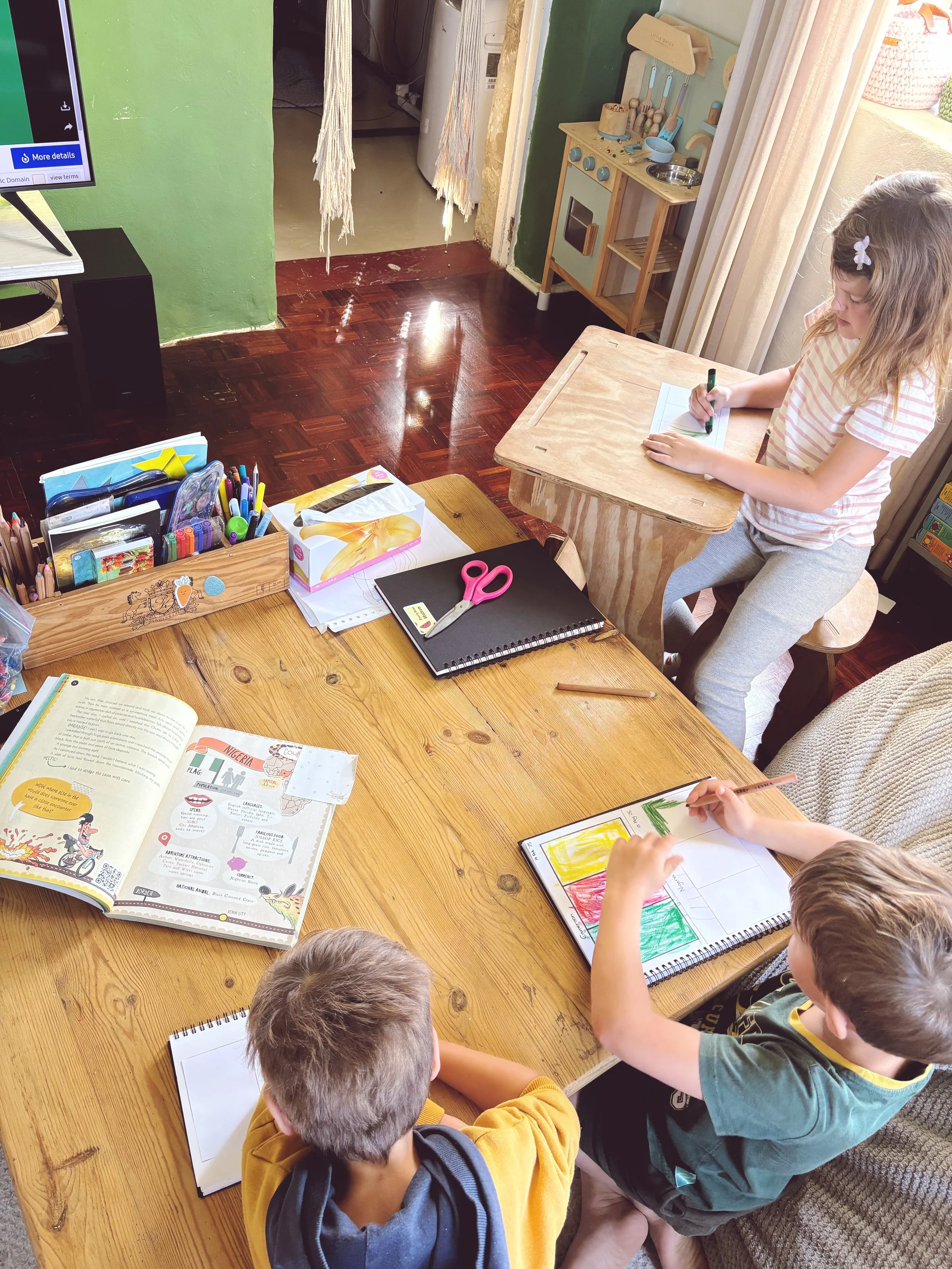
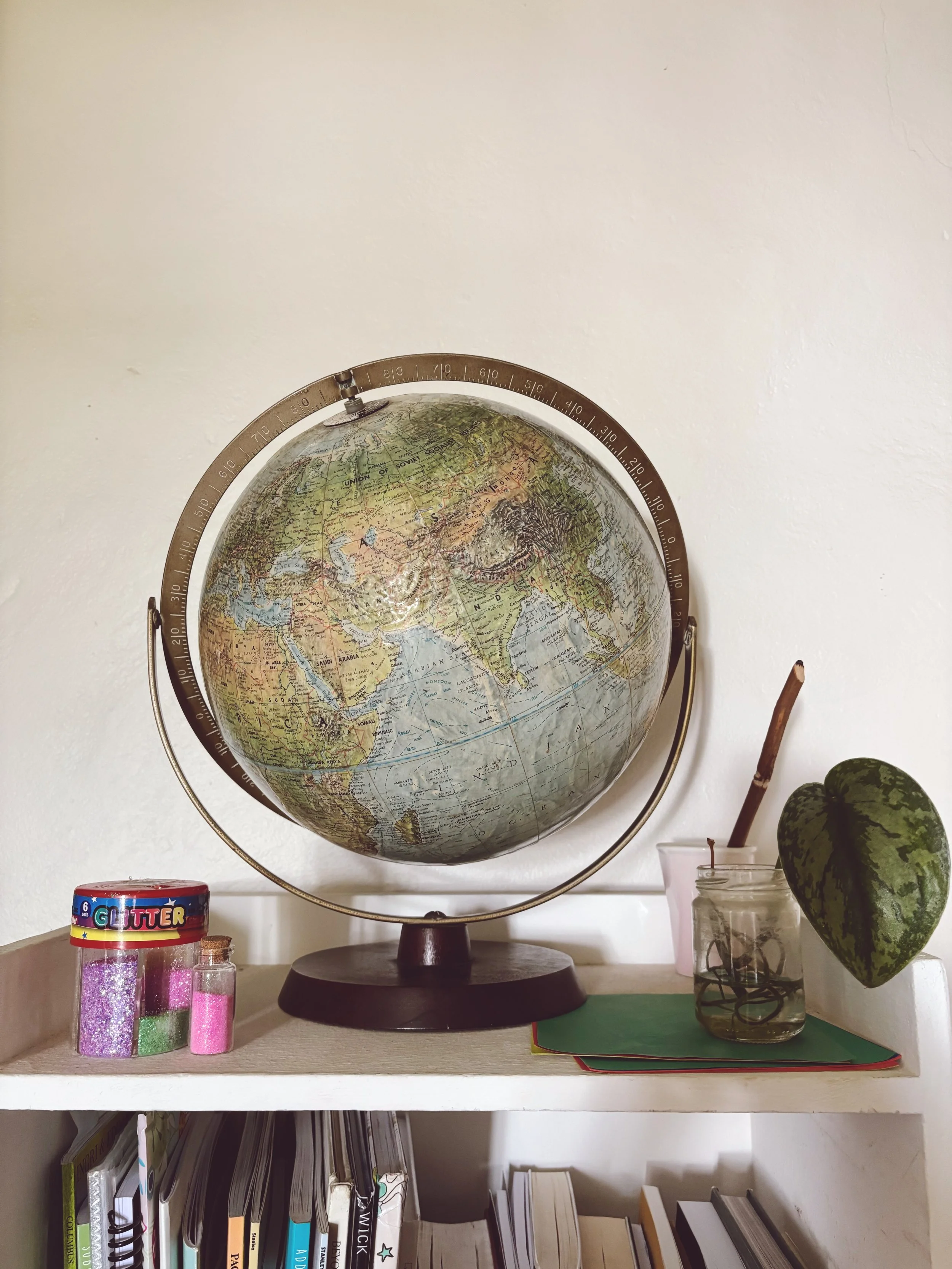
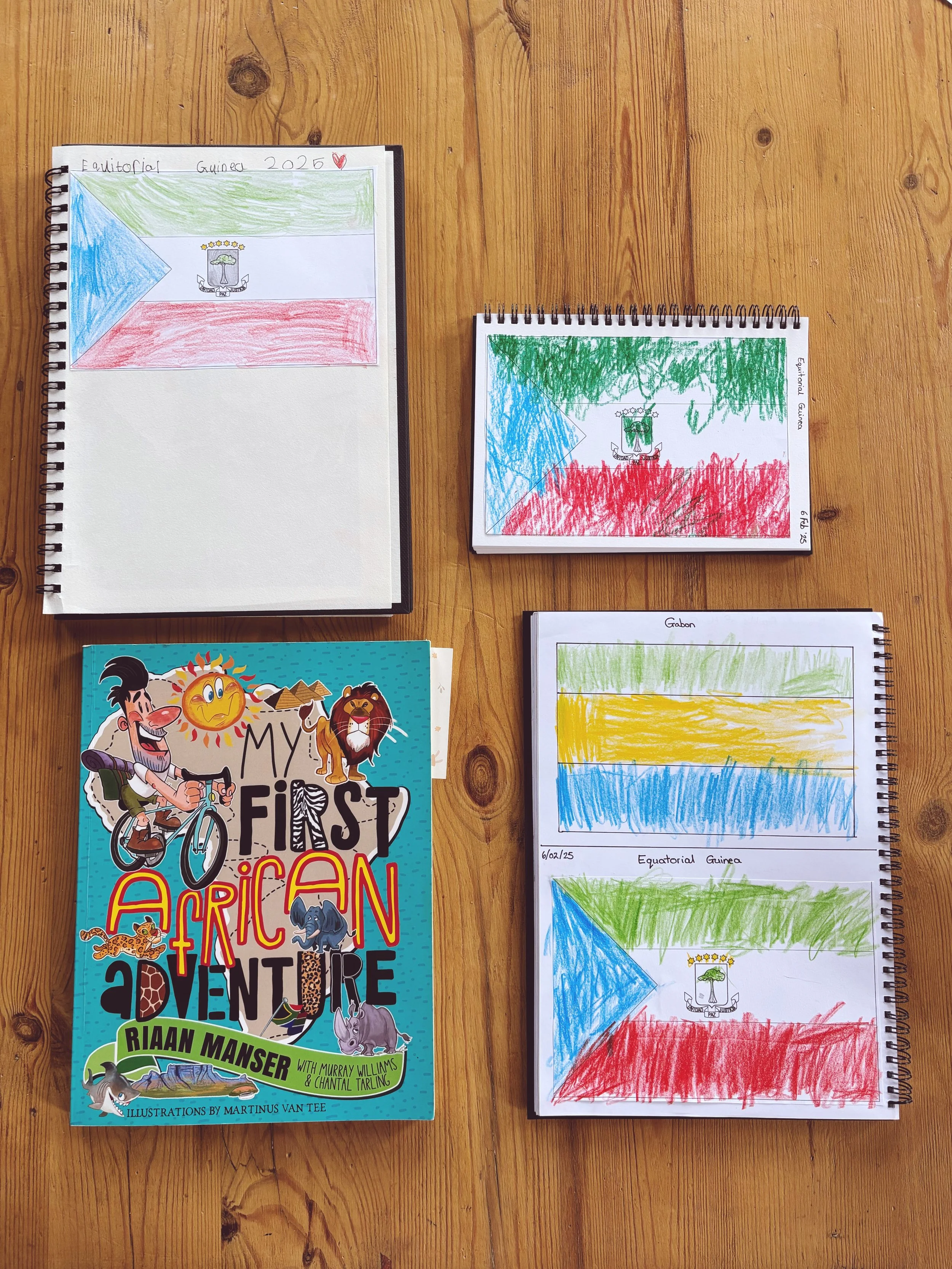
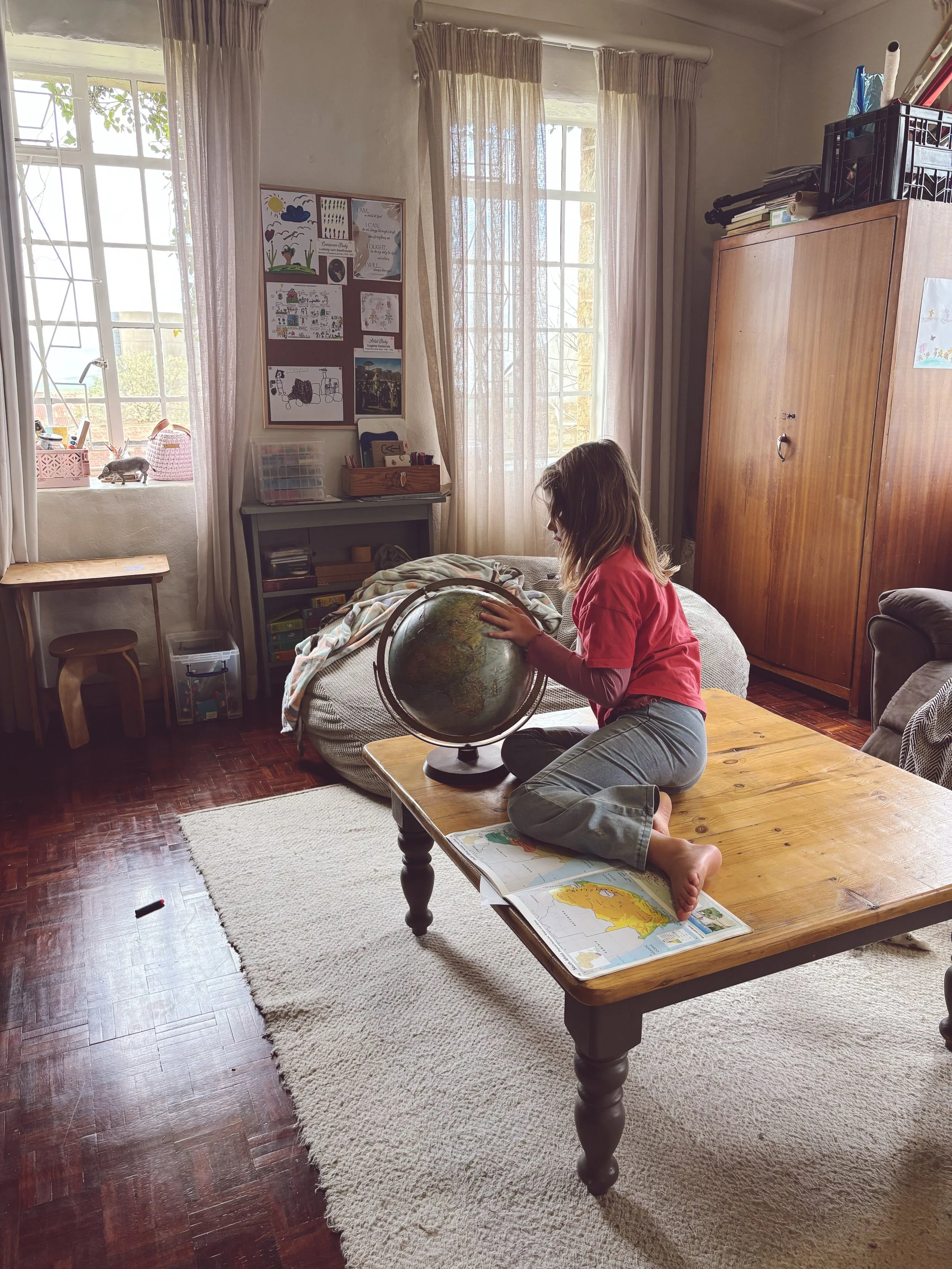
Geography was something I didn’t feel we did enough of, especially with regards to mapwork (another thing to add to the list for the next year!). I simply used our globe to point out the countries we read about in our books. For more South African Geography, we carried on using the Riaan Manser ‘My First African Adventure’ which we had started using a few years ago, but didn’t get very far. This was a fun thing to do with all of my kiddies, and I then had them colour in the corresponding flags for the country we were reading about.
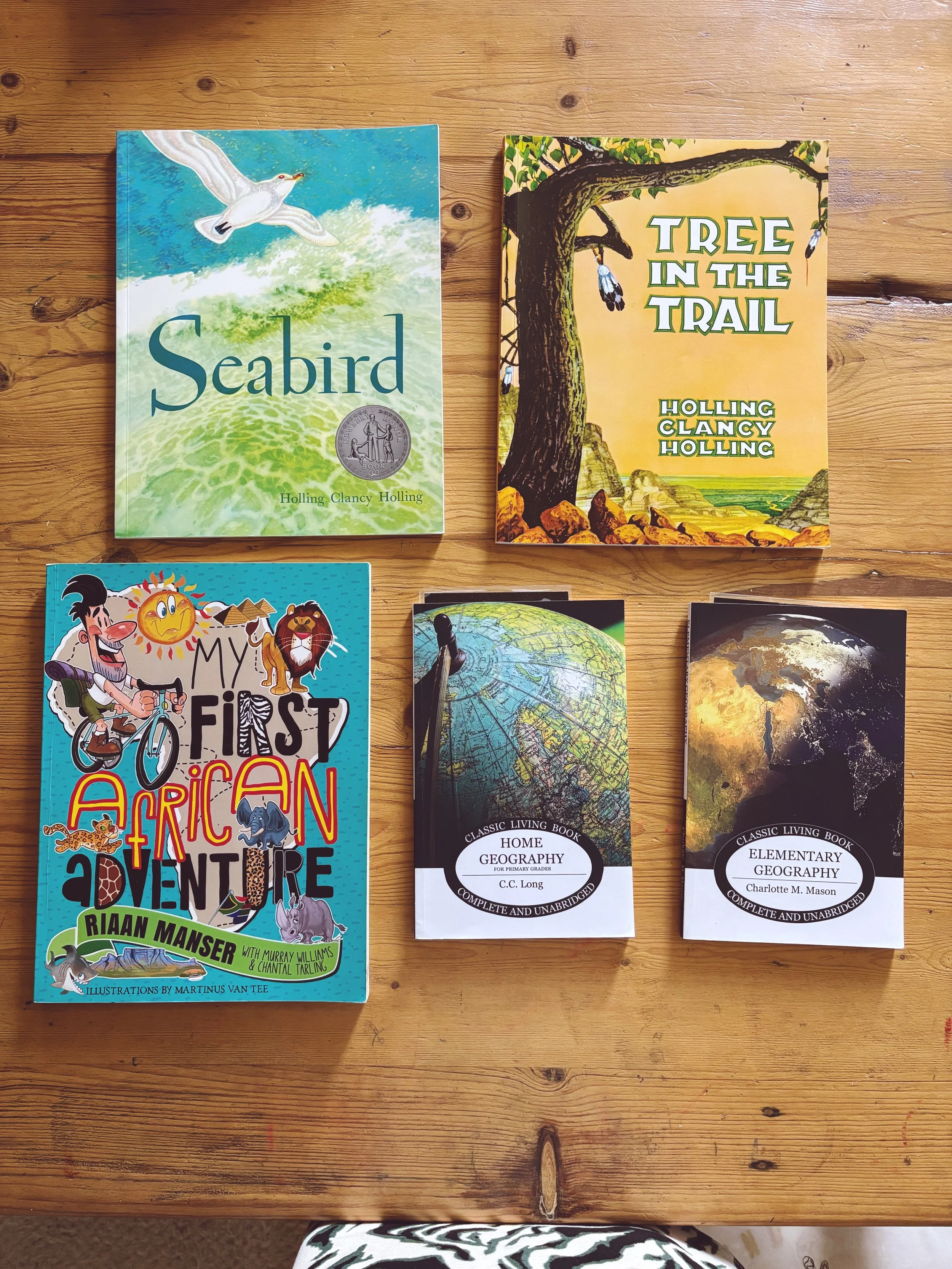
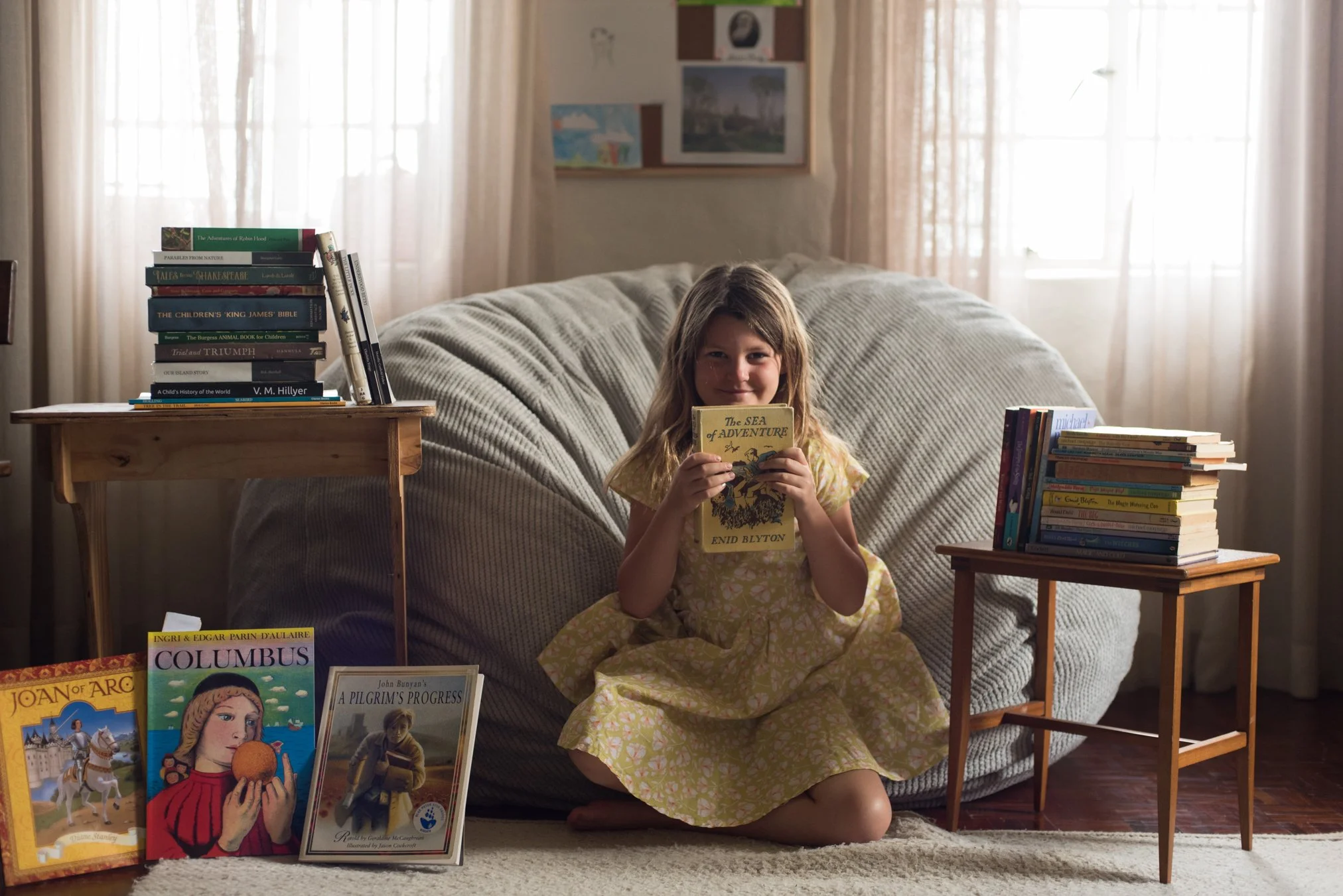
This next year I plan on doing much more South African geography (and using blank maps so we can work on our map work skills). The Home Geography & Elementary Geography books (pictured above) were nice to use during Morning Time, and these I simply read through a page at a time (sometimes it was a poem, sometimes a bit more of a detailed explanation of the compass or how the seasons work. It would have been nice to do more hands on activities with these lessons, but alas, I just didn’t get there this year…next year!).
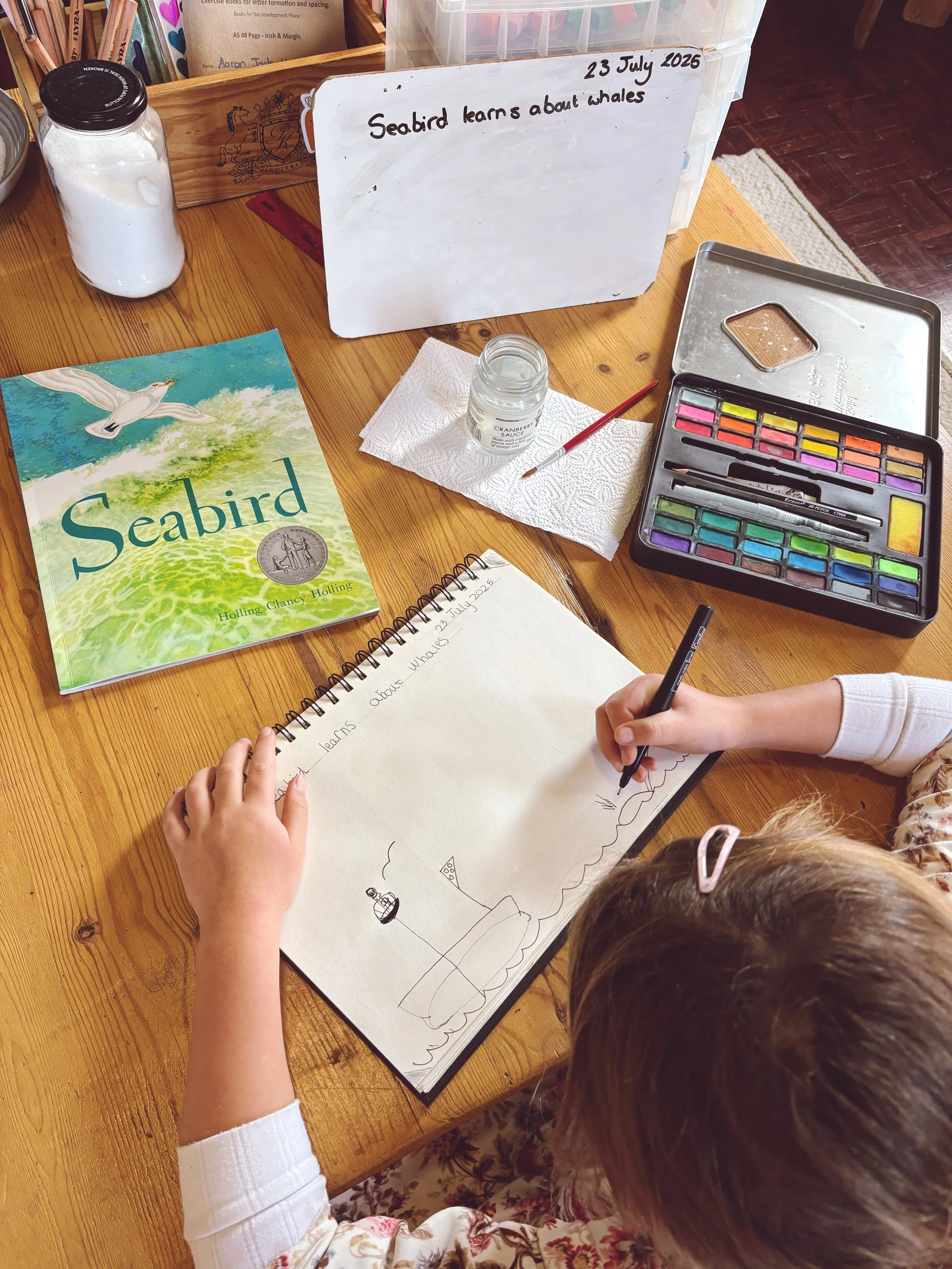
Seabird & Tree in the Trail were interesting books, but I think I may substitute these books for more South African living books on adventure. They are quite difficult to get hold of (and usually expensive!), and while they are nice to learn about the US, there are some wonderful South African travel adventure books out there. For example, the Jay Heale ‘South African Sea Adventures’ would work well.

Nature Study & Science

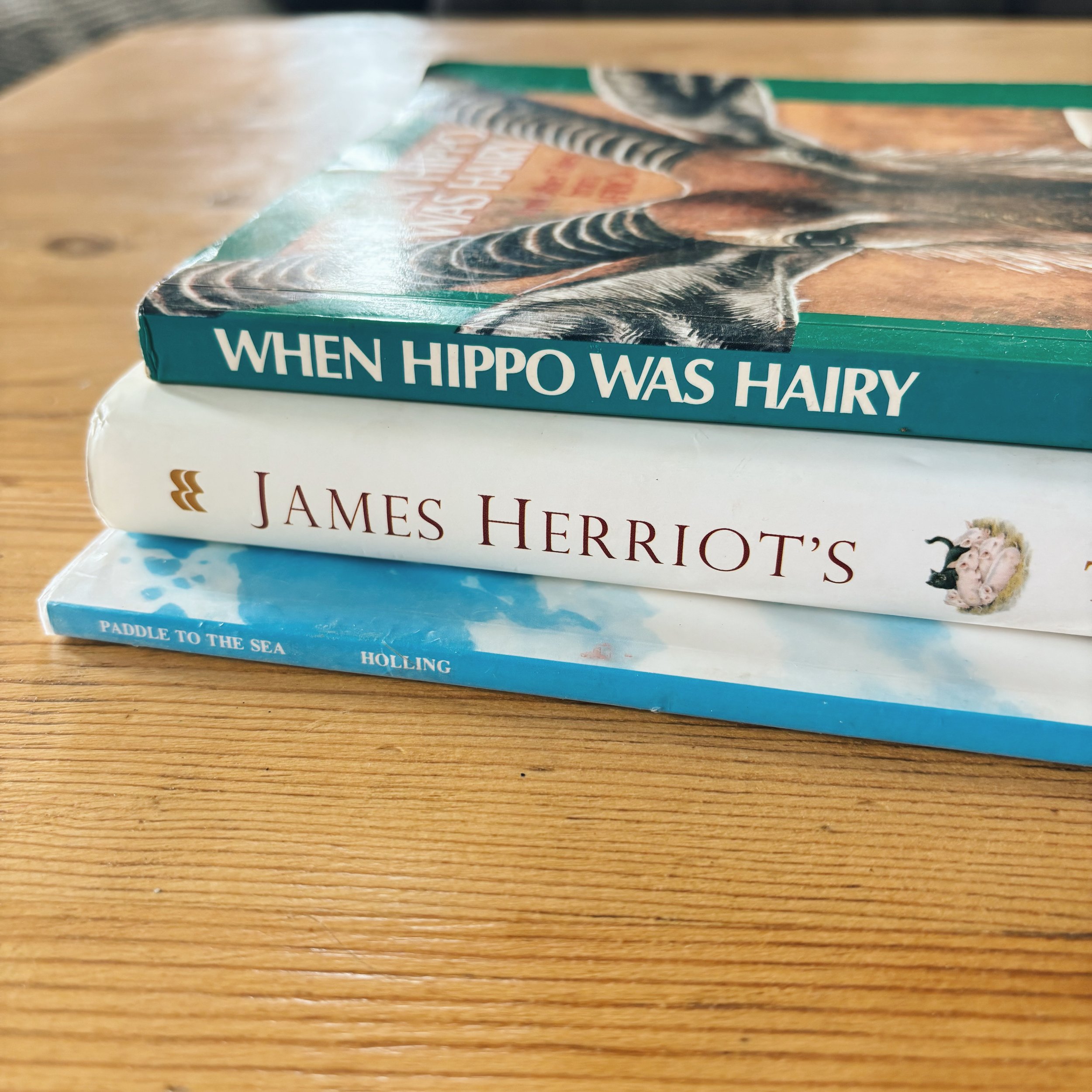
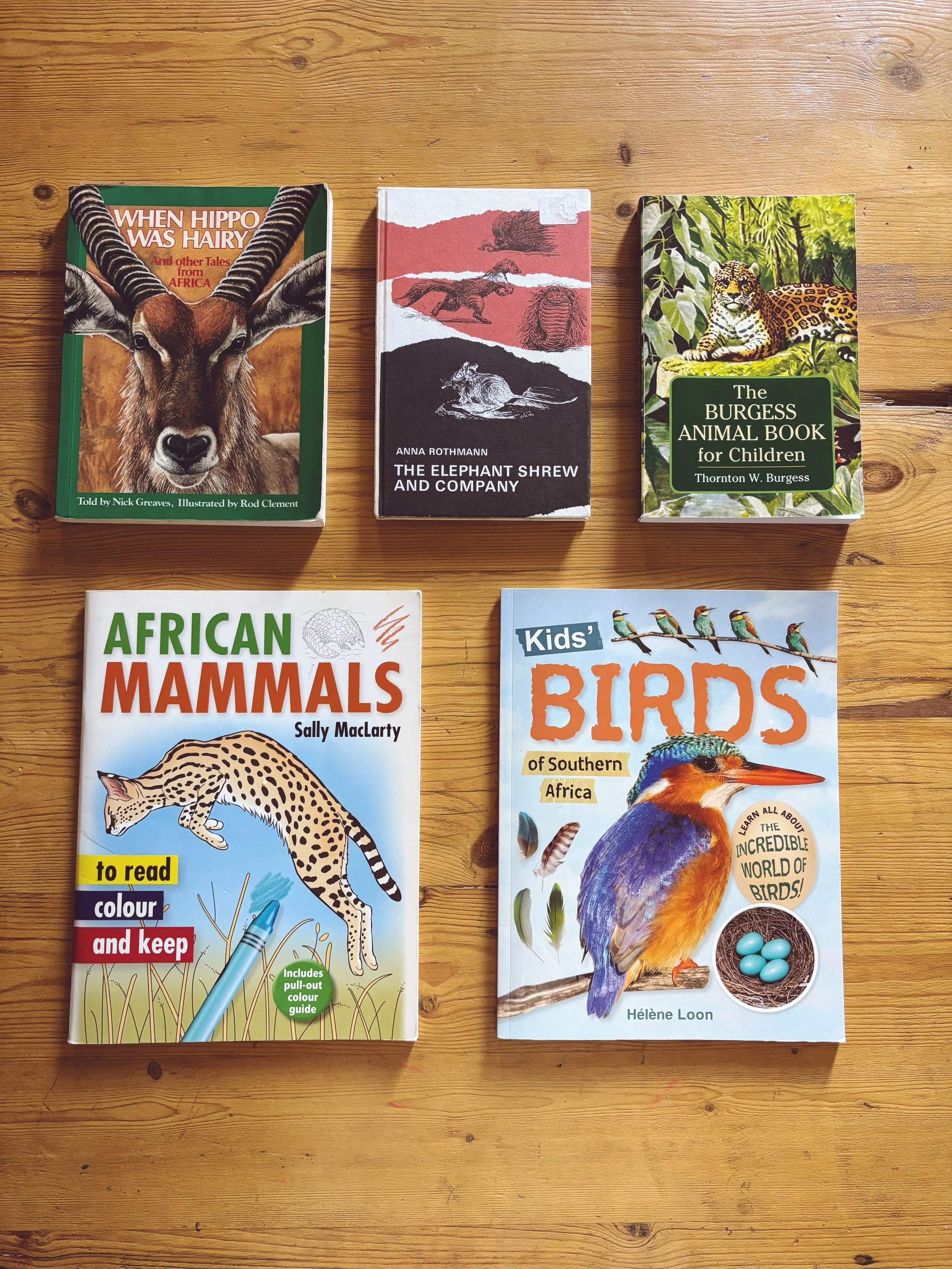
Although we stared off with the Burgess Animal book, I quickly dropped it in favor of the wonderful (South African) ‘The Elephant Shrew and Company’ by Anna Rothmann. I also have her bird book, The Crow and Company, both of which I picked up second hand on BobShop. There really isn’t much point in learning about European/American birds and animals when we have such a variety of local critters that we can actually hear the calls of and see in the flesh. When Hippo was Hairy (there are a few different books in the series) are also wonderful to add in for some more African myths and tales.
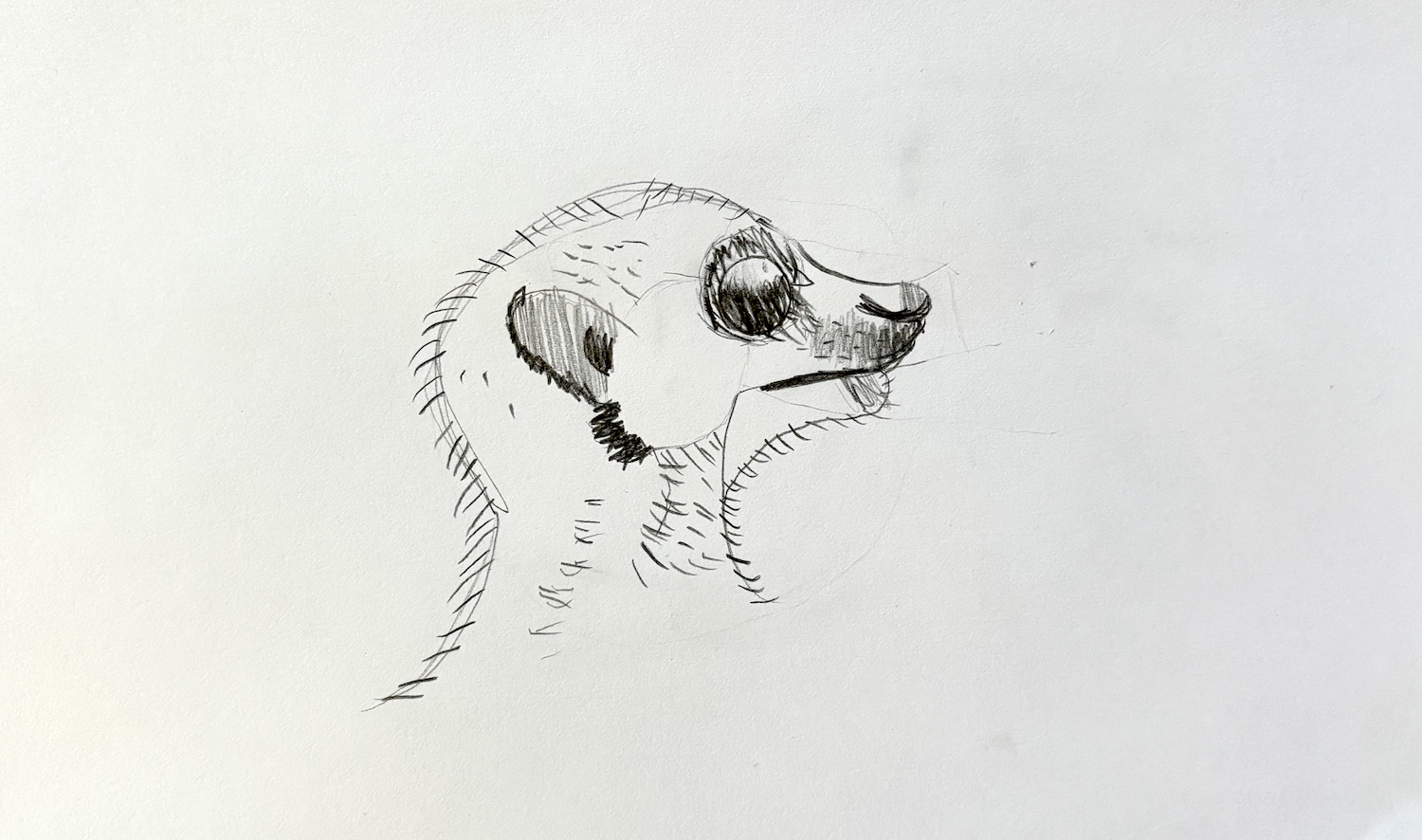
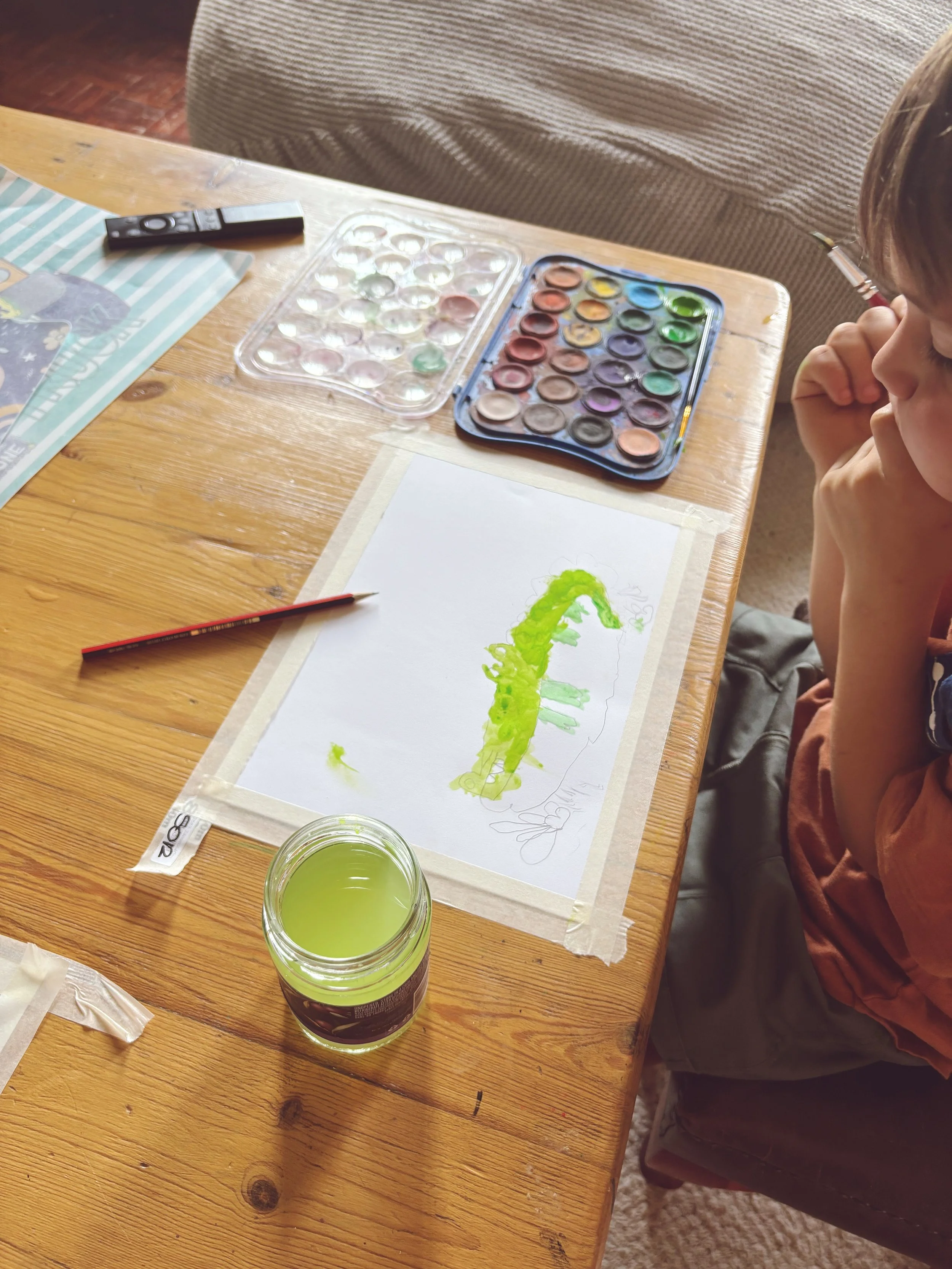
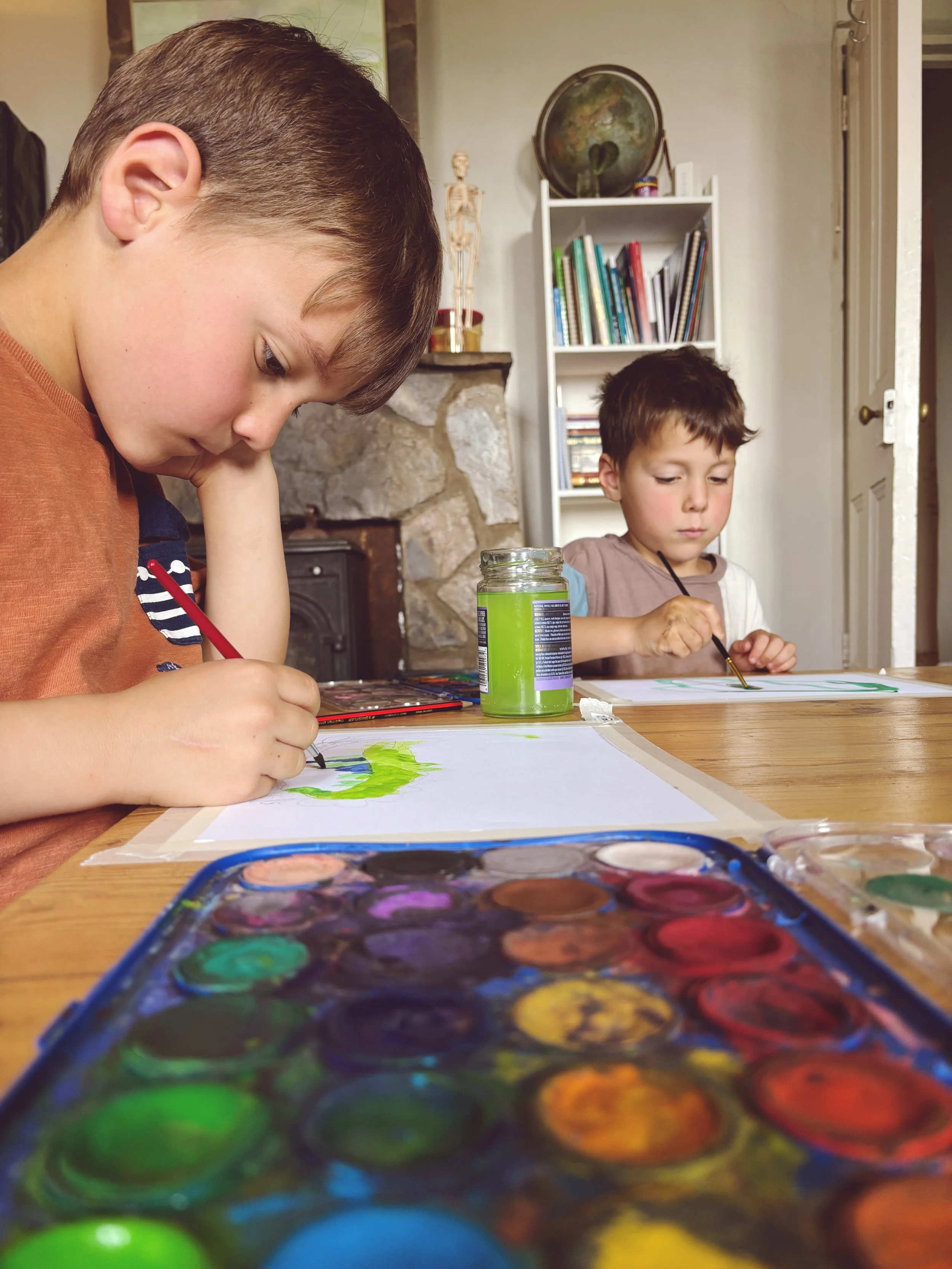
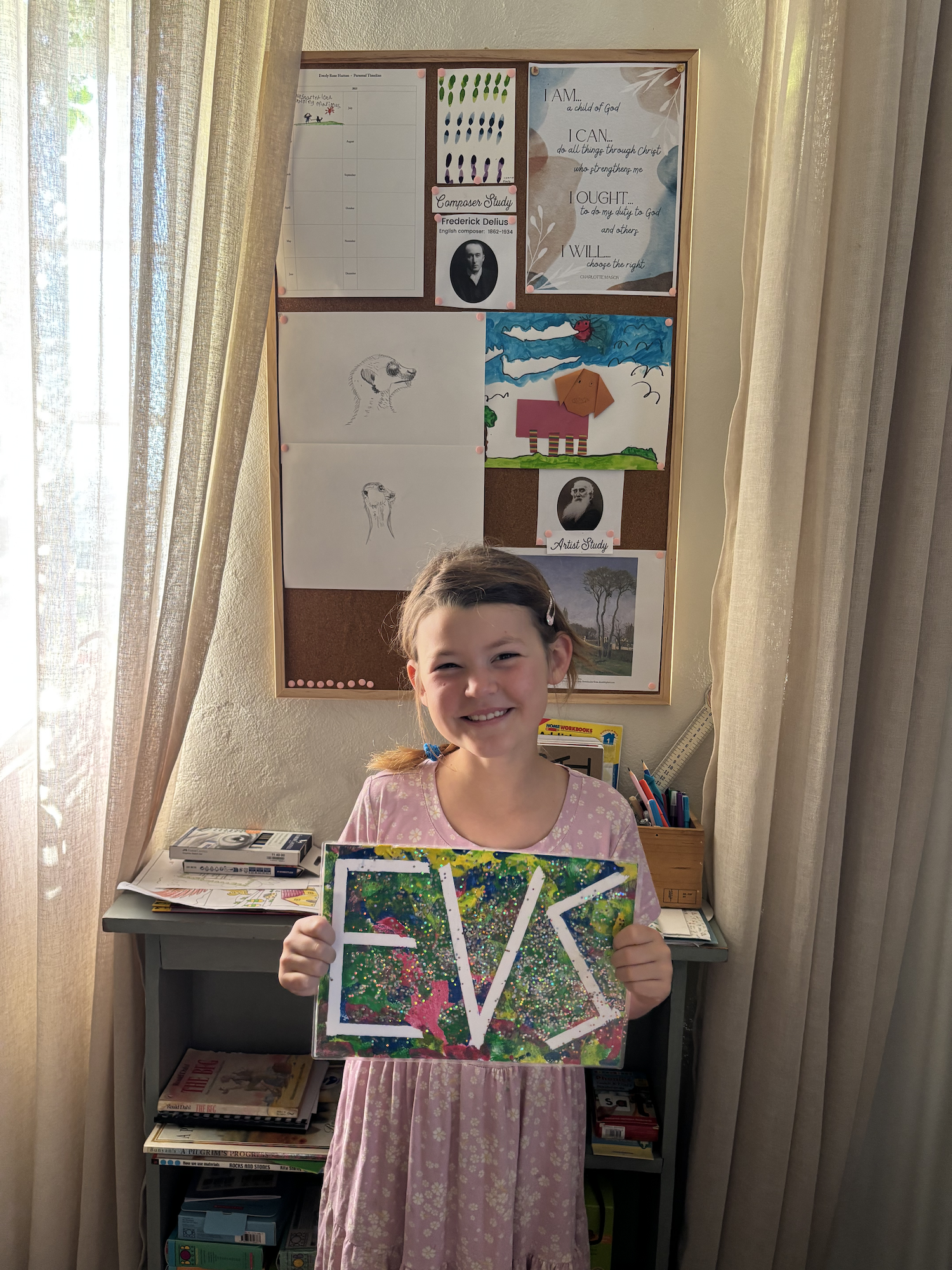
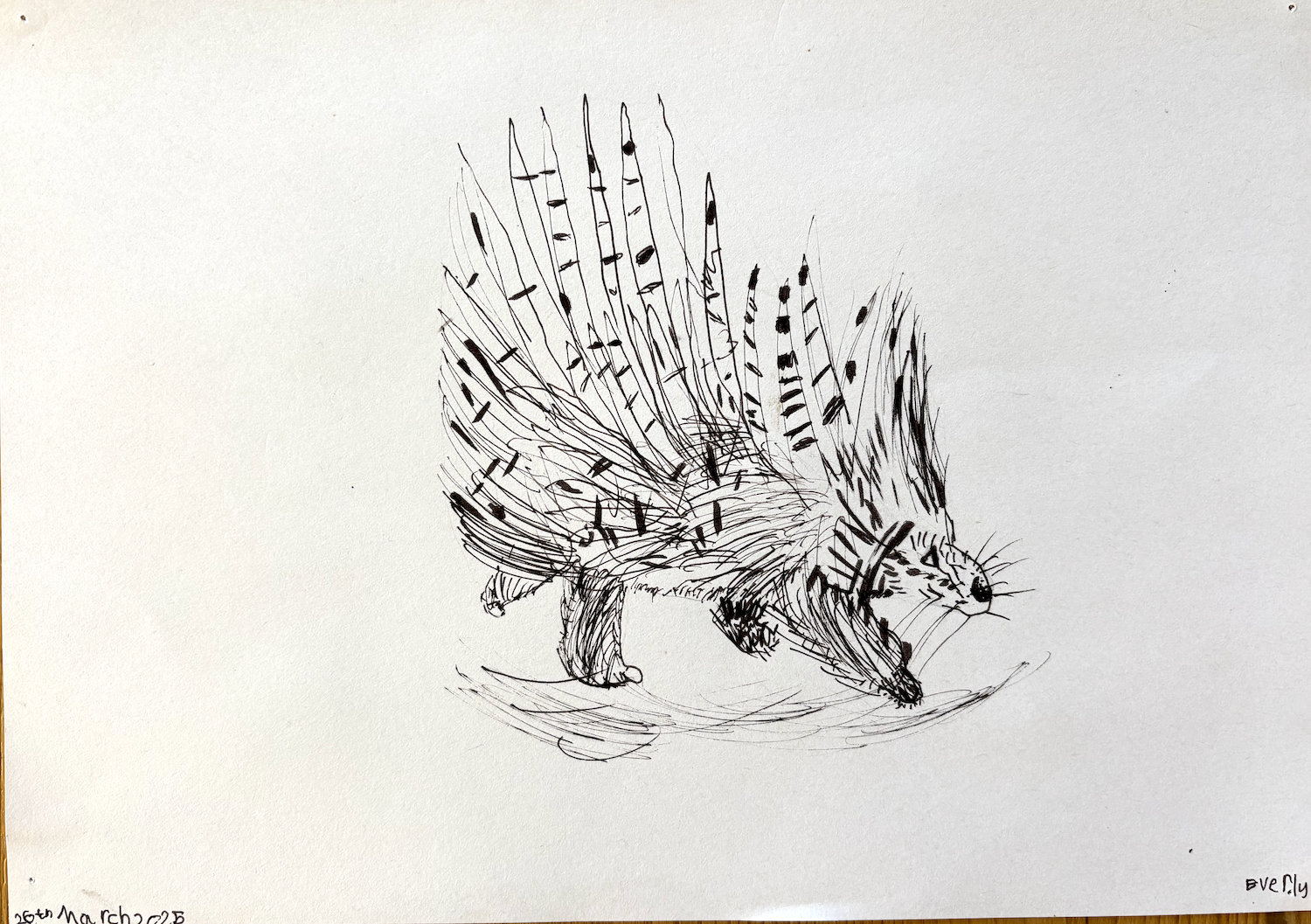
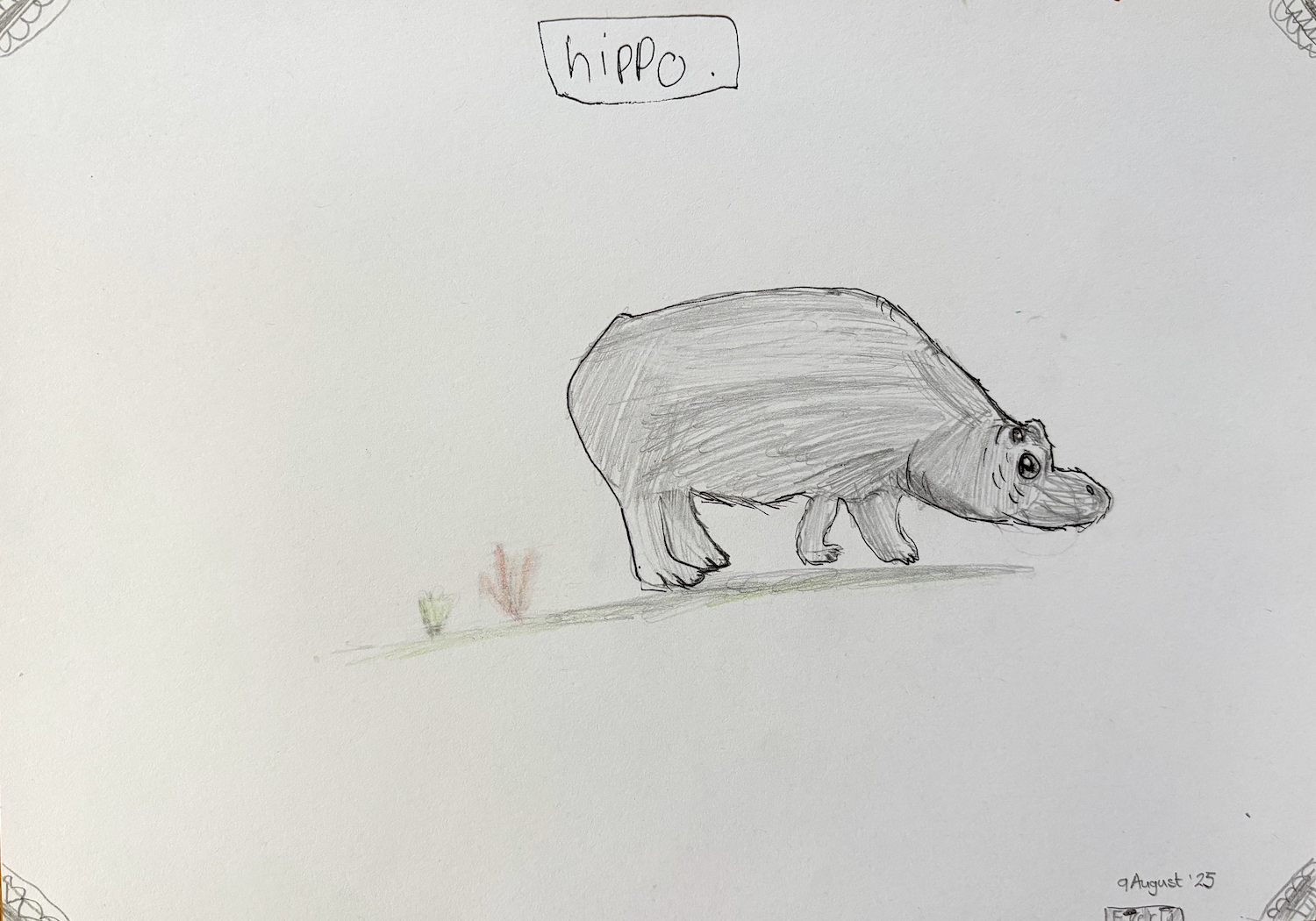
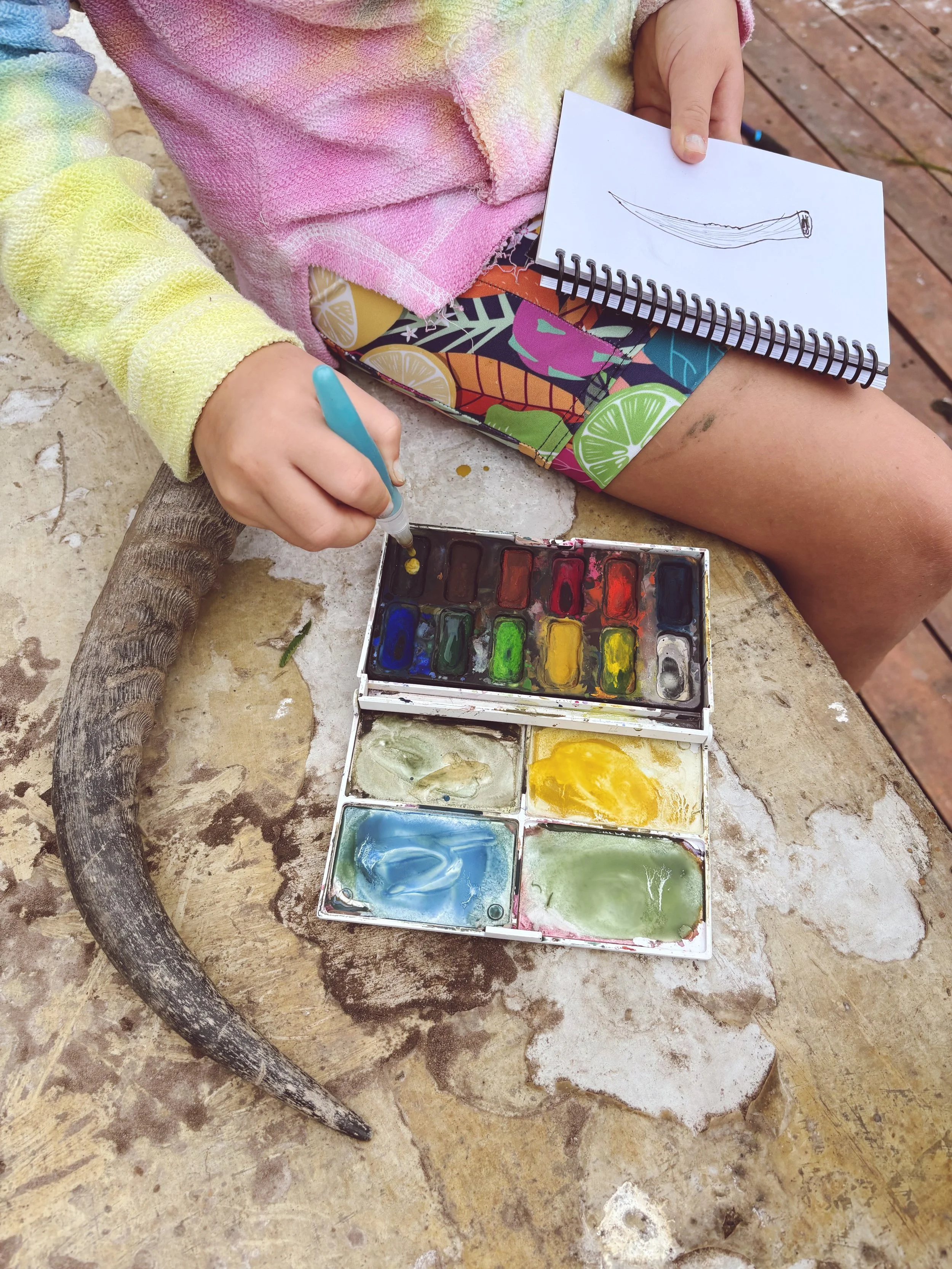
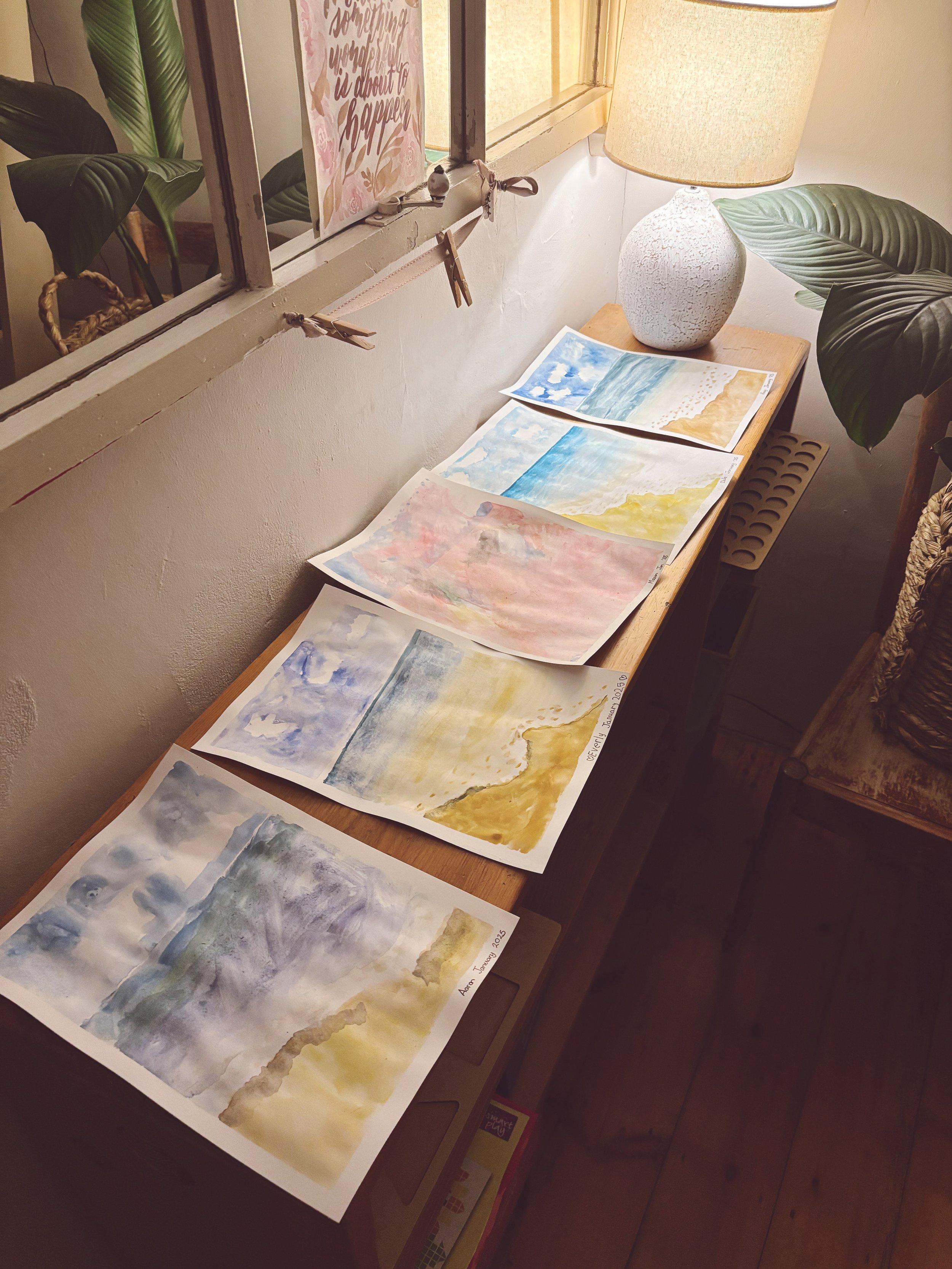
We used our animal stories as subjects for art projects (I simply search for ‘line drawing tutorials’ on Youtube and then we follow along with the video). Click here for my favourite art/nature journaling supplies. I’ve loved how beautifully these have come out (even though that isn’t the point, I know) and I had my kids do them on pieces of paper, rather than in their journals, so that I can display them around the house. Here are a selection of Everly’s artwork.
As far as actual (proper Charlotte Mason style) nature journaling went, we didn’t do this nearly as often as I had planned. This is something I definitely have at the top of my list to do more of this next year.

History & Tales
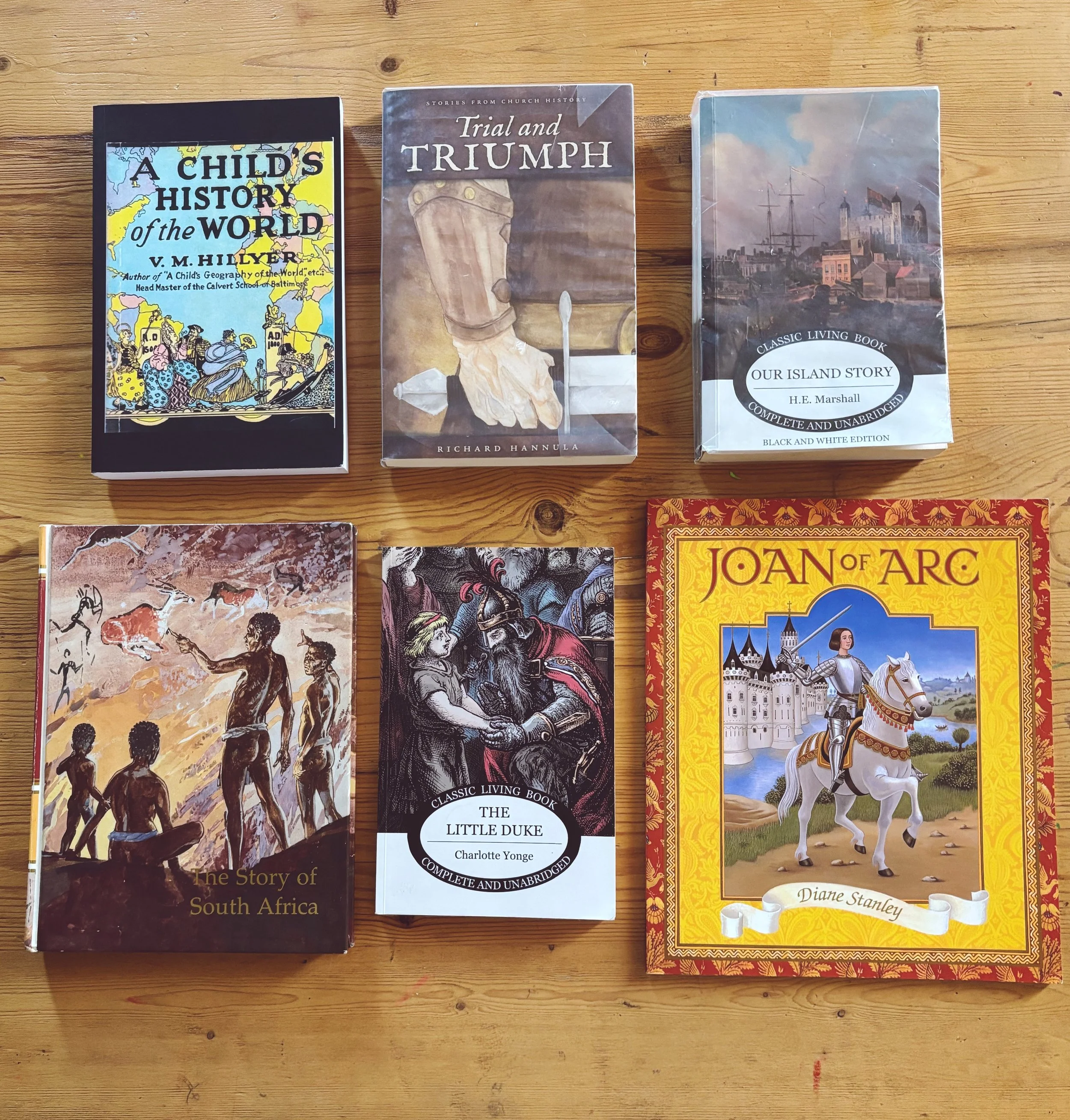
I only got hold of a copy of A Children’s History of the World in the 3rd term, and so I used the Childcraft The Story of South Africa in place of it in terms 1 & 2. I plan on doing more local (South African) history in the coming years but finding copies of local living books has been a bit of a challenge as they aren’t easy to come by.

We continued with Our Island Story & Trial & Triumph (pretty heavy going in some places, but lots of really good discussions came out of that) and Little Duke & Joan of Arc (although it has us both in tears at the end) were pretty firm favourites for Everly. I photocopied and printed some of the Little Duke images in the book for Everly to colour in while she listened, to help keeps things interesting.

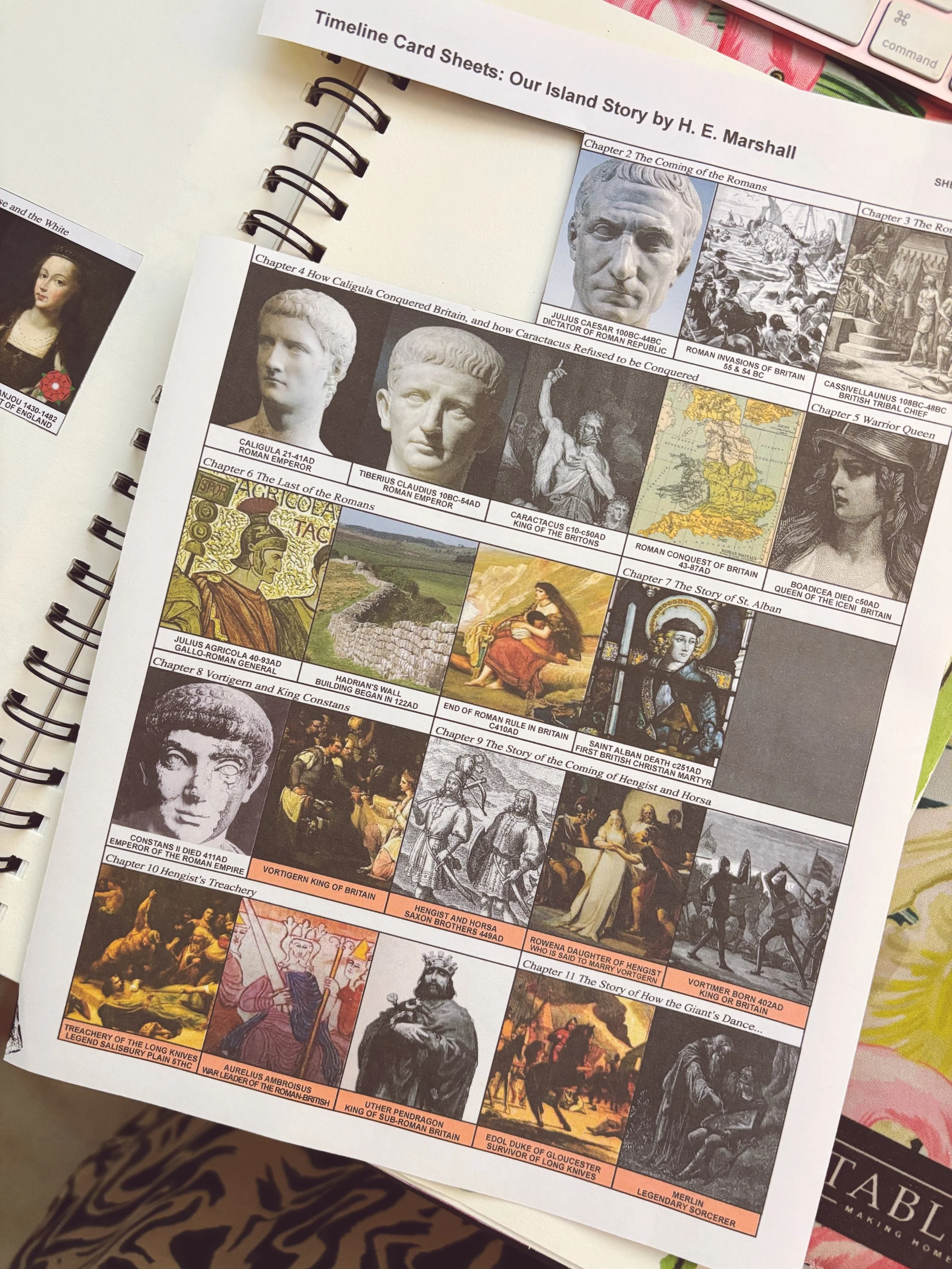
And in the Term 2 I found these great poster/printable timeline cards for each chapter in Our Island Story. While I think the idea is to use the corresponding chapter images to place on a timeline, I didn’t quite get there this year and instead printed them out on sticker paper (bought on Takealot here), and then had Everly stick them into her School Journal and write a title and the date. I am hoping to start a visual history timeline this year. Sometimes she added her own little drawings to the page too.
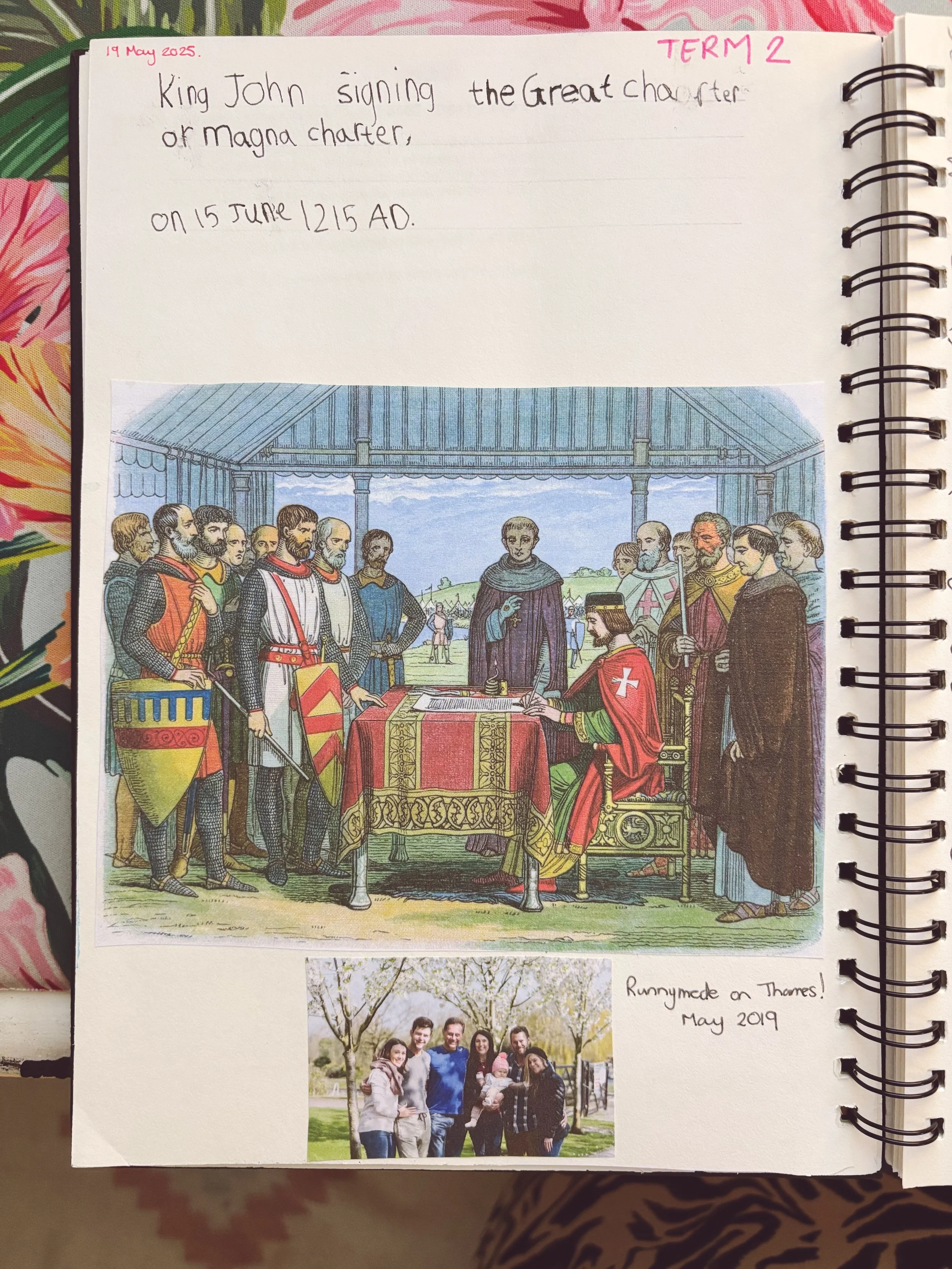
Some really fun connections were made as back in 2019 we went on a family trip to the UK with a little 8 month old Everly, and stayed at a hotel called the The Runnymede on Thames in Surrey. This was (close to!) where the Magna Charter was signed (and this was part of Our Island Story reading in Term 2). I found a photo of us all and it was a really exciting, real life lesson of history connections.

Literature:
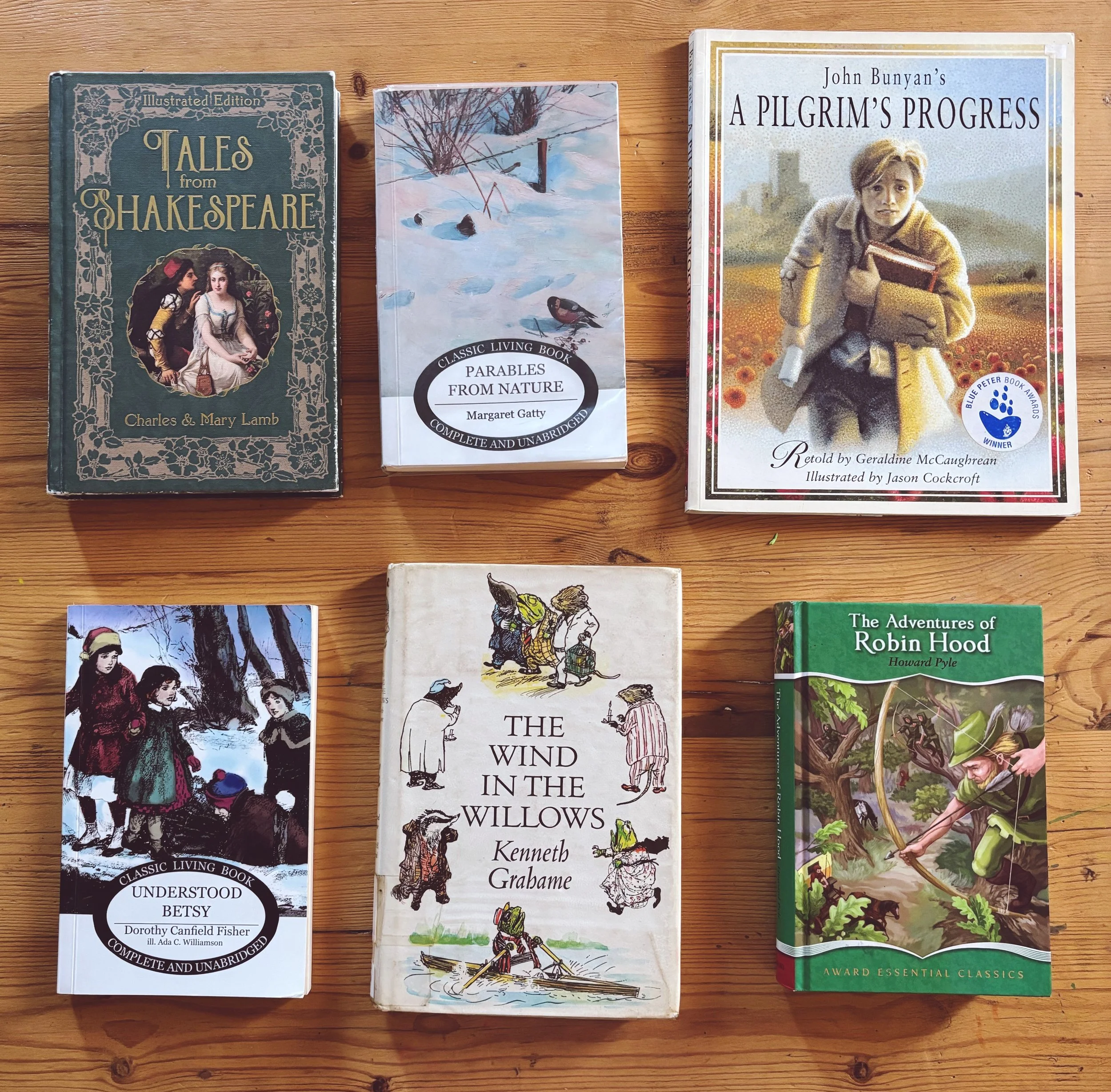
The Wind in the Willows (Term 1) and Robin Hood (Term 3 and finished off in the holidays) I set as Everly’s own reading books for her to read herself. She then had to come and narrate to me what she had read. I had her do a couple of drawn narrations for these, but they would also be nice audiobooks to have on hand for free time/weekends and the holidays.

While we LOVE audiobooks in our family, I do feel strongly that as many physical copies of the scheduled books need to be read rather than listened to. Here is a nice bit of extra info from the Ambleside Advisory on audiobooks:


“Note on Audiobooks: While links to audio books are added as a courtesy, Miss Mason's approach to grammar and composition is heavily dependent upon the children receiving an immense amount of visual exposure to the written word over many years, so parents should exercise extreme caution in how many audiobooks they use each year. Our brains just work differently when we see the words.

For children who have difficulty reading, one solution is to have them follow the audio version along in a written text.
Librivox free audio is done by volunteers, and some are better than others. Heidi Nash has a list of some favorite Librivox readers. Be aware that apps, including Librivox, that have clickable ads can open a browser and allow children unfiltered access to the internet, even when browsers have been disabled by the parent. There are options: either download mp3 files from Librivox and listen without the app, or only install the app on a parent-controlled device. Librivox has a pay option to turn off ads.

Cindy Rollins did a Circe Mason Jar podcast that included the role of audiobooks with difficult books. There's an archived copy here.” AmblesideOnline


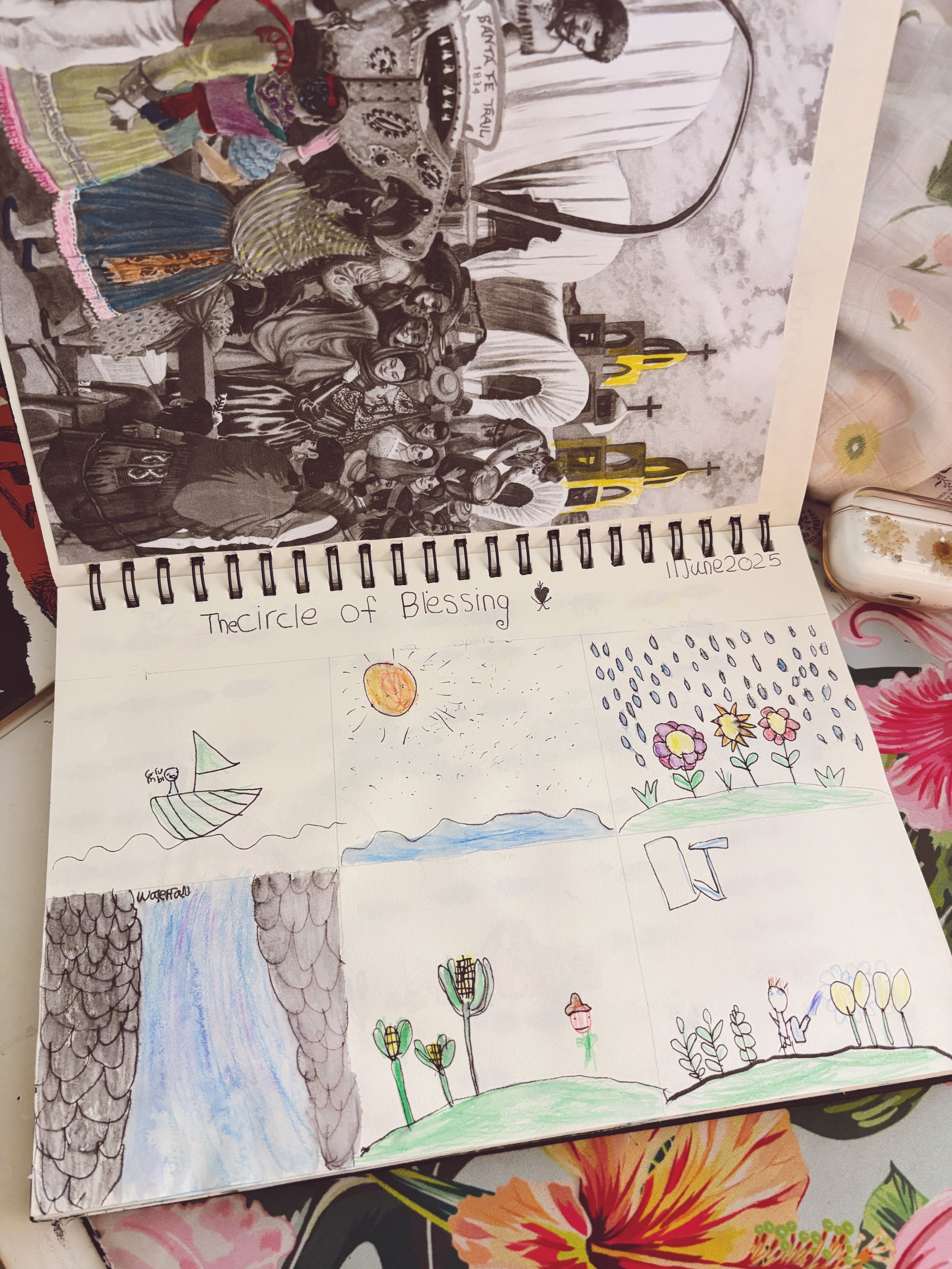
Parables from Nature was nice to use for drawn narrations, and I loved seeing which parts of the story Everly chose to use for these.

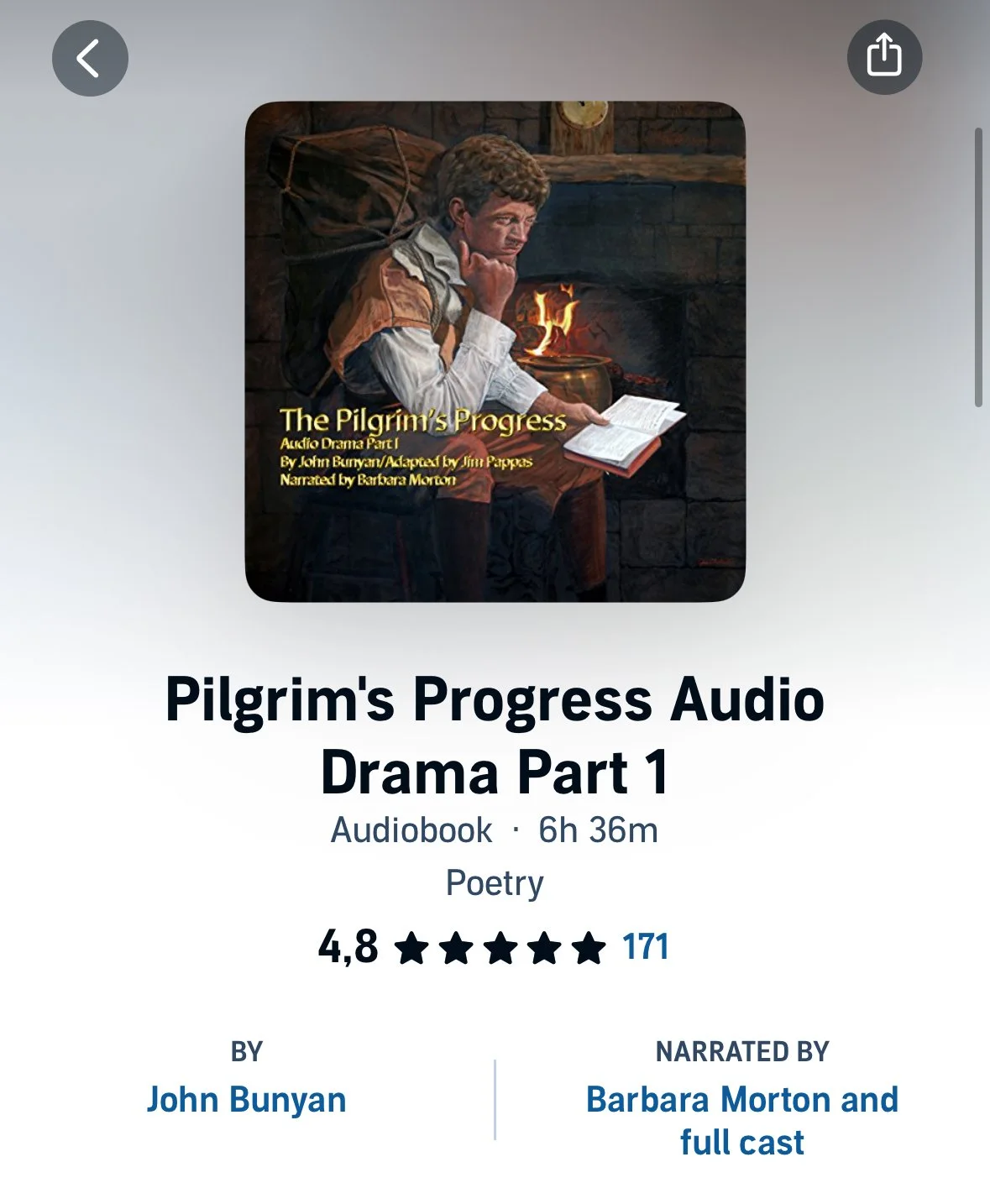
Pilgrims Progress: as per a recommendation on the Ambleside Forum (well worth a visit if you can look beyond the chunkiness/seemingly old school website feel, there is so much gold in there!) I used Audible for my kids to listen to the dramatized version of Pilgrim’s Progress (unabridged!). While it seemed to go way over their heads a lot of the time, I am amazed at just how much they could narrate and how much they enjoyed it. We will do the same for Part 2 (Christina’s Journey) as there is a dramatized version of that on Audible too. We also read through the book I found somewhere (pictured above) during some morning time too. And this year all 3 of my kids are listening to Little Pilgrim’s Progress on Everand as a ‘free listen’ during lunch time, which they are enjoying. I don’t require a narration from them for that.

Art
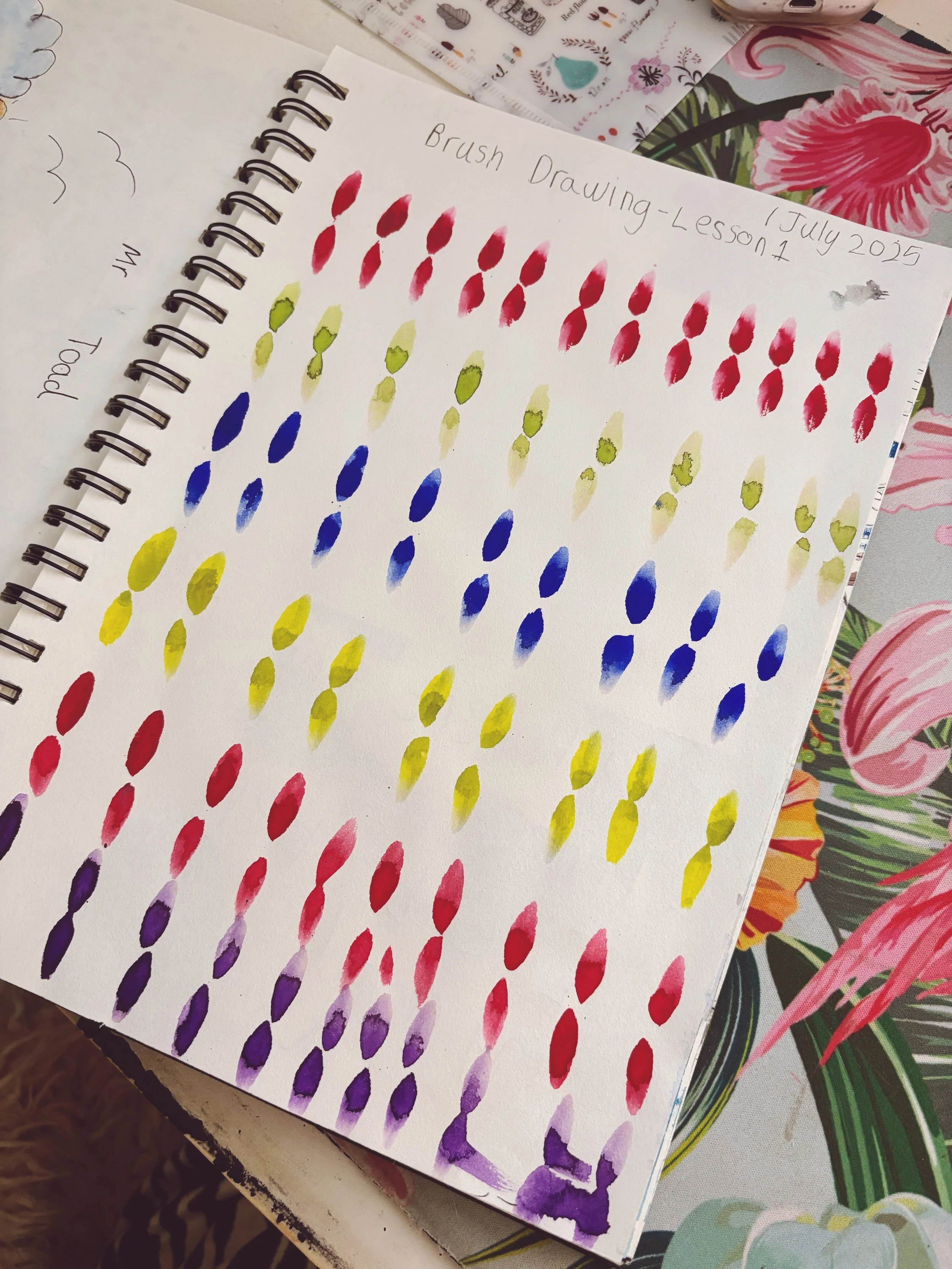
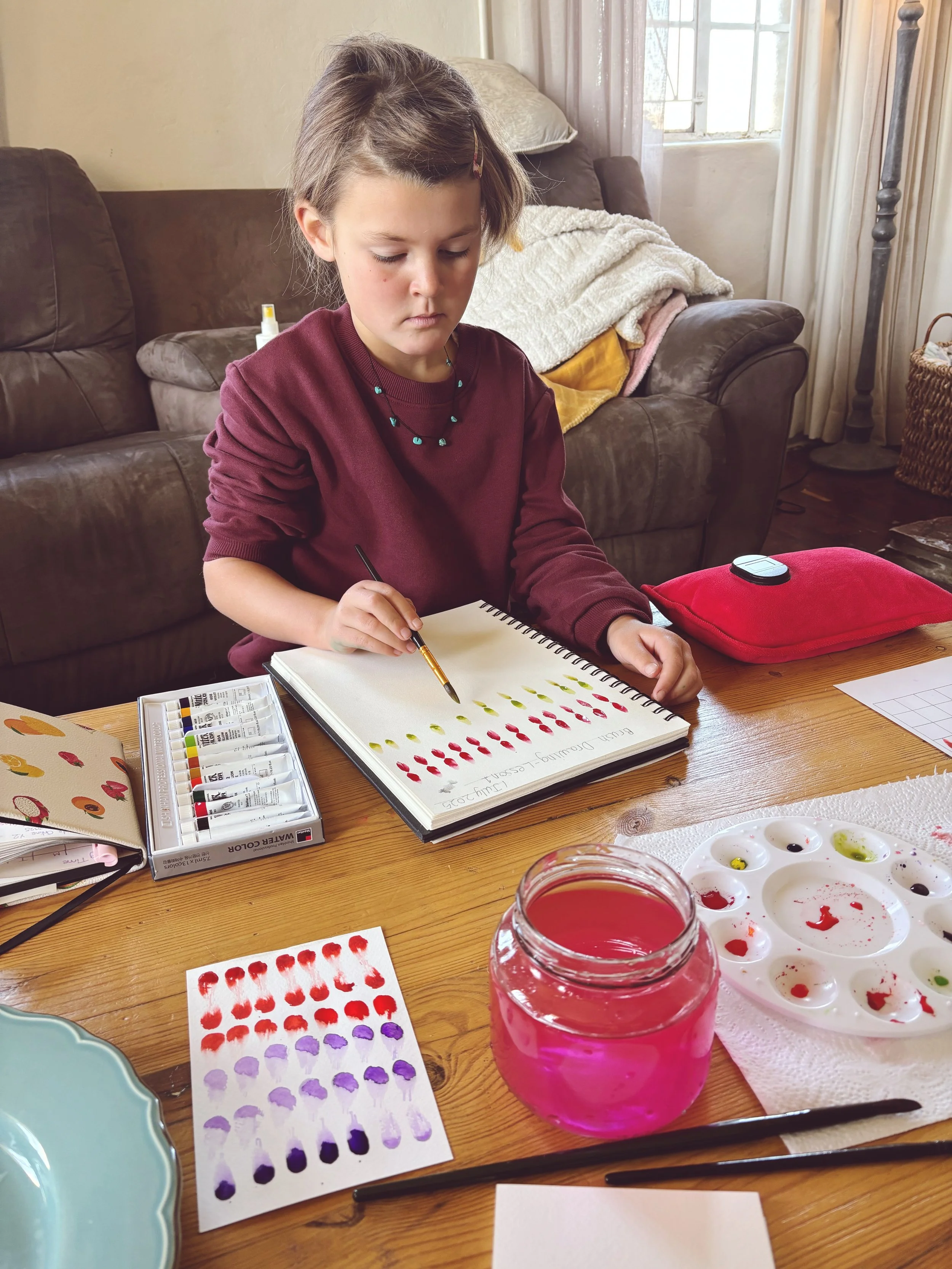
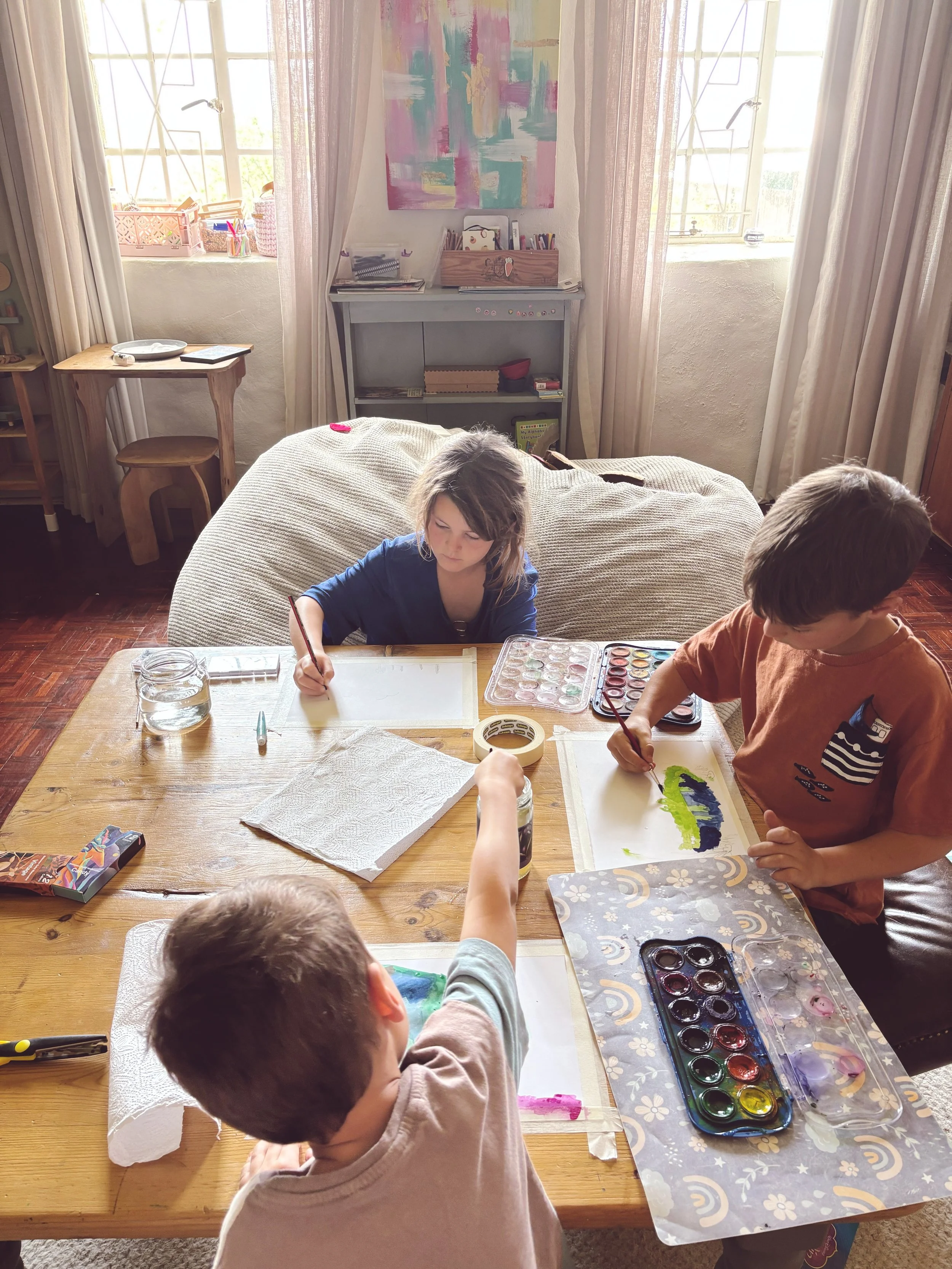
As far as ‘official’ art lessons have gone, we did Lesson 1 of a brush drawing course I purchased and that was as far we we got haha. We did A LOT of painting though (mostly watercolour) and even some family painting sessions where I chose a tutorial on Youtube and all of us spent an afternoon painting together (even hubby!). Those were really fun and I’d like us to do more of these as a family.
Foreign Language

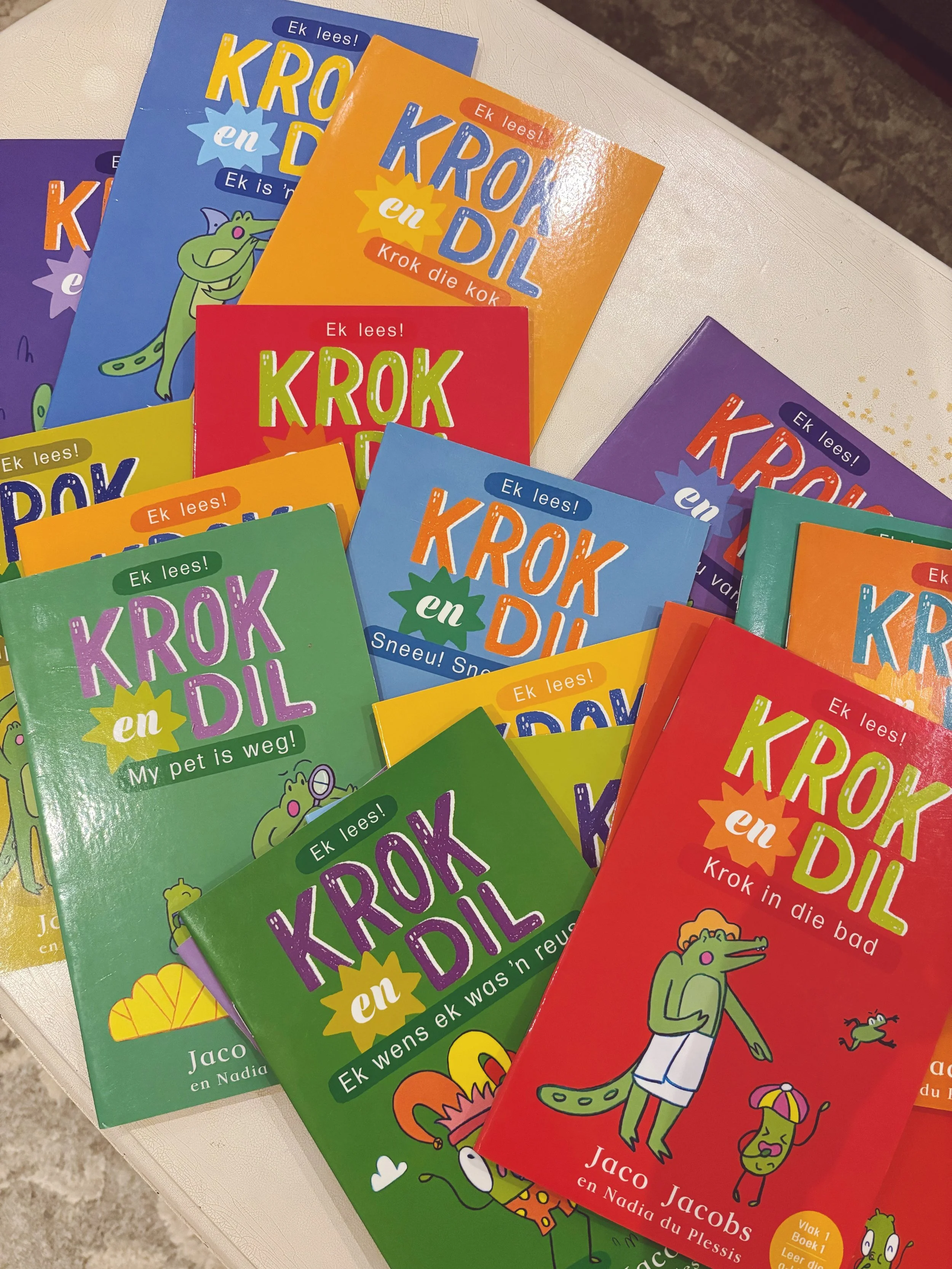
Our Foreign language this year consisted of lots of songs (Afrikaans & French on Spotify) and later in the year I got my hands on a secondhand set of the Krok en Dil Afrikaans readers. These we did once a week, but I had to rope my husband in to do the actual reading as I lived in UK for most of my primary school years and so my Afrikaans is pretty much non-existant, and my accent is terrible (I focus on the French side of things which was my second language in school).
Folk Songs & Hymns

The same as last year, I simply went onto spotify and found a playlist for the year (based on the Ambelside Rotation). We played these songs at breakfast time, in the car, whenever someone mentioned wanting to hear one of the songs. All 3 of my kids loved the folk songs selections. In my plan for the next year, I want to have morning time files for each of my kids and I plan on printing out the lyrics for the hymns and folks songs so they can follow along and learn the actual words (we have some pretty hilarious interpretations of the folk songs based on what my kids THINK the words are). All of my kids absolutely love Sea Shantys…and always request these. This playlist from Nathan Evans has been their favourite so far.

Poetry
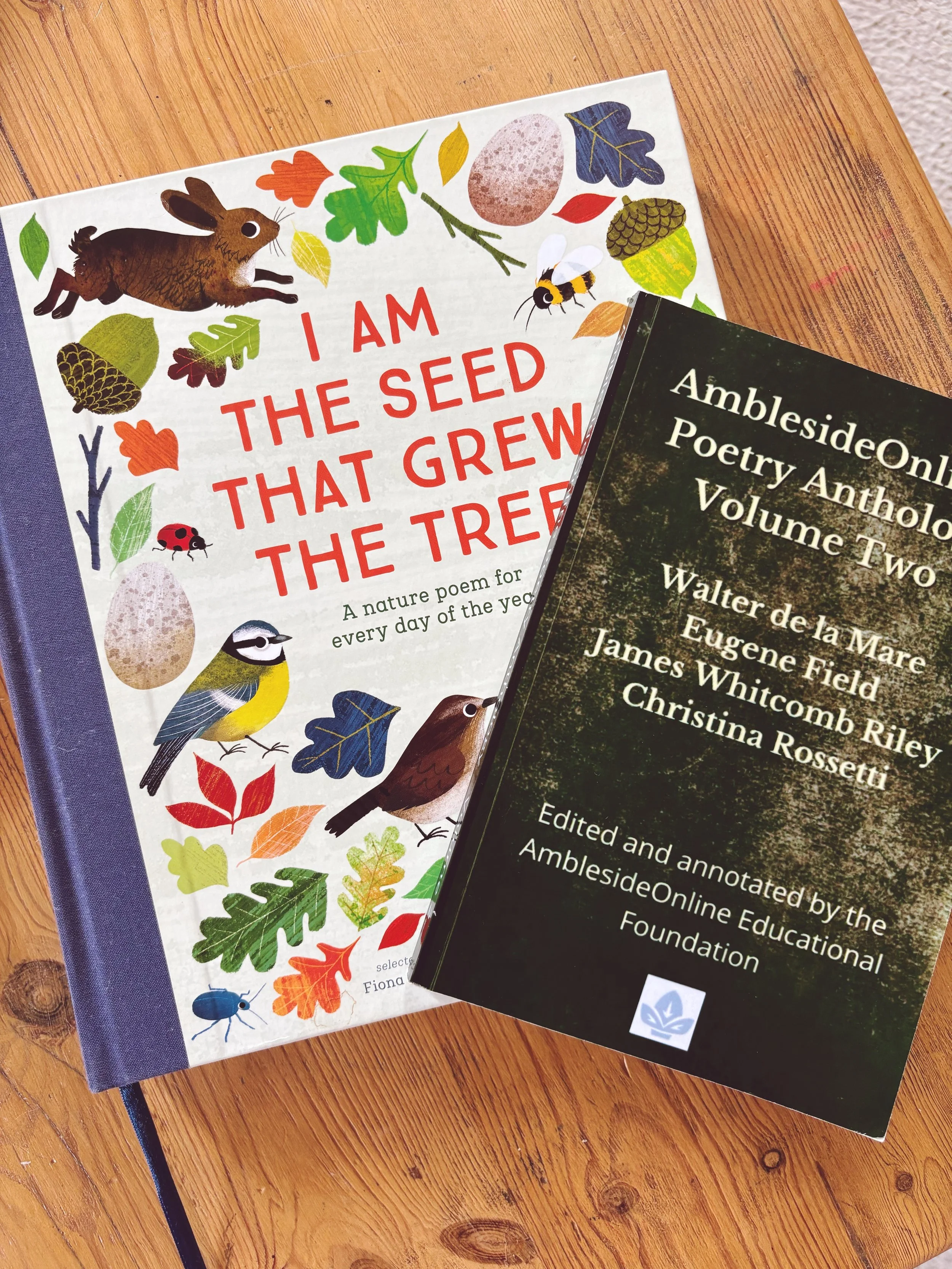
We used the bigger poetry book above during our morning time, and then I did buy the AO Poetry Anthology Volume 2 which we worked through and finished. Each poet had a lovely introduction so we could get to know the poets better before reading their poems. In an ideal work we would have had a timeline up on the wall, and we could have added our poets to that…but alas…next year!
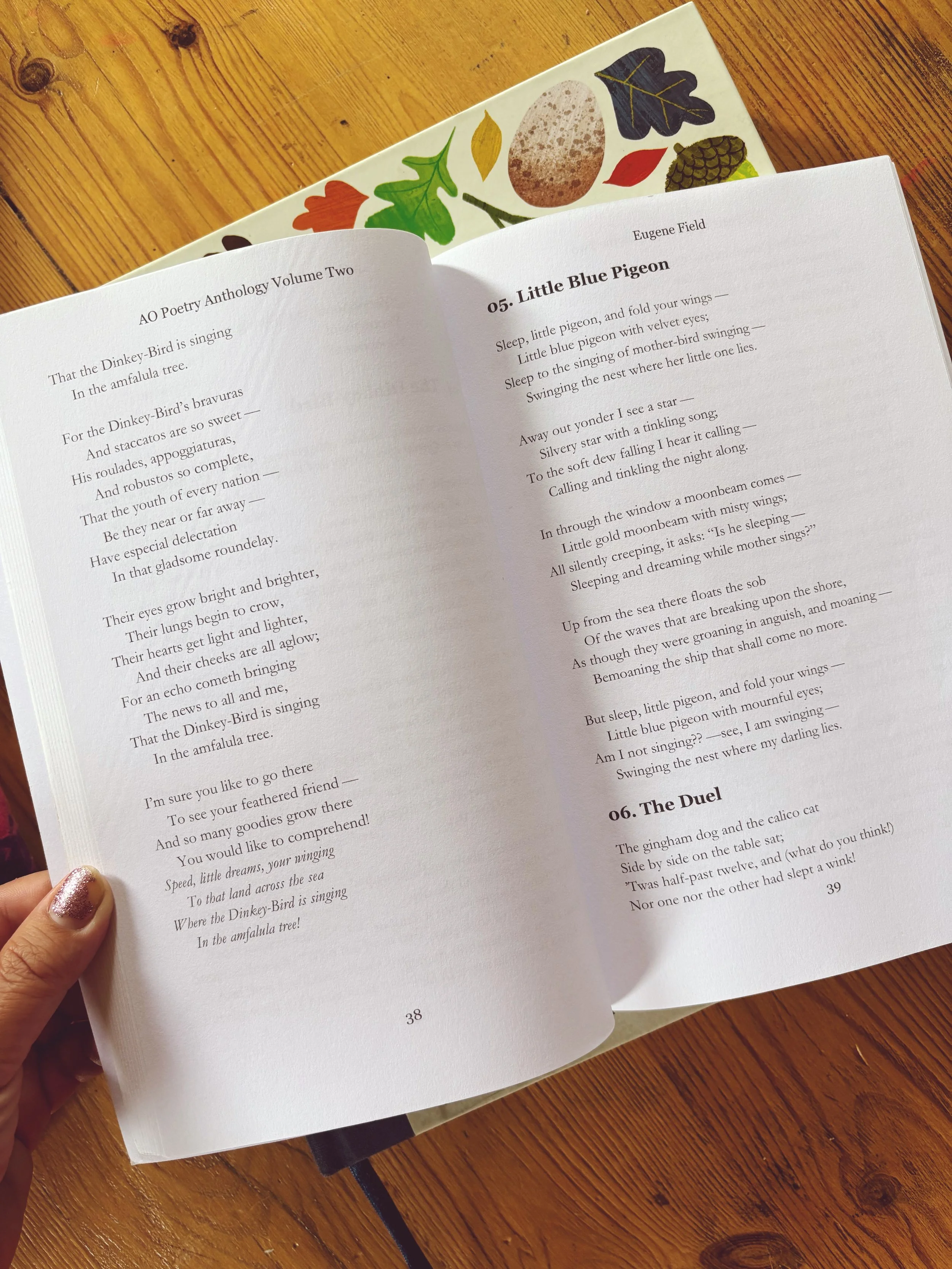
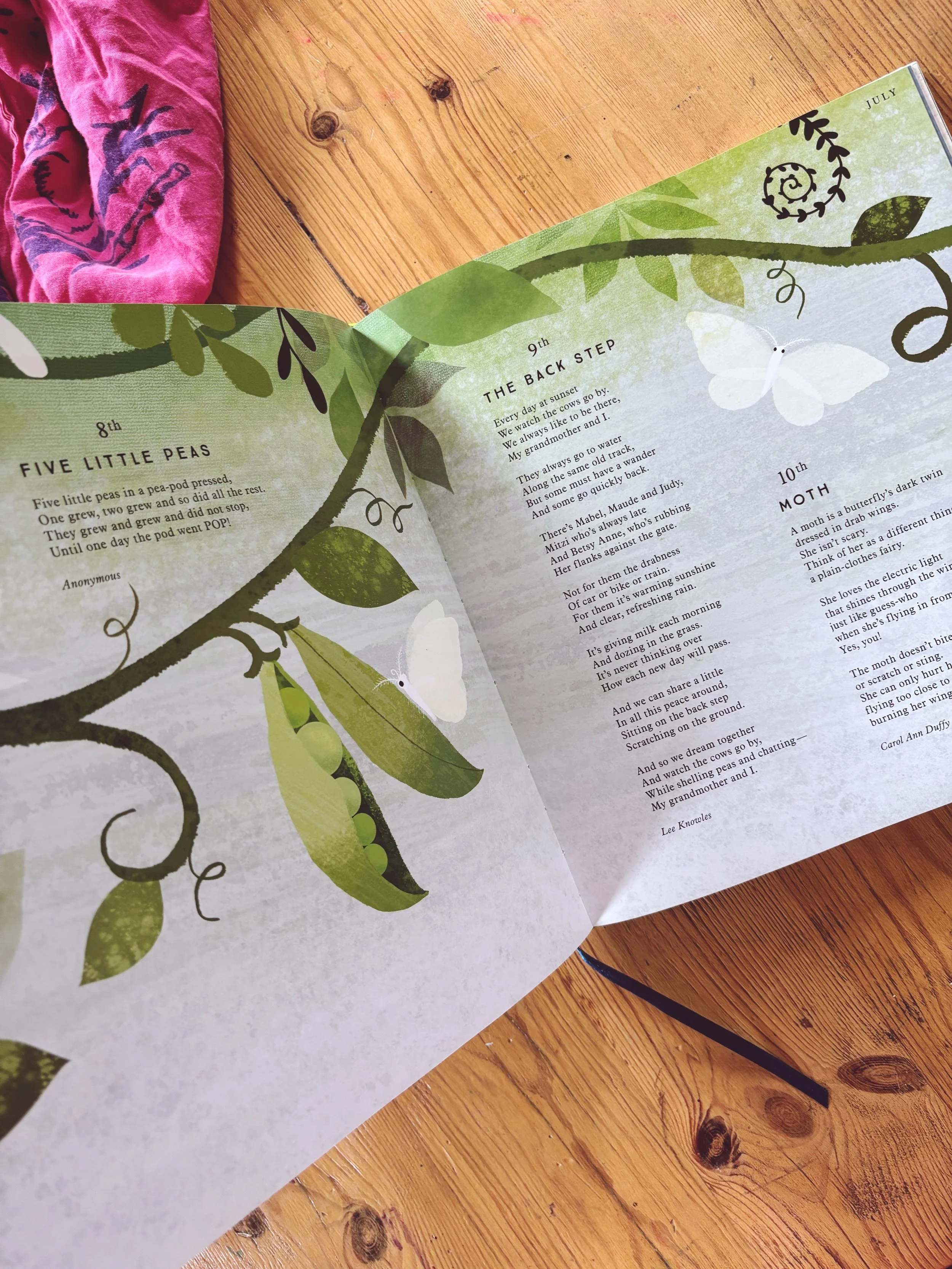
And before you worry about how on earth to ‘do’ poetry, here is a great reminder from the AblesideOnline website:

How do you "do" poetry? Simply read it and enjoy it, re-read it, read it again and listen to the sound of the phrases, let them paint a word picture in your mind. AmblesideOnline Year 1

Art Study (Picture Study & Composer Study)

For artists study, I simply printed out the artwork from the corresponding AO Artist rotation (click here) and then had my children look at the artwork for a minute or so and then turn away and tell me what they saw. I once had them try to draw what they could remember, but this ended in arguments (and tears!) all around as their work wasn’t ‘good enough’ or they felt frustrated at their skills. Needless to say, I didn’t attempt that again haha.

For composer study (click here), I just had the AO Composer playlist from Spotify on my phone, and we would listen to the songs sporadically through the year.

Handicrafts

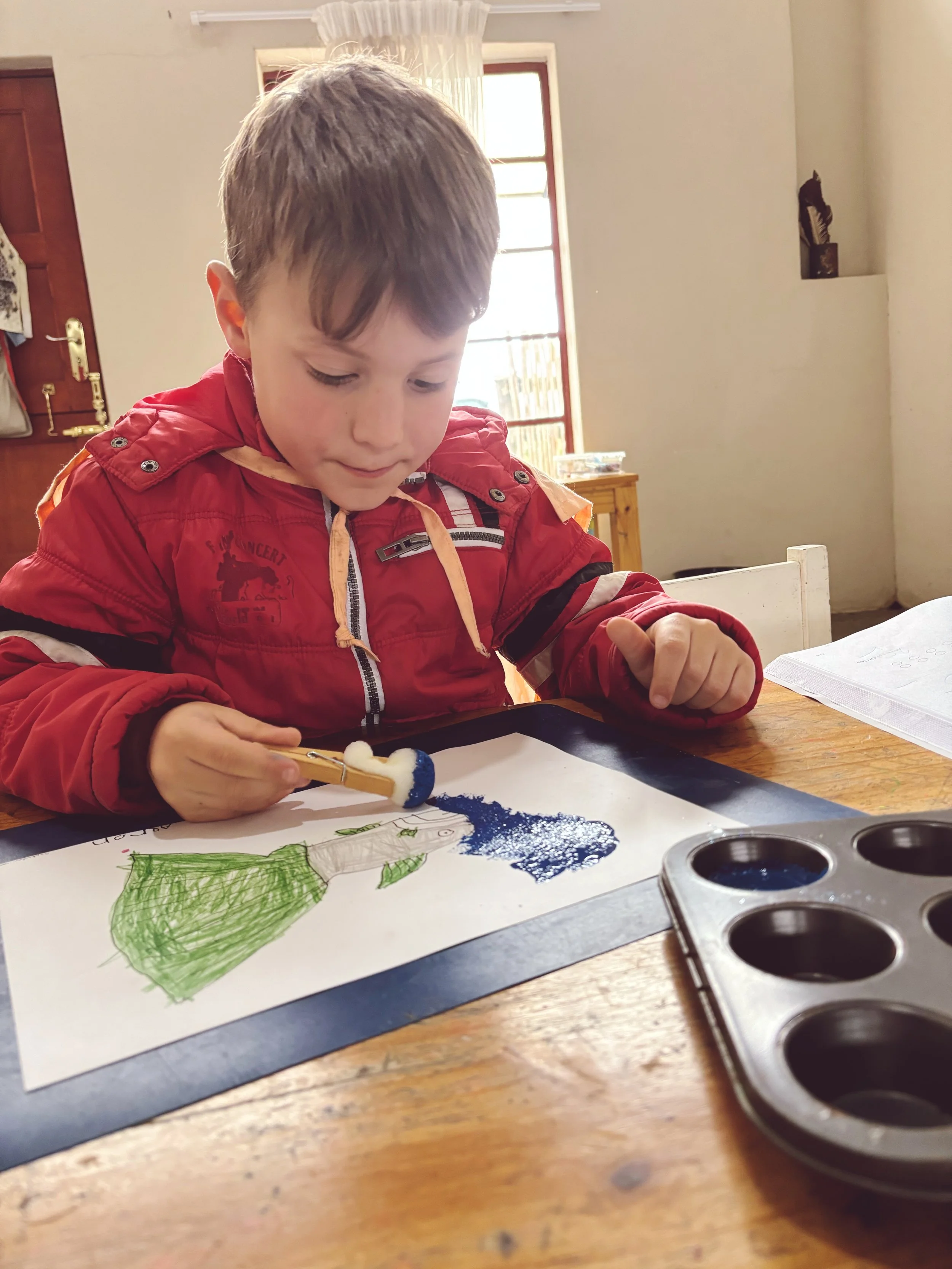
We didn’t do a huge amount of handicrafts this year, but did do some Origami (Aaron enjoyed this a lot) and Everly had some sewing lessons with our wonderful Nanny, Zuki. Everly loves cutting up bits of rags and materials to make things for her dolls and toys, and is excited to get better at sewing so she can make some ‘proper’ clothing items this next year.
Exams

Something that we did manage to start this year was Exams. I wrote a whole post on our first time doing Exams (click here to read) and the whole process (once I had wrapped my head around the logisitcs) was great! The exams were a nice way of ‘checking in’ after each term, and reassessing things that we needed to focus more on, or even things that we needed to drop to keep the happiness in our homeschool. We only did exams after Term 1 & 2…somehow it was suddenly Christmas when we wrapped up Term 3 and I just didn’t get around to doing them at the end of Term.
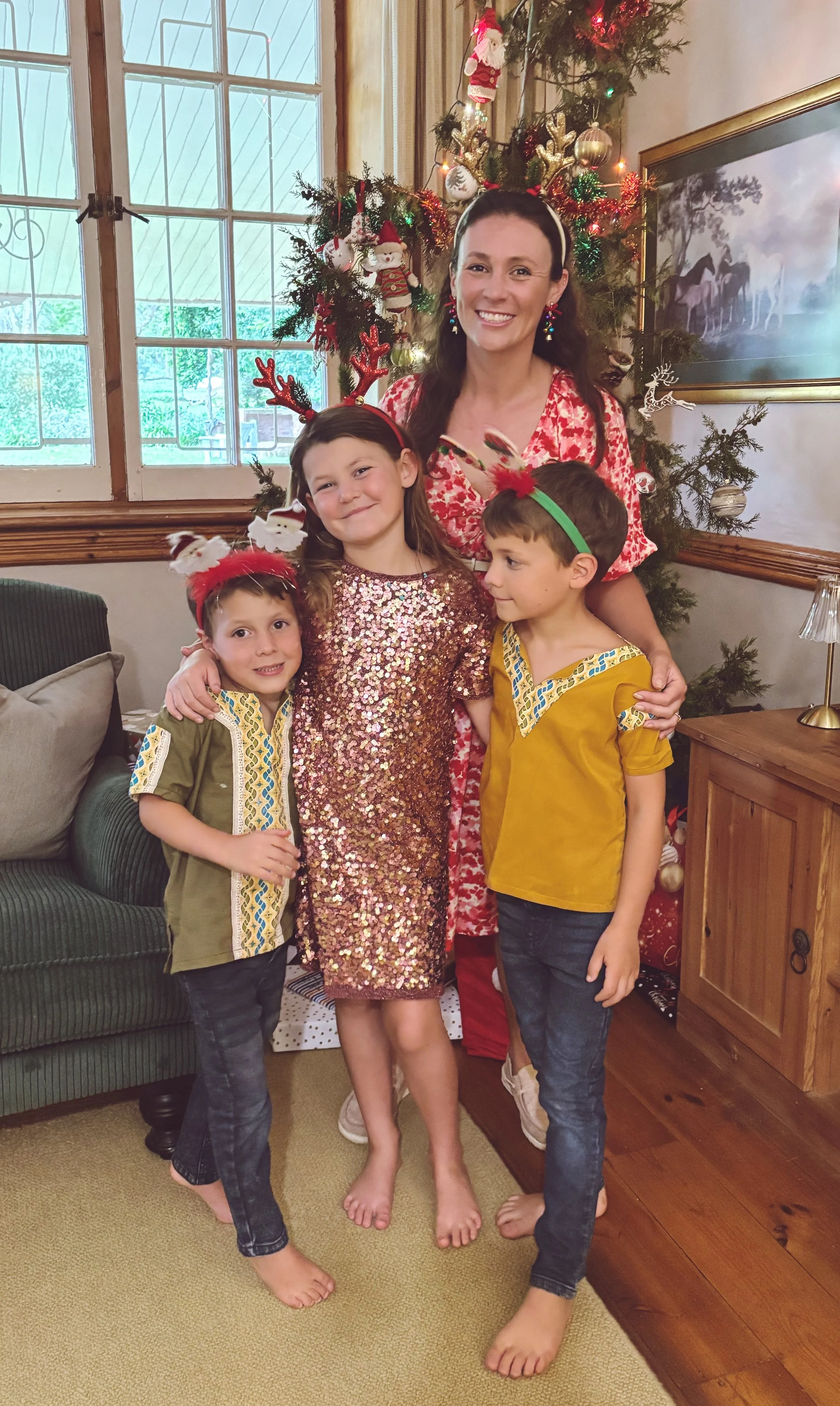
Whew! After writing this post and looking back at our year, I am greatly encouraged by everything we DID do. If we do less this next year, but are able to keep focusing on the good, true and the beautiful every day, I think we will be just fine.

As always, I love hearing from you. Please leave me a comment if you have any questions about what I’ve talked about above or if you have any ideas/suggestions on anything you’ve done differently in your homeschool journey.

Roxy

x

All About Caterpillars, Clouds & the letter C

These posts document my teaching adventures in starting up a Reggio-inspired school in my farm shed in January 2023. I’ll share more about how all this came about soon, but in the mean time, I hope you enjoy these moments & learnings.

It was that time of the year when the silk worms start making their appearance (although they are NOT indigenous to South Africa…there is generally someone somewhere who has found/bought/hatched themselves some) and that’s exactly what happened for us. One of the Granny’s of my kiddies asked if we wanted any, and I thought they would work perfectly for us to learn about caterpillars (and other ‘c’ or Clever Cat things like clouds). And for those asking if silk worms are actually caterpillars? Yes, they are! They are the larvae of the silk moth, Bombyx mori.

I arrived at school to a ‘special delivery’ from one of the kiddies, and we all immediately opened it up and got stuck into some wonderful discussion about what these things were (worms? slugs? nunus?) and out came the Field Guide to try and identity what exactly these creepy crawlies were (not that we were actually able to identity them, but the idea is to get into the habit of looking things up in the book). And then lots more discussion on what they eat (mulberry leaves!!) which I just so happened to have a large one growing in the field behind the school. So off we went to collect fresh leaves for the silk worms.

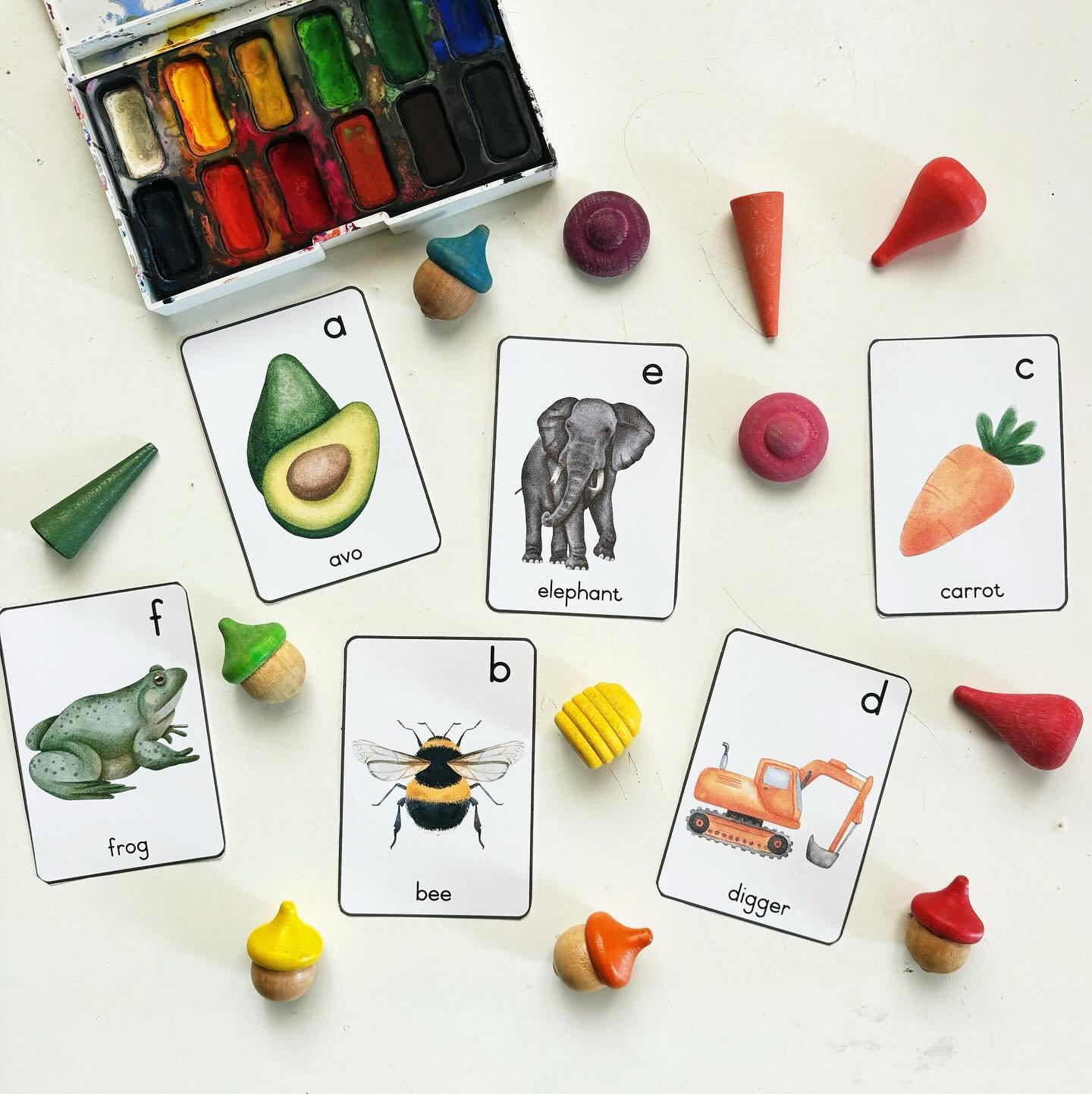
The silkworms lead into the ‘theme’ or rather, the letter for the week and I pulled out my playdough mats for the Letter C and we read the story of Clever Cat (we love you Letterland!) and spoke about what other ‘C’ things we could think of…and from this we found a few more things to add to learning; clouds, cows & cats.

For ‘writing practice’ (I don’t believe in anything too formal in the early years) I alternate using a big white board with lots of different sensory letters for the children to touch and trace. For this week I pulled out the rice tray and every had a go at writing the letter themselves in the rice. I always start this exercise at snack time (or while they are busy with playdough/plasticine), by reading the corresponding Letterland story that goes along with each letter, while everyone eats their snack or keeps their hands busy. And then they come up one by one so I can give them some undivided attention while they practice their letter formation. I leave this set up out for the week so that they can come and go as they please and play/learn when they are inspired to.

I had 2 finished artwork pieces in mind when we started this week (or rather when I realised we would be learning about the Letter C). One for clouds (this involved painting with shaving foam…such a fun process art activity!) and then sticking cotton wool onto the background for the clouds.

The other art piece would be loosely based on The Very Hungry Caterpillar by Eric Carle. We did marble painting (in green and yellow for the body of the caterpillar) onto white paper doilies with one red piece (done by my eldest, Everly) for the head.


{How to do the Marble Painting: simply dollop paint onto your paper/cardboard, and then let the kids roll the marble around the page. This is a little trial and error as to how many marbles to use, how quickly to roll…ie before the paint dries…and for the little hands to practice holding up the tray and getting the hang of moving the marbles around the tray. My favourite paints to use are the Giotto Tempura paints. The colours are nice and bright and the paint lasts for ages. They are well worth the extra money spent}


We also chatted about the life cycle of a silk worm (I didn’t worry too much about the whole worm vs caterpillar thing…can’t let facts get in the way of arts and crafts haha) and that they turn into moths or butterflies. The boys especially loved this very hands on week and a few of the kiddies were brave enough to really get stuck in and play with the silk worms.

AmblesideOnline Year 1 - a recap of our first Charlotte Mason homeschool year

We ended our first ‘official’ year of homechooling with AmblesideOnline in mid December. It took me until the last day of the year to take the above book stack photo (I had SO many ideas of ways to take it, spots to be in…like the garden/food forest) and then I realised if I didn’t just forget about taking the perfect photo, I would miss the opportunity before beginning Year 2! So here I am, a few days into January 2025, finally getting around to recapping our year.

AmblesideOnline is a free homeschool curriculum that uses Charlotte Mason's classically-based principles to prepare children for a life of rich relationships with everything around them: God, humanity, and the natural world.

Where did I get my books?

I bought the majority of the books new (a pricey investment but considering that I am planning to use these same books with each of my 3 children, I could justify the costs) and had them sent to family in the UK. I started compiling the books quite well in advance of starting Year 1, and in that time I had family members who were traveling to the UK who could be my ‘book mule’ and bring them back to South Africa for me. I used Amazon.co.uk for the majority and then used ChristianBooks (a US site) to order the harder to find Beautiful Feet books and a few others, and they were shipped to the UK. I did look into shipping straight to South Africa, but our postal system is unreliable at best, and the cost to ship them here and then the import tax to receive them was just too expensive. What is wonderful about AmblesideOnline is that a lot of the books are in the public domain, and available to download to Kindle/PDF. And then there is also Librivox which is a free audio site to listen to the books. It can be a bit hit and miss with the narrators on there, but the really good ones are linked on the AmblesideOnline book lists. I also found a few books second hand on the Homeschool Buy/Sell/Exchange Facebook group.

Here is a very brief summary of the subjects covered in Year 1:

We schooled 3 - 4 days a week this year (I was still running my Reggio inspired ‘Red Shed’ school in the shed next door to our house 3 mornings a week) and I only had one hour for each of those mornings to focus solely on Everly and her ‘official’ school work needs. I am happy to say that even though it seems like a tiny amount of time, we were able to complete 95% of the 36 week schedule of her work. I aimed for 4 days a week, but realistically only managed 3 days most weeks. We took time off for holidays each term (I ran my school on a 4 term schedule) and even between sick days/low enthusiasm days/people visiting and general life busy-ness, I am very proud that we finished just about every book on the schedule. Sometimes we caught up & finished readings on the weekends, but the majority of the work was done on a Monday, Tuesday and Wednesday morning. It worked really well having both my Shed School (my 3 children and 5 other kiddies were part of the school…I’ll share more about this another time) but it was a constant juggle between the two. From next year (2025) I will only be homeschooling my own children, and I look forward to enjoying more of the homeschool lifestyle I had envisioned when I first began this journey of home educating back in 2021/2022.

Reading/Phonics

Everly’s reading really took off this year. I didn’t follow any formal reading program, and we don’t do spelling/reading lists (and a small part of me is worried we have perhaps missed out on some skills somewhere along the way) but seeing how she absolutely loves reading and is able to decipher pretty much any word she comes across, I would say what we’ve done up to this point has worked really well for her. I’ll share a full post on how I taught (or rather, how she learned to read) as I’ll be following the same process with her brother (Aaron is 5 turning 6 in February), but here are the basics of what we did:

We read lots and lots and lots of books together in the early years, and worked our way through the Letterland series together.

I also read (and re-read!) this wonderfully comprehensive series of posts by Joyful Shepherdess on how to teach reading the Charlotte Mason way, and found it really helpful too.

Once we had gone through all 26 letters (I started with the letters in her name, not with the official alphabet sequence) and then I moved onto the move advanced Letter land books. She was able to out together basic CVS words right after the first few Letterland Story books, but we took it slow and I think this was the key. Alongside Letterland, once we had gone through the majority of the letters, I started her with the below traditional Peter & Jane first readers that I picked up second hand.

It took us pretty much up until the start of 2024 to move through all the Letterland books and then to move from Peter & Jane Book 1 to book 4 (there are separate A, B & C books for each level). Once we had started AmblesideOnline Year 1 (and gone through Peter & Jane Levels 1 - 3) I then I changed things up a bit and followed the Ambleside recommendation of the McGuffey Readers (I had bought The First & Second but skipped purchasing the Primer) from Oikos when they were still selling…but you can now purchase these from the Oikos BOBShop or from the online GoodNeighbours Bookshop.


We began AmblesideOnle Year 1 with the McGuffey First Reader and are still making our way through it. I was worried it would all be too old fashioned, but Everly has loved this book, and while it was a big jump from the Peter & Jane books & she did not enjoy the challenge at times, the growth I have seen in her has been wonderful.

Handwriting/Copywork:

We started off our handwriting journey with The Good & The Beautiful Handwriting Pre-doodles and Level k workbooks, but I really didn’t enjoy the way some of the letters were formed and preferred Everly to write her letters & numbers the way I was taught as school. I then set out of try and find a nice South African handwriting workbook.

Initially I had Everly form letters in a very tactile way (playdough, a salt tray) and lots and lots of ‘air writing’, the workbooks came in later for us.

We swopped over to the Happy Handwriter workbooks (which you can buy online through JumpLeapFly)and I’ve been very happy with them. Everly had already learned to write all her numbers and most of her letters…along with some bad habits…so we started right back at the beginning and we also did lots of letter tile play with our Kids Corner Montessori moveable letters. I also found these lovely lined handwriting books for her copywork, and it has been amazing seeing her progress throughout the year. They also match up with the Head, Tummy & Tail formation (the little monkey pictured above) in the Happy Handwriter books, as well as the Kids Corner Head, Tummy & Tail Board for placing the moveable letter on.

Maths:

We chopped and changed quite a lot in the last year, as I’ve gone back and forth between what I felt was the ‘right’ maths program for Everly. We’ve had fights, there have been tears, there have been high fives, beaming smiles and just about every emotion in between. And after all of it, I have come to the realisation that all the shoulds/requirements of a year 1 student (or Grade 1 if you’re South African like we are) should be thrown out the window if they are causing conflict, stress and frustration for all those involved. I was reminded to re-read Ruth Beechick’s the 3 R’s, and to remember that education is the ‘science of relations’ (thank you Charlotte Mason) and my own desire to ensure Everly LOVES maths & the NEED to make up for my own dread of the subject in school has actually been having the opposite result. I think a lot of more veteran homeschool moms can probably relate to the feeling of doing too much for their first child in the beginning of the homeschool journey. The wise words from older moms on the Ambleside forum to ‘enjoy the early years’ and not to take things too seriously with subjects like maths fell on deaf ears, but I am listening now. I am taking my foot off the pedal a bit, and we are playing more games, dong more hands on maths again (just like we did when we first started our learning journey) and things are once again feeling more peaceful. We have used a combination of the following this year:

  • The Good and the Beautiful Math 1 (TGATB)

  • Math-U-See Alpha

  • Life of Fred (LOF)


Halfway through the year, we put aside Math-U-See and instead alternated TGATB Math 1 with a chapter of Life of Fred every now and again. If I had had more faith in myself, we would have probably just done LOF alongside math games and spent the year with a less intense math focus. But, I am again reminded that the beauty of homeschooing is being able to change things when they aren’t working for your child.


We are half way through TGATB Math 1 (and I’m not worrying myself that we should have finished Level 1 because Grade 1 and Level 1 should correlate (ahem…that’s my A type personality trying to take over again!), and Maths is once again (for the time being at least haha) a happy subject that is challenging for all the right reasons.

On a practical note, I get all my large scale colour printing and binding done with Iron Pig Projects who are very affordable and produce excellent quality printable booklets etc.

Bible

When first starting to put my book list together, I read this article on the AmblesideOnline website which details why they recommend using the King James version. That’s why I purchased myself a copy on the GoodNeighbours website (click here).


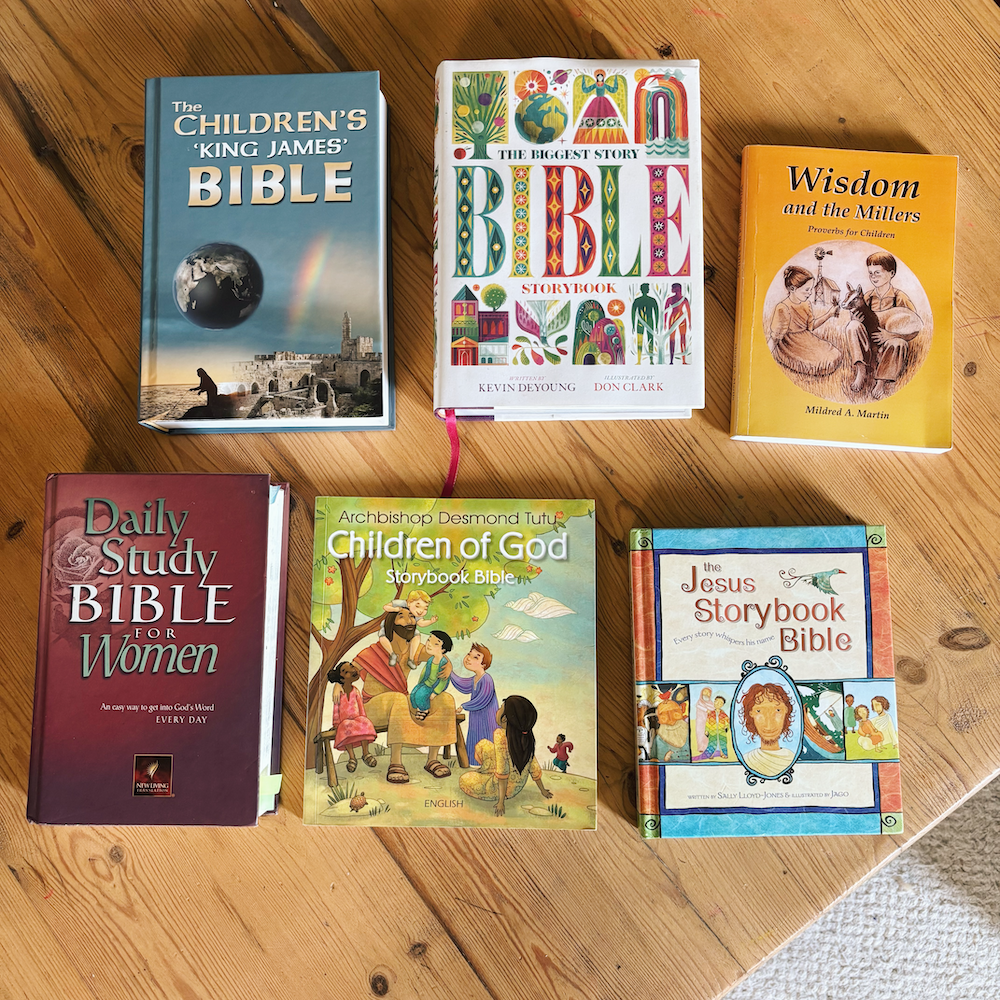
Once I had actually started the year, I quickly realised that if I was going to be able to continue with all the bible readings, I was going to need something a little more comprehensible for myself. I’ve never actually read the bible myself and so my knowledge of the stories in the bible is so limited. Everly actually was able to handle the stories and narrate back to with more understanding than I was able to, but I decided the whole AmblesideOnline curriculum was enough of a stretching for us to start with by itself, and decided to dust off my old Women’s Daily Study Bible which worked really well this year. I would like us to move back to the King James version at some point, but for Year 2 we will probably stick with the Study Bible and see how we go. The Other bibles are story bibles I have read together with my other 2 kiddies during morning time (which I will soon share more of what that has looked like over the past couple of years), and the Wisdom & the Millers book has been such a lovely addition we are just about finished off together.

History & Tales


Our Island Story - I think I may have enjoyed as much if not more than Everly as I spent 5 years in living in the UK when I was younger. I learned a lot about the history of the UK (I’ve even visited Stonehenge, and had no idea of the stories and myths surrounding it’s history and how it came to be where it is).

Trial & Triumph - quite heavy going, and definitely pre-read for very sensitive souls. I thought Everly would be very upset narrarting this book, but she handled it well and it lead to a lot of really good (stretching!) conversations. I’m glad we didn’t skip it.

Fifty Famous Stories Retold - these were really great and Everly enjoyed every one of them.

Viking Tales - Suprisingly, this turned into one of Everly’s favourtie books! I think this may have to do with the fact that I started photocopying the corresponding illustration from each story for her to colour in and stick into her work book. It defninetly helped to keep her interest, and we both enjoyed going through the illustrations together after her narration.

**Child Craft - Story of South Africa (we started this in the 3rd term and just added it in every second/third week depending on the workload for the week). A lot of moms recommended focusing on history from your home country, and so this was a really nice living book to add in for South Africa that didn’t send us on too many tangents. Each story is short enough that I was able to add this book in without ommitting any of the others above.

Shaka Zulu - While I’m sure there are ‘better’ books on Shaka Zulu, this is one I had collected over the years, and this too, suprisingly, was one of the books Everly would always ask if we were reading each week. I chose Shaka as a historical figure for us because we live in Kwazulu Natal (his birthplace) and we often holiday to a place called Shakas Rock in Balito, which is named after him.

D’Aulaire’s Buffalo Bill & Benjamin Franklin (we skipped George Washington as I coulnd’t get my hands on a copy of it, and this is when I subbed in Shaka Zulu). Both really great books! I learned so much about American History from them, and Everly made all sorts of connections throughout the year after reading the books like pointing out the lightning rods/conductors on the thatch cottages in the Berg and mentioning that ‘Wasn’t Benjamin Franklin clever to think of making those lightening rods’.

We also started (as suggested by AmeblesideOnline) a personal history ‘timeline’ for Evs. This is the foundation for being able to understand the idea of where dates fit into history (something that starts more officially in Year 2/3 with the introudction of a Book Of Centuries…click here for some lovely ideas for when you’re ready to start that). The concept of a timeline is so abstract (basically numbers on a page haha) and doing a personal timeline of the child’s life is a wonderful way to help them get a good understanding of the ideas of the past and therefore 'history’.

Natural History


Burgess Birds - I wished we had both loved this book more (I mean, it’s all about Peter Rabbit and his adventures meeting lots of different birds!) but we couldn’t really relate to the stories as much because so many of the birds aren’t native to South Africa. I did get the Librivox version and have added it to Everly’s Yoto player, and she has enjoyed listening to them on and off in her free time. I had visions of beautiful dran narrations (there are SO many amazing ideas to bring the book to life…from homemade felt birds to paintings hung on a homemade forest/branches but we just didn’t get there this year). I borrowed this from a friend).

Paddle to the Sea - I bought a set of maps from Beautiful Feet and we enjoyed painting in Paddle’s journey to the sea together. This was a lovely story for both of us. There also also so many wonderful ideas to bring this book to life even more, but we again, just didn’t get around to all that I had hoped with it.

James Herriot’s Treasury - a favourite for both of us! Everly is a real little vetrinarian in the making, and as we live on a farm, so many of these beautifully illustrated stories have formed part of our every day lives. A must in your bookshelf collection (not just for Ambleside!). I think there is a whole collection of his stories on Audible too.

**When Hippo Was Hairy and Other Tales from Africa (when Burgess Birds got a bit long winded for us, I subbed this in for more African tales which was GREAT especially after we spent 10 days in the Kruger Park in July). These stories were fun to draw narrations of.

Nature Study

We did a lot of Nature Study during the year with my Shed School, but I did extra with Everly in the form of nature journaling (click here for a full post on this). Some good quality watercolour paints, a little journal/notebook with thick enough paper for the paint, and lots and lots of time outdoors.

Literature

Aesop’s Fables - we both enjoyed these short and easy to digest stories. These were fun. I recently bought the Audio version on LibroFM which Everly has really enjoyed listening to after having read the stories throughout the year.

Parables of Nature - although these stories were long and the language very challenging at times, we both really enjoyed the messages.

Just So Stories - Everly really loved these, Oh Best Beloved ;)

Blue Fairy Book - This was probably Everly’s absolute favourite books this year. The stories were long, and we often had to finish them off on the weekend, but they were filled with adventure and wonder.

Shakespeare - Everly surprised me with her narrations of the plays we covered this year (King Lear, As You Like It, Twelth Night,The Tempest, A Midsummer Night’s Dream. For the first 3 plays I bough these lovely colour-in-yourself illustrations (from Etsy) of each character which I laminated and then we used them as puppets to help us both understand what was going on. We had lots of giggles at Puck and reading Shakespeare with my daughter while chatting about who was doing what to whom was a very special time this year. I studied English Literature at University and English was always my favourite subject at school. Sharing my love for it with her through her own schooling has been very special indeed.

In putting the above photos together, I have only now realised that I might have gone a bit overboard in my collection of versions of Shakespeare books I have haha. The Usborne Complete Shakespeare collection is a really lovely version that my other 2 have enjoyed paging through often.

Foreign Language

This is something I would like to work on more next year, as all we did for this was listen to lots of French, Afrikaans and playlists on Spotify of kids songs from around the world. I do belive songs are the most powerful way to immerse yourself into a language, and when I hear my 3 year old break out into spanish because he knows the words to a song, my heart is glad we’ve made the effort to at least do lots of songs…even if they’ve only been background music to our arts and crafts. I studied French as a second language at school (as I lived in the UK for such a long time) which does make things a little more complicated for us when choosing a second language to study for my kids. Because of my French background, I feel more equipped to help them study French, than say, Afrikaans or Zulu which are the two most common second languages here in our province in South Africa. There are lots of great tips and resources on the Ambleside Forum (click here) if you’re trying to work out how (and which one!) to introduce a second language to your children.

Folk Songs

I simply went onto spotify and found a playlist for the year (based on the Ambelside Rotation) and we played this songs at breakfast time, in the car, whenever someone mentioned wanting to hear one of the songs. All 3 of my kids loved the selections.

Poetry


I found an old copies of 1 of the ‘recommended’ poetry books but you really can use anything! I added in the Christopher Robin Verse Book & A Baobab is Big & other verses from Africa to bring in some more local African flavor (it’s a lovely addition!).

And before you worry about how on earth to ‘do’ poetry, here is a great reminder from the AblesideOnline website:

How do you "do" poetry? Simply read it and enjoy it, re-read it, read it again and listen to the sound of the phrases, let them paint a word picture in your mind. AmblesideOnline Year 1


Art Study (Picture Study & Composer Study)


I had lots of grand ideas about how picture study would work, but in the end I simply printed out the images for the year (thank you Rebecca from a Humble Place for all your hard work in offering these art prints for free) and I taped them up on the bathroom door as it’s the most ‘looked at’ spot in the house haha. I then swop out one of the prints and put it onto the fridge as well for us all to look at and notice in our own time.

Composer study was less successful this year. We did listen to a few lovely classical pieces, but there is a lot of room for a lot more!

Handicrafts

These are also something that we didn’t do very much of intentionally. A lot of what we did do at my Shed School would be termed Handicrafts, but I’d like to be more intentional with Origami and sewing in the next year. And I’d like to fin a nice supplier for a loom too (oh, and pottery classes would be something else I’d love to start!).

Whew! After writing this post and looking back at our year, I am really encouraged by everything we DID do (and I’m not so caught up on all the ‘did not do’ parts of the year. It was a very stretching year, but we were able to take it slow and find a really nice rhythm to our weeks. This next year is going to be a bit more challenging in a lot of ways because I only have myself to be acountabel too (and not the other kids and their parents whom I was teaching). I will have a lot more freedom, but with that is also the worry that I won’t be as pressured to keep up with everything. Anyway, I remind myself often that these early years are incredibly precious and fly by so fast. If we do less this next year, but are able to keep focusing on the good, true and the beautiful every day, I think we will be just fine.

As always, I love hearing from you. Please leave me a comment if you have any questions about what I’ve talked about above or if you have any ideas/suggestions on anything you’ve done differently in your homeschool journey. I so enjoy hearing from you.

Roxy

x

The Red Shed - All About Rainbows

These posts document my teaching adventures in starting up a Reggio-inspired school in my farm shed in January 2023. I’ll share more about how all this came about soon, but in the mean time, I hope you enjoy these moments & learnings.

This week was filled with colourful sensory play, lots of paint (and mess!!!) and most importantly (at least for me and my view of education!) accidental learning through purposeful play.

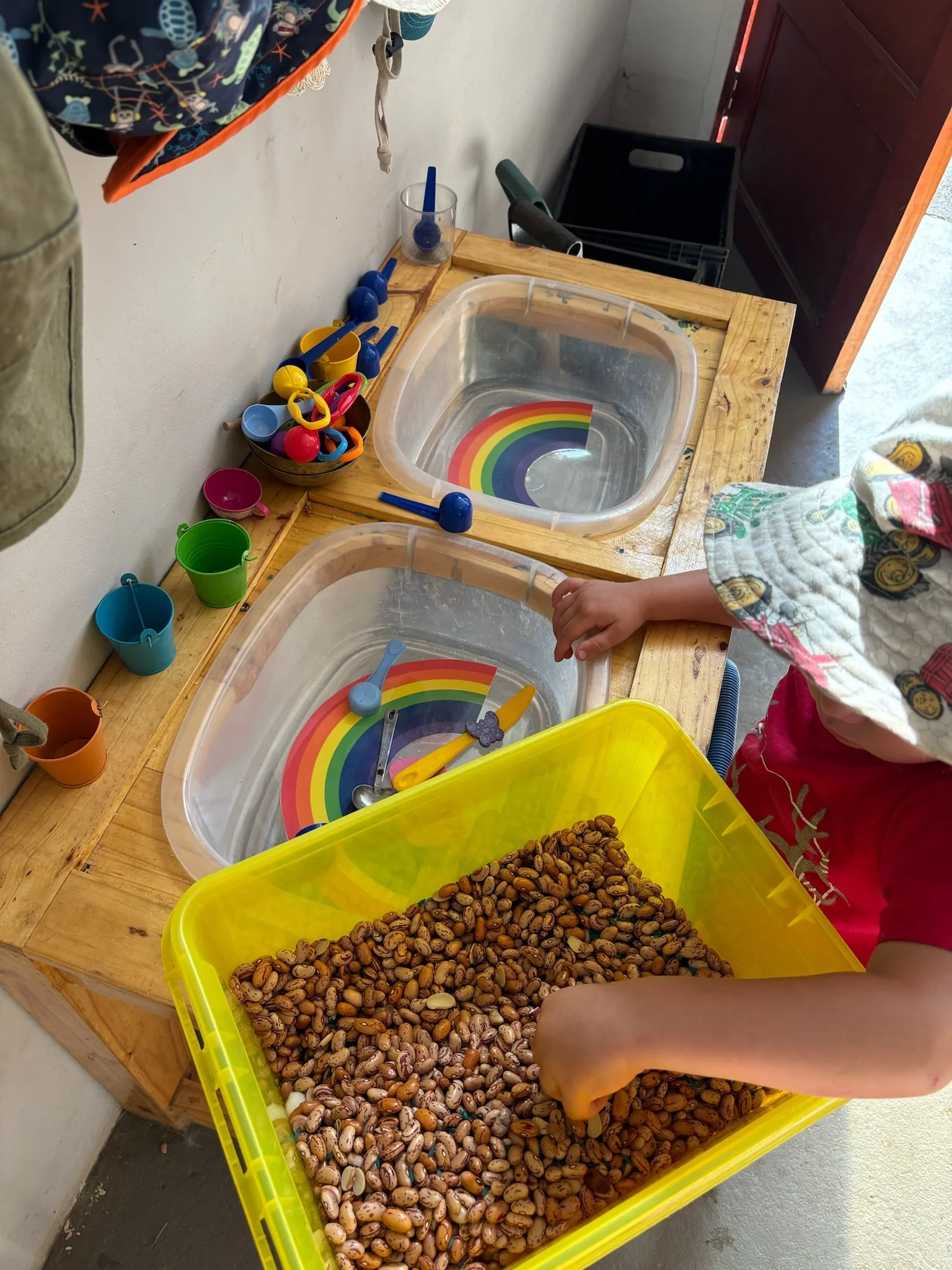
I set up our sensory table (I had one custom made by Cob&Pickle in Howick…click here for a link to their Facebook page) and put some laminated rainbow images into the trays. I covered these with beans and rice and then let the children ‘dig for the rainbow treasure’. This was such a hit! I used some of the left over rainbow rice I made a good couple of years ago (yes, I am as shocked as you that that batch of rainbow rice is still going strong!). I love the photo of the kids looking underneath the tubs to see the rainbow (make sure to print and laminate it double sided so that it actually shows up nicely both from the top and the bottom).

I bought one of these lovely wooden rainbow stackers from Thornwood Treasures a few years ago for my kids, and it was the perfect open ended toy to bring out for this week. The kids had a lot of fun with them, using them in all sorts of ways…it really is a fantastic toy!

For ‘writing practice’ (I don’t believe in anything too formal in the early years) I use a big white board with lots of different sensory letters for the children to touch and trace. Then they get to have a go at writing the letter themselves with a white board marker. I always start this exercise at snack time (or while they are busy with playdough/plasticine), by reading the corresponding Letterland story that goes along with each letter, while everyone eats their snack or keeps their hands busy. And then they come up one by one so I can give them some undivided attention while they practice their letter formation.

Another favourite process art activity is marble painting. Simply dollop paint onto your paper/cardboard, and then let the kids roll the marble around the page. This is a little trial and error as to how many marbles to use, how quickly to roll (ie before the paint dries!) and for the little hands to practice holding up the tray and getting the hang of moving the marbles around the tray.

My favourite paints to use are the Giotto Tempura paints. The colours are nice and bright and the paint lasts for ages. They are well worth the extra money spent.

We also had some left over cardboard that we used for these (see the last two photos), and I suggest having more scrap paper/cardboard on hand as the kids always love this activity and will want to do more and more and more.

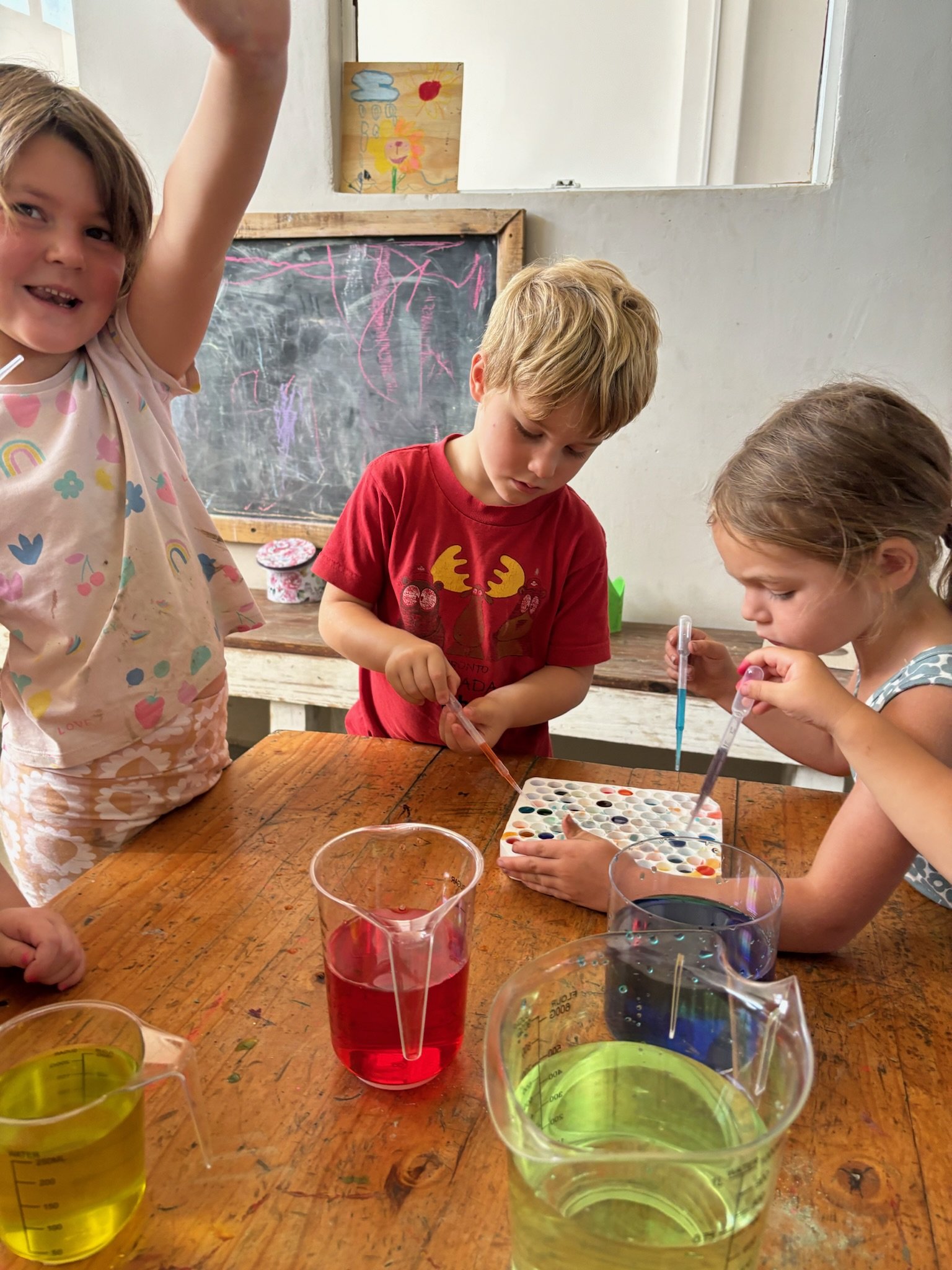
One of my favourite lesson of the year has been introducing the kids to measurements (and of course mixing of colours!) with this really simple set up. We were given a couple of these polystyrene test tube trays, and when you add droppers/syringes/pippettes they are perfect for all sorts of colour experiments.

Everyone got a turn to help me fill up the jugs with water, and then we had a discussion on colours (and what is a primary and secondary colour…this was a recap for the older kiddies) and then it was all systems go for some really fun colour water play.

This was a really fun & colourful week that I enjoyed just as much as my kiddies.

Kidscorner Kzn Math Counting Board - Helpful Homeschool Materials {Product Review}

Today I’m sharing the love for local brand @kidscornerkzn and their wonderful range of educational goodies & learning tools.
This is their Counting Board which is not just great for learning number symbols and quantity relation, but it’s also fantastic fine motor practice.

{This product forms part of a trade exchange between myself & Kidscorner KZN. I only share products that we genuinely love and use in our home}

The board can also be used to introduce the concept of even & odd numbers (talk about the numbers that have ‘pairs’ and the ones that are ‘alone’).

A nice extension activity is to use flashcards to add to the activity (these pretty number flashcards are from Stephanie Hathaway Designs) and feature really beautiful illustrations along with the number symbol and word.

This counting board is a really lovely addition to our homeschool classroom and both Everly and Aaron have been drawn to the board (for different reasons). Everly loves to play with the beads (loads of ‘accidental learning’ takes place as she makes cups of ‘tea’ with the beads…counting them out as she goes and moving them from the board to a tea cup). Aaron likes the pompoms, and likes to ‘cook’ with them, also counting as he goes moving the pompoms from the board to a bowl and into the oven in our little play kitchen.

The board comes with tweezers, a packet of 55 beads and a packet of 55 pompoms. It retails for R195.

All in all, a very budget friendly addition to your maths & number based lessons and would be a wonderful tool to have at home for your little ones to play with, even if you aren’t doing any formal homeschooling.

The ladies at Kidscorner have very kindly given my readers & followers a 10% discount code >>> Use the code Roxy10 to get 10% off your order at checkout on the website

Click here to visit the Kidscorner Website

Our homeschool journey - the beginning

For the time being, I’ve decided not to enrol Everly (4.5 yrs) in Grade RR…possibly even beyond that…and to rather spend this year following a loose homeschool/play based learning approach for both her and Aaron (3yrs)…with a bit of little Mason (6 months!) thrown into the mix too.

We will see how this goes (I’m also totally giving myself permission to change my mind at any time) but it’s been fun so far! As I am a teacher by training (and because I’m so passionate about play based learning) this has been a natural progression for me.

I do still send them both once/twice a week to the local pre-school for some social time and for a change of scenery. These stories & posts will document our adventures (and the prep that goes on behind the scenes).

I am often asked about my decision/interest in homeschooling and wanted to share more about it here for those who would like to know more. I hope you enjoy these posts and stories!

Why Homeschool?

Wondering why I’m interested in homeschooling my kids? It’s not just about the financial burden of mainstream education (although that is a factor when you have 3 kids!) but my reasons go far beyond that:

• I’m a qualified teacher and want to be involved/have a say in what my kids are learning

• I refuse to send them to school in masks

• I want to structure their day around their interests and their capacity (ie around nap times)

• School for us has a long travel time, and it’s not something I could easily do with a little baby in tow

• I love being crafty (printing & laminating make me so happy)

• I love a challenge!

• I’m a firm believer in routine so I know I will be able to figure out a nice (loose) structure for all 3 kids

There are as many ways (ie methodologies and paths) to homeschool as there are stars in the sky but here are a few things that do interest me and are elements that I would like to try incorporate:

  • Montessori (especially their approach to maths & literacy)

  • Forest Schooling (being outside)

  • Reggio Emelia (child led learning & open ended exploration of materials)

  • Charlotte Mason (her whole philophosy is incredibly inspiring…no formal learning until the age of 6/7)

  • Routine and structure (to a degree…this is how I function best so it’s important I at least am able to follow a plan of some kind)

  • The ‘pretty’ (I will always make things as pretty as I can while still trying to keep things simple. This also goes for what and how I share what we are doing…I love styled photos but everything I share will still be authentic, I may just move a few bits of junk out of the way when taking a photo etc)

I hope you enjoy these posts and if you have any questions along the way, please pop me a comment below. I love hearing from you!

Canon Pixma G3411 Refillable Ink Tank Printer for Homeschool, Photos & Home office Use - A Review

Canon Pixma Ink Tan Printer Review refillable ink printer for homeschool office photos south africa-01.png

I have been on the lookout for a new printer for ages, something that is easy & (ideally) cheap to refill, and that does really good quality printing. I need it to be able to print worksheets and other fun activity pages for my little ones, and I also need it to be able to print really good quality photographs as we live in the middle of nowhere and getting photos printed is such a pain.

If you Google eco-tank printer, chances are the Epson Eco-Tanks will pop up. And while I was very tempted by them (and they have loads of great reviews!) unless you are going for the high end printer, it seems the photo quality isn’t that great. This was a big one for me as I want to be able to print photographs for scrapbooks, baby books and for frames around the house. And this is where the Canon Pixma comes in.

The one I eventually chose is the G3411…it does all your basic printery things (scan, copy & print), has wifi connectivity (I print straight from my iPhone and from my Mac…this has been a little tricky especially from my Mac because downloading drivers for a printer isn’t as straightforward as a PC but it’s doable!) and the best part is that the ink is refillable.

Canon Pixma G3411 Refillable Ink Tank Printer for Homeschool, Photos & Home office Use - A Review

What’s in the box?

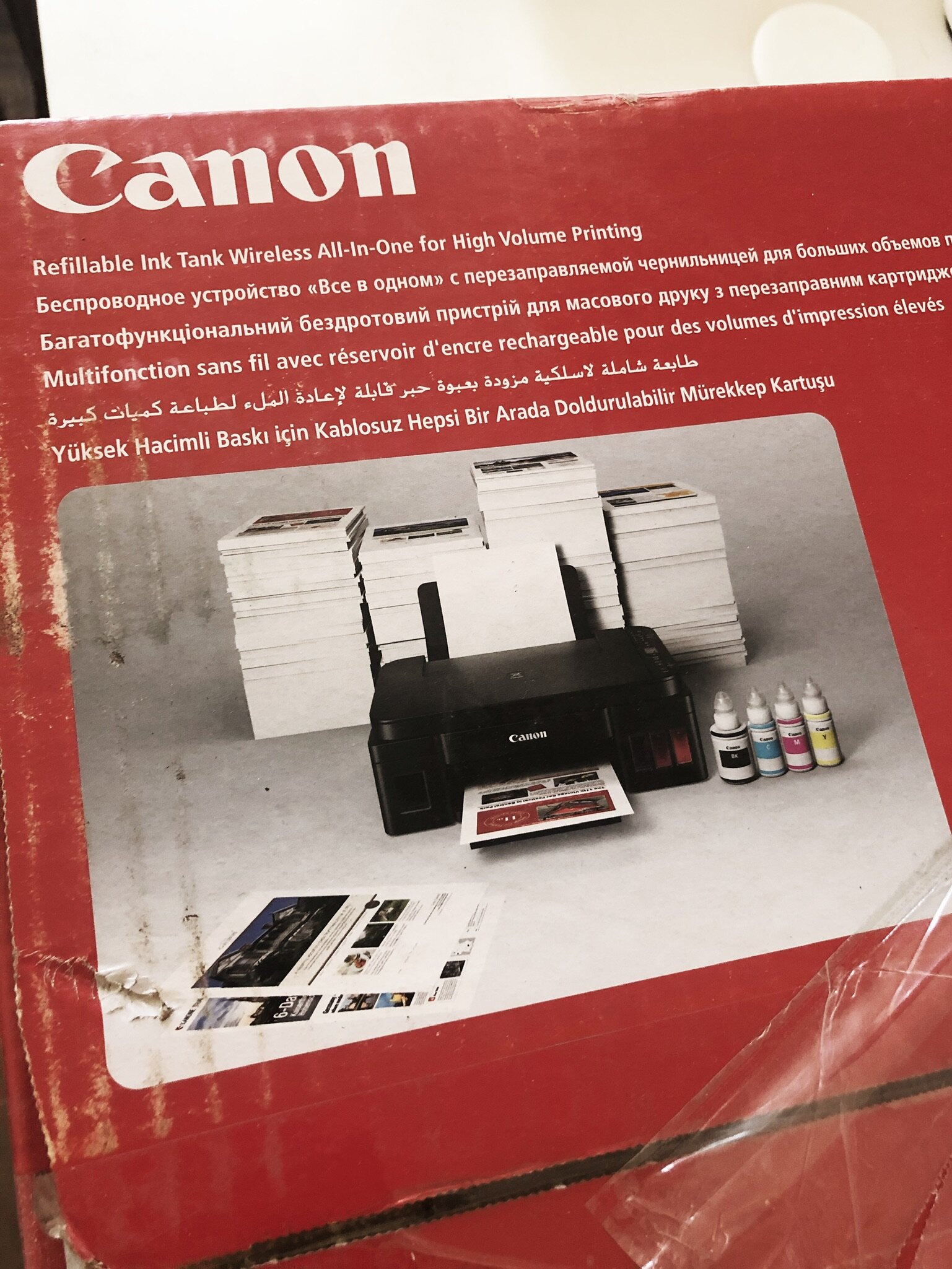
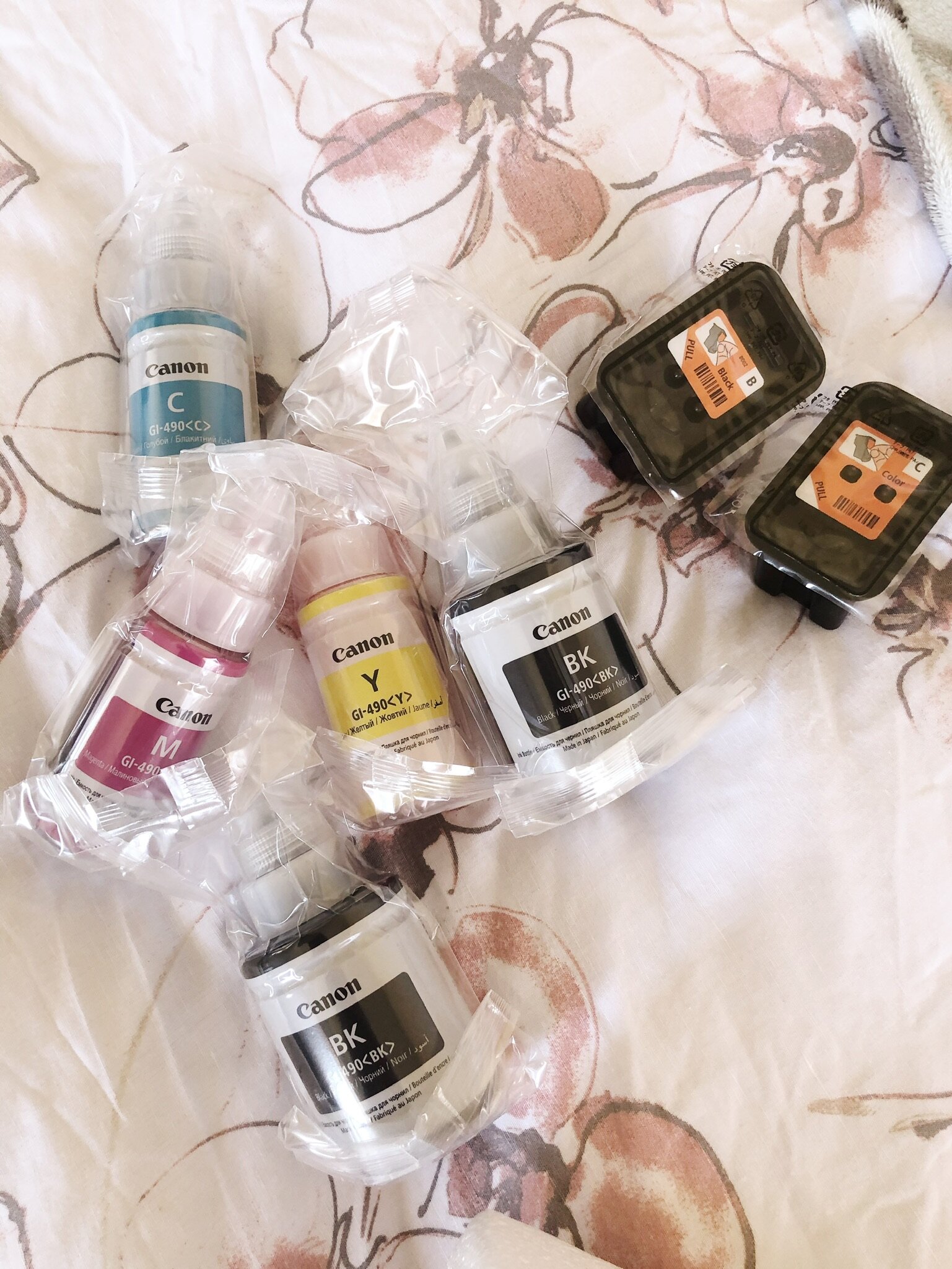
The G3411 is a midrange priced printer (I bought mine from Incredible Connection where it was on special for R2999 and it came with free delivery…it arrived out here on the farm within 5 working days!). The box comes with:

  • actual printer & cables

  • 2 black ink bottles

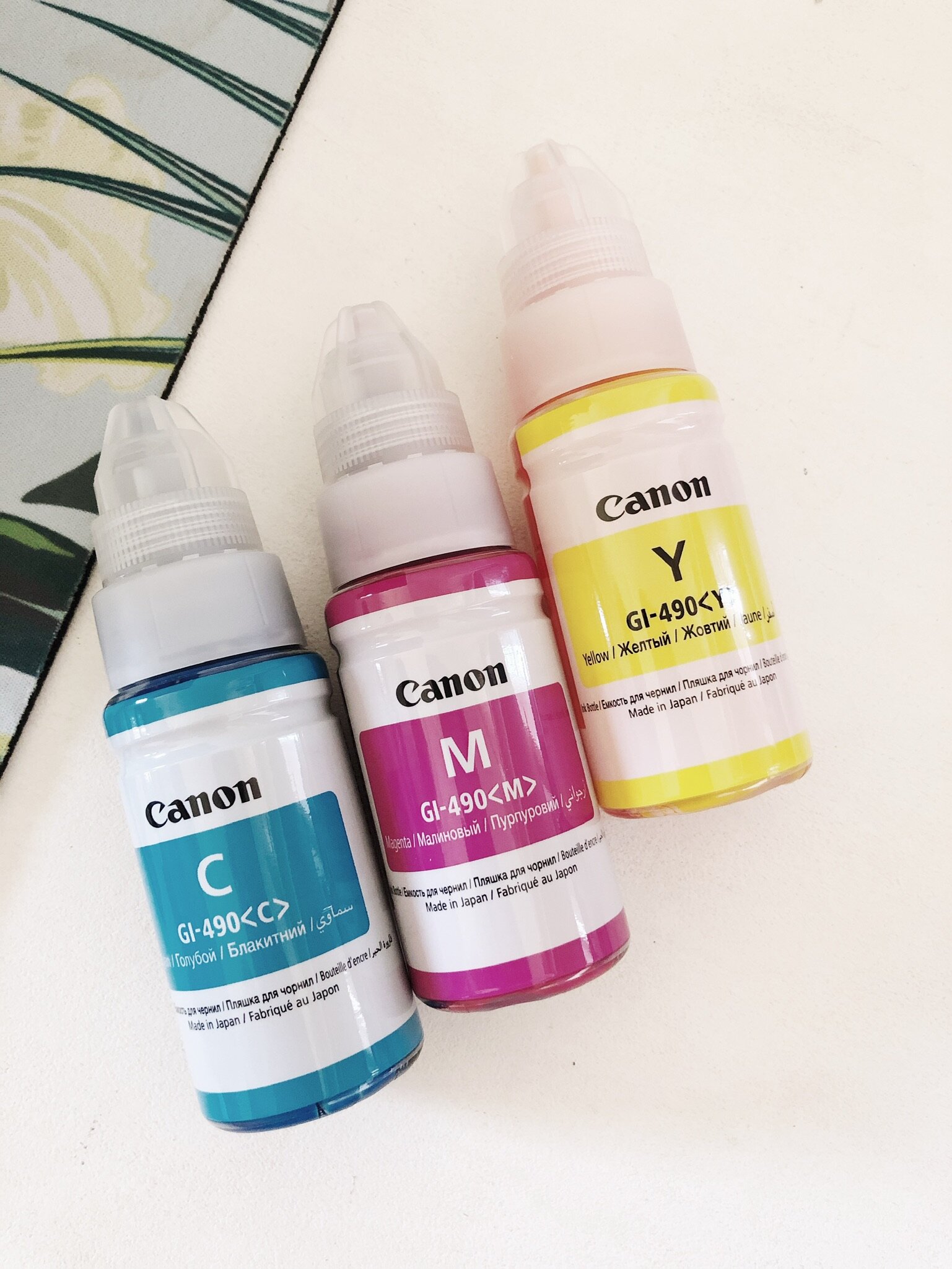
  • 3 colour ink bottles (CMY)

The Set Up

I was slightly nervous when it came to setting up the printer, as I’m usually pretty slap dash and don’t read instructions. My mom was visiting, so that really helped as she read the instructions and I was able to actually follow them step by step. It took about 25 mins for the entire thing to be set up (it has to calibrate the ink and the black calibrates separately to the coloured ink) but it was very straightforward.

The actual printing took me a lot longer, as I needed to download the Canon Print app (I have an iPhone but the app is free and available for both Apple & Android) . Then to print photos vs documents is a little different from your phone. I used the Print app for for both photos & documents. And then to print from my Mac was a little trickier, as I have to connect to the printer via wifi (this means I can’t actually be on the Internet wifi…which was a bit of a pain as I have to disconnect from the Wifi and connect to the printer, and then connect back to the Internet when I’m done). I think I read somewhere that there aren’t any actual cables to connect this printer to a Mac…so just bear that in mind it would be much simpler if I was able to connect my laptop to the printer via a cable. But, as I work on a laptop and not a desktop, this isn’t such a big deal.

I have been blown away at the quality of the photograph printing most of all! The Print app is easy to use and you can print different sizes and collage using the photos on your phone. I tested the quality of my iPhone shot photos vs my camera images (I use Google Drive to on my Mac to upload my camera images to the cloud and then I download them from the Drive app on my phone) and I am very impressed.

Refillable Ink Bottle Prices

The ink is usually where you really get caught when it comes to home printers, but the refill bottles for this printer are pretty reasonable at R180 for colour & R270 for black (this is the online price at Incredible Connection right now). But, apparently I shouldn’t need to buy ink for at least a year (and then some!). So I’m hoping this proves to be the case even with printing kiddie related bits and pieces as well as photographs.

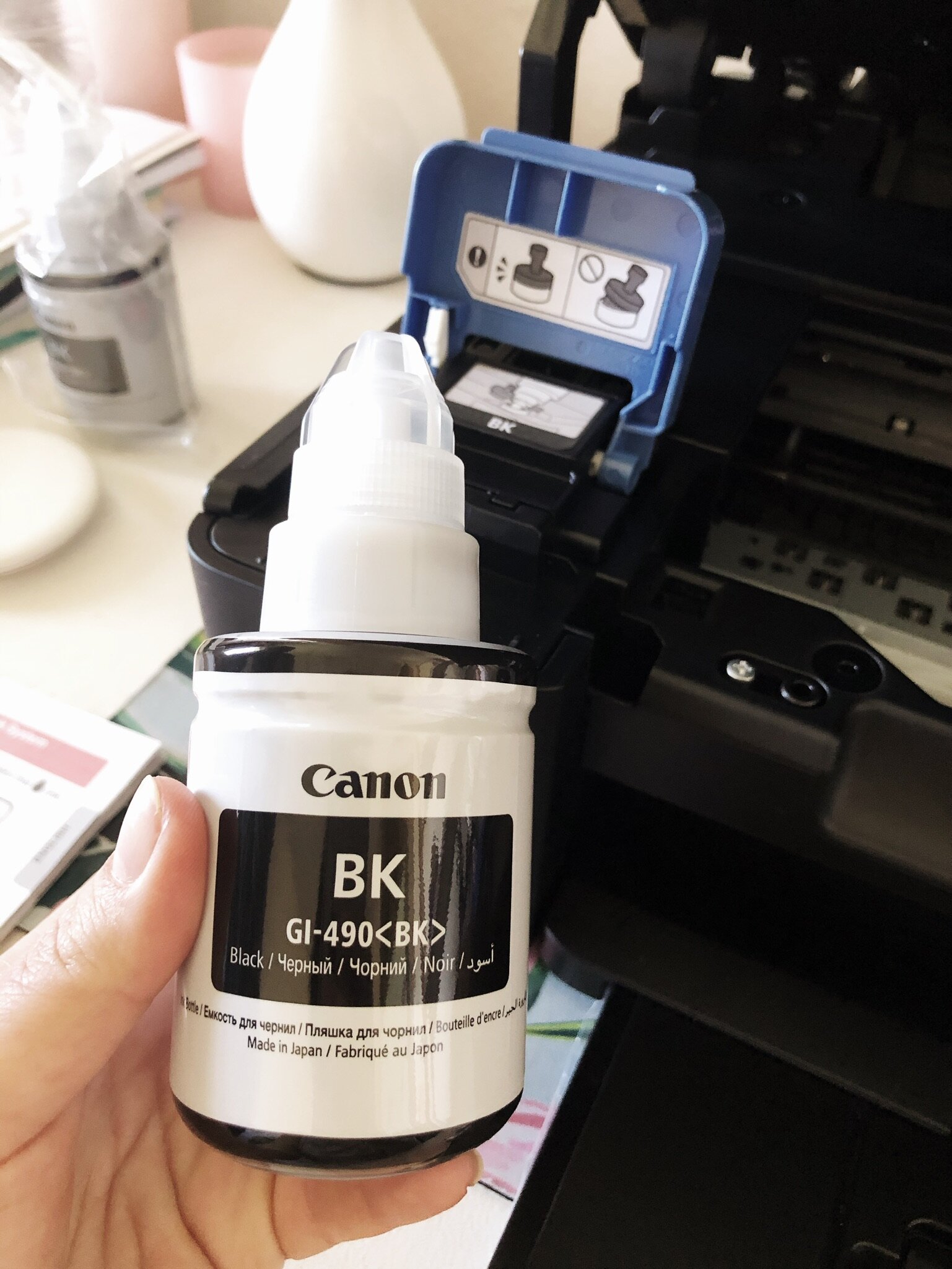
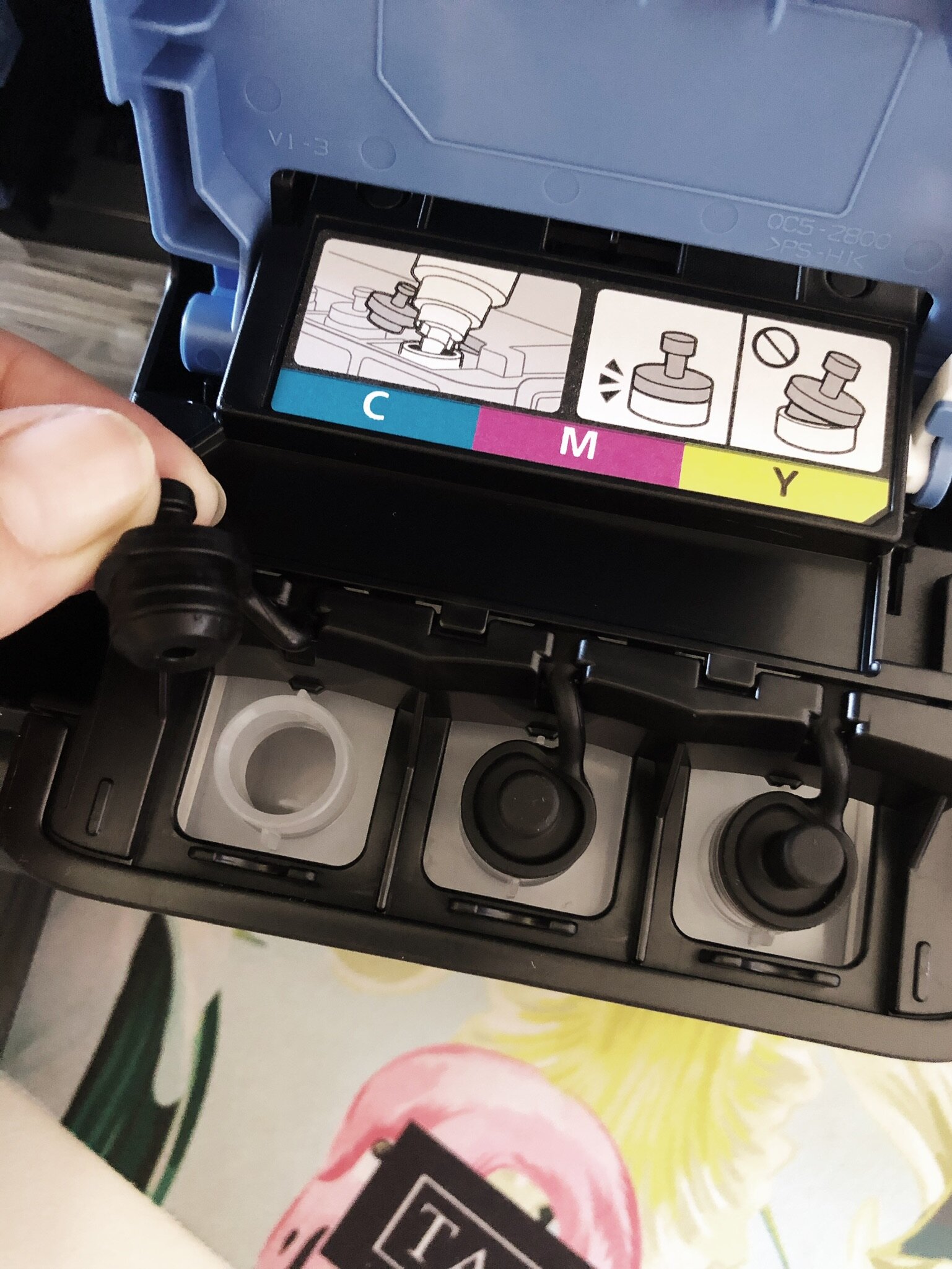
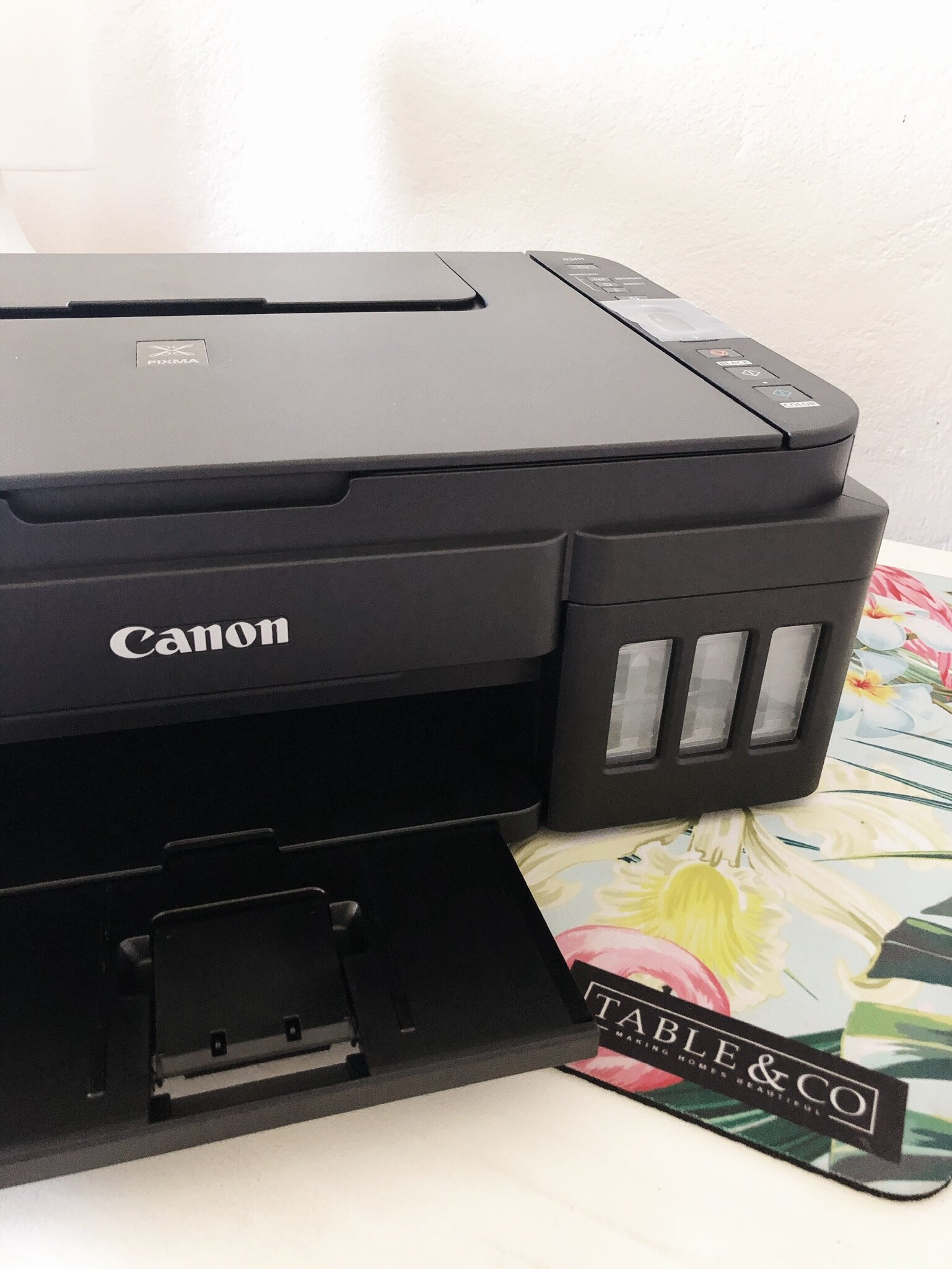
Filling up the ink tanks was very easy (you simply pour the ink into the little jars) and then once full the printer calibrates the colours. There is an easy to see ink level on the front so you can see how much ink you’ve used and when you need to buy more.

The nitty gritty product features of the Canon Pixma G3411 3-in-1 printer

  • Print, scan, & copy 

  • Ideal for those who do not require speed but low cost per copy 

  • Ideal for regular printing  

  • Page Yields: 12 000 pages mono / 7000 pages colour

  • Productive low-cost printing 

  • Wireless Connectivity 

  • Rear paper feeding 

  • Borderless printing 

  • 12 Month Warranty 

So far I’ve printed a number of photographs and a lovely workbook from Under The Acacia (a nature based homeschool curriculum for little ones…even though I haven’t actually started it with Everly yet) and I am really impressed with the printer so far.

Canon Pixma G3411 Refillable Ink Tank Printer for Homeschool, Photos & Home office Use - A Review

Next on my list is a laminator (any recommendations for a good one? I’ve been told it’s the laminating sheets that are the expensive thing?) This seems to be like most tech where the actual machine is relatively inexpensive, but the extras are what end up being so expensive.

I’m very happy with this printer, and will keep you updated as to how it goes and how long the ink lasts.